Many butterfly species are native to the United States, including monarchs, eastern tiger swallowtails, painted ladies, mourning cloaks, red admirals, American ladies, and zebra longwings. The species you see depend on your state, local plants, climate, and season.
From a sunny backyard in Texas to a woodland trail in Maine, native butterflies bring color and life to American landscapes. Some have bright orange wings, while others display blue spots, yellow bands, or dark wings with pale edges. Each species has its own range, food plants, and life cycle.
Native butterflies are species that occur naturally in a region rather than arriving through human introduction. The United States has many kinds, from common garden visitors to rare butterflies with very small ranges. A butterfly native to Florida may not be native to Alaska, so location matters when identifying a species.
The North American Butterfly Association groups butterflies into six main families found in the United States: swallowtails, whites and sulphurs, gossamer-wing butterflies, metalmarks, brush-footed butterflies, and skippers. These groups include familiar species as well as many small or less often seen butterflies. Learning their basic traits can help you identify the butterflies around your home and choose plants that support them.
Source: i.pinimg.com
What Does Native Mean When Talking About Butterflies?
A native butterfly is a species that occurs naturally in a region without being brought there by people. It belongs to the area’s natural wildlife and has a long-standing relationship with local plants, habitats, and seasonal conditions. Native does not mean that a butterfly must stay in one place all year.
Some native butterflies migrate hundreds or thousands of miles. Others move between nearby habitats, while some spend much of their lives in a small area. Their movement does not make them non-native.
America can mean the United States, North America, or both North and South America. This guide focuses mainly on butterflies native to the United States, including species found in parts of Canada or Mexico as well. Hawaii has its own distinctive butterfly fauna, so its native species should be considered separately from those of the continental states.
Source: images.squarespace-cdn.com
Native species
These butterflies occur naturally in their established range and are part of local ecosystems.
Introduced species
These species have reached an area through human activity and now occur outside their natural range.
Seasonal visitors
Some native butterflies travel into areas where they do not remain year-round. A temporary visitor is not automatically an introduced species.
How Many Native Butterfly Species Are There?
There is no single number that fits every definition of America. Counts differ depending on whether a list covers the United States alone, North America north of Mexico, or a wider region. Taxonomic changes can also alter species totals when scientists split or combine named species.
The North American Butterfly Association maintains a checklist of butterflies recorded north of Mexico, with separate attention to Hawaii in its published checklist resources. Its family lists are a useful starting point for learning the major groups. For a state-level search, Butterflies and Moths of North America provides regional information and records of reported sightings.
Popular Native Butterflies in the United States
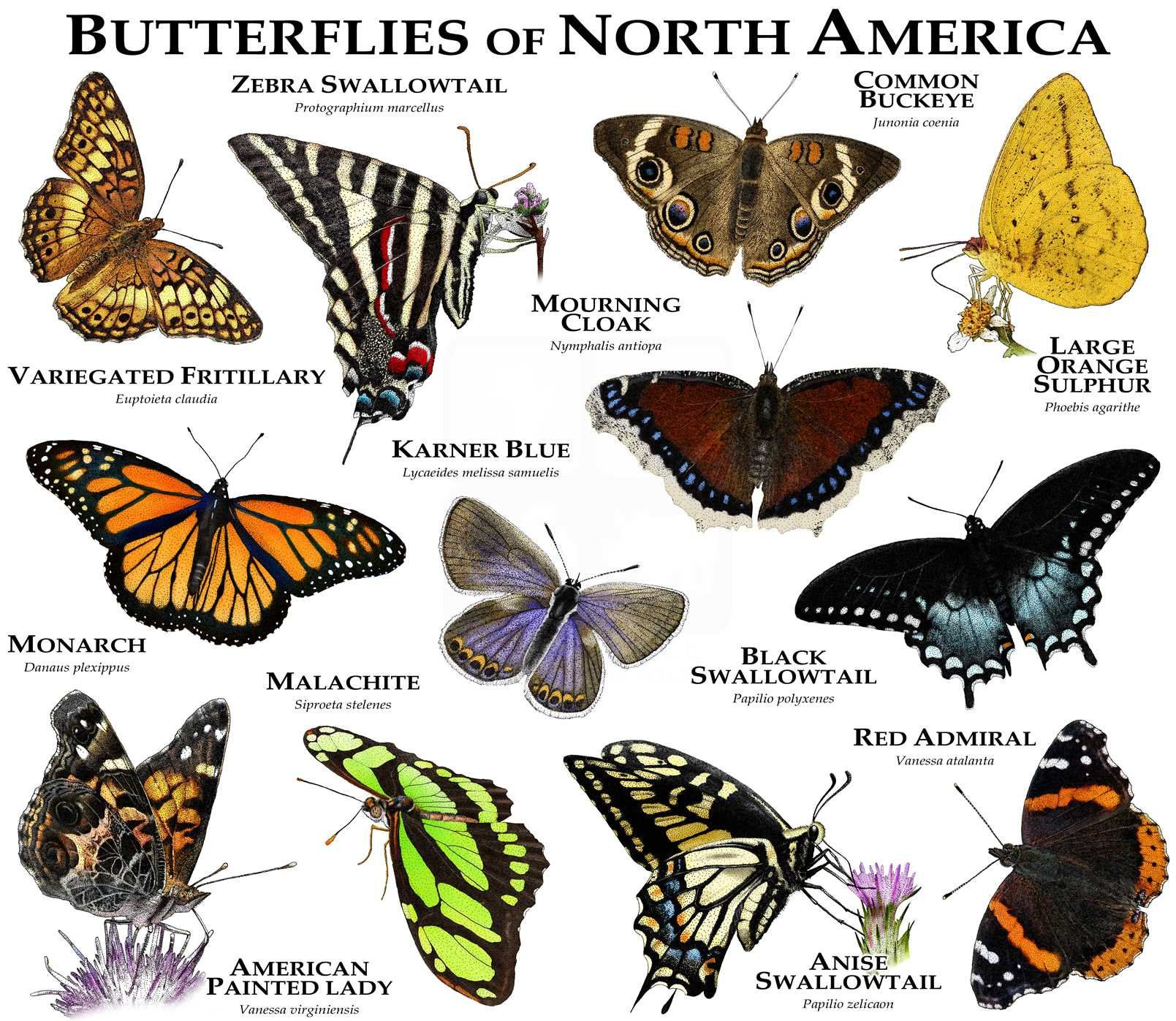
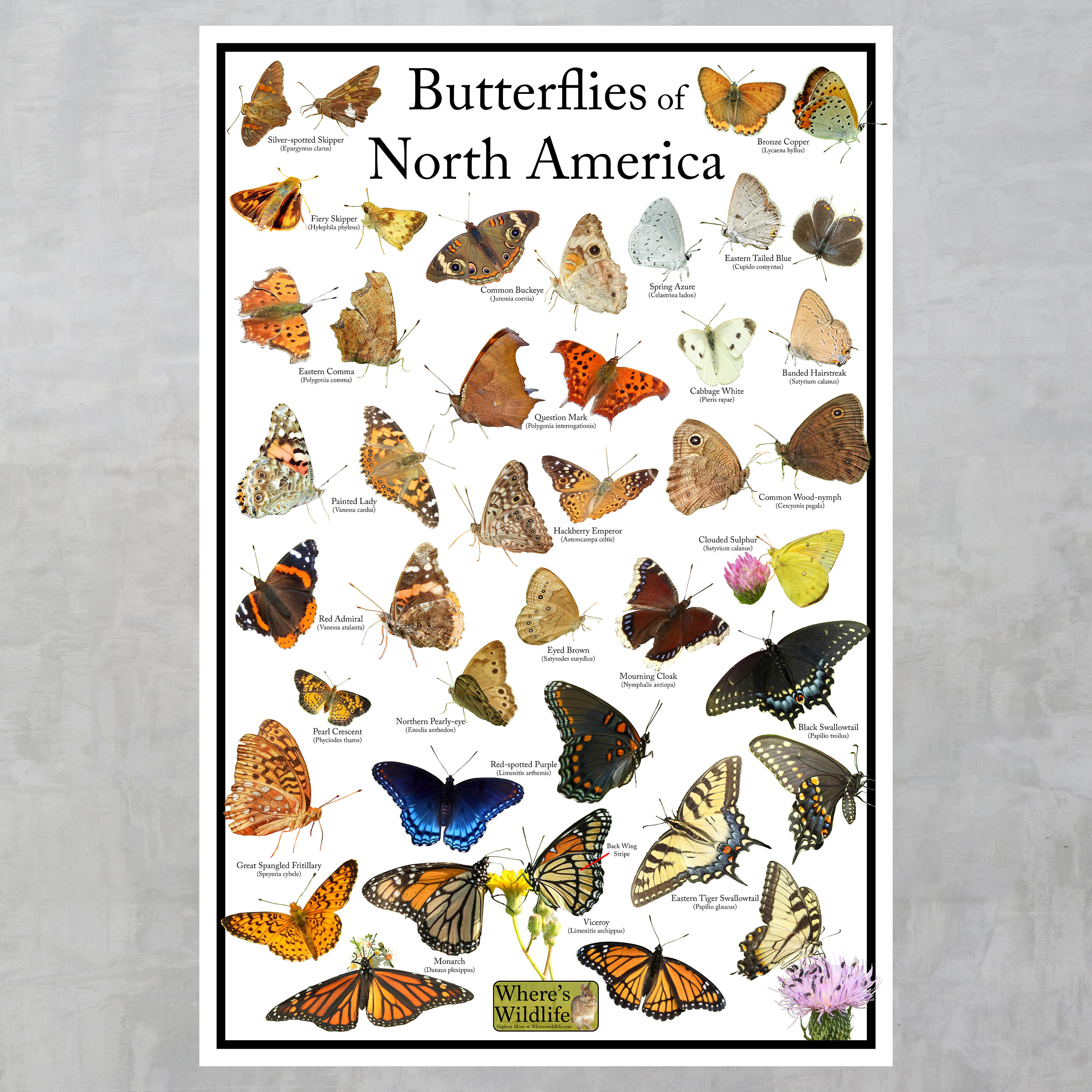
Many native butterflies are easy to recognize once you know their main markings. The following species are good examples because they have distinctive appearances, broad or notable ranges, or strong links to familiar American habitats. Their exact distribution varies by region, and not every species occurs in every state.
Source: i.pinimg.com
Monarch butterfly
The monarch has orange wings with black veins and a dark border marked by white spots. It occurs across much of the United States and is famous for its long migration. Monarch caterpillars feed on milkweed, making milkweed essential for breeding.
Eastern tiger swallowtail
This large butterfly has yellow wings with black tiger-like stripes. It is common in much of the eastern United States, where its caterpillars use trees such as tulip trees, wild cherries, and other suitable woody plants.
Western tiger swallowtail
This yellow-and-black swallowtail is found mainly in the western United States. Its range includes areas with suitable trees and water sources, especially in the West’s varied woodland and river habitats.
Painted lady
The painted lady has orange, brown, black, and white markings. It occurs across much of the United States and can travel long distances. Its caterpillars use several kinds of plants, including thistles and mallows.
Mourning cloak
This butterfly has dark maroon-brown wings with a pale yellow edge and blue spots. It lives in much of North America and may appear early in spring because adults can survive winter in sheltered places.
Red admiral
The red admiral has dark wings crossed by bright red-orange bands and marked with white spots. It occurs widely in the United States and often visits gardens, woodland edges, and sunny openings.
American lady
This butterfly has orange and dark-brown upper wings with white markings near the tips. Its caterpillars often feed on plants in the cudweed and everlasting group, including some native pussytoes.
Zebra longwing
The zebra longwing has narrow black wings with long yellow stripes. It is native to parts of the southeastern United States, especially Florida, and its caterpillars feed on passionflower vines.
Other Native Species Worth Knowing
The common buckeye has large eyespots on its wings and often rests on sunny, open ground. It occurs across much of the southern United States and in other parts of the country during suitable seasons.
The question mark butterfly has orange-brown wings with dark markings and a small silver mark beneath its wings. It is found across much of the eastern United States and often visits woodland edges, parks, and yards.
The cloudless sulphur is a large yellow butterfly common in much of the southern United States. It may also travel farther north during warm seasons. Its caterpillars use plants in the senna group.
The spring azure is a small blue butterfly that appears in spring in many eastern areas. The California sister, common in parts of the West, has dark wings with bold orange and white markings. These species show how much butterfly diversity exists beyond the famous monarch.
The Six Main Butterfly Families Found in America
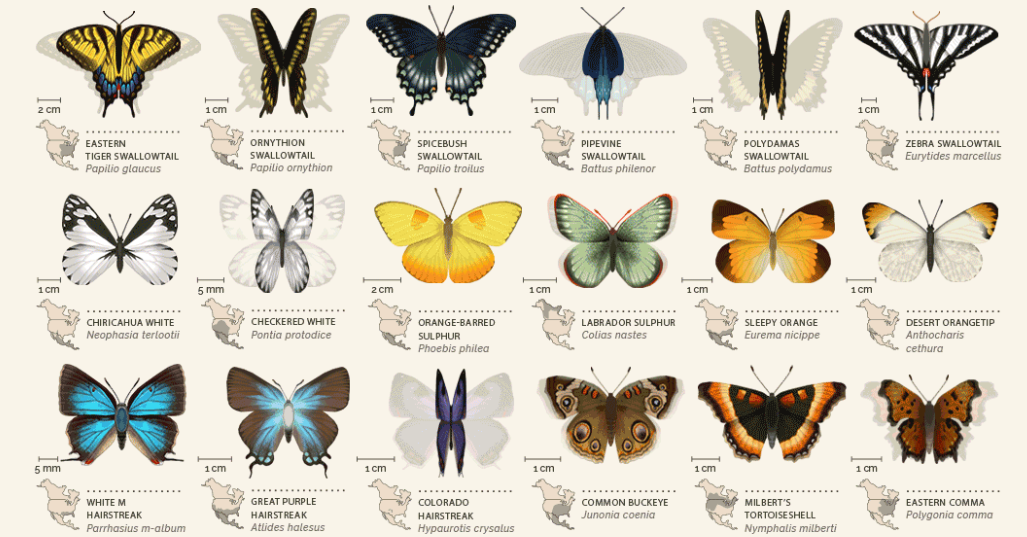
Butterfly families offer a practical way to sort the many native species found in the United States. You do not need to memorize scientific names to start. Wing shape, body size, flight style, and color patterns can help you place a butterfly into a likely group before you identify its exact species.
Source: i.etsystatic.com
Swallowtails
Family Papilionidae includes large butterflies, many with long tails on their hindwings. Tiger swallowtails and spicebush swallowtails are familiar examples. Some species have yellow-and-black patterns, while others are mostly dark with blue or green highlights.
Whites and sulphurs
Family Pieridae includes many white, cream, and yellow butterflies. Cabbage whites are widespread but were introduced to North America, so they are not a native example. Clouded sulphurs and cloudless sulphurs are useful native examples in appropriate regions.
Gossamer-wing butterflies
Family Lycaenidae includes blues, coppers, and hairstreaks. Many are small and easy to overlook. Some have delicate blue wings, while others show orange, brown, or metallic-looking colors.
Metalmarks
Family Riodinidae includes butterflies that often have small, patterned wings. Metalmarks are more diverse in warmer regions, and some species have tiny reflective marks that help explain the group’s common name.
Brush-footed butterflies
Family Nymphalidae includes monarchs, painted ladies, mourning cloaks, red admirals, buckeyes, and many other familiar species. The front legs are reduced in size, giving many members of the group a distinctive appearance when examined closely.
Skippers
Family Hesperiidae includes many small, sturdy butterflies with relatively large bodies and quick, darting flight. Their antenna tips often look hooked. Some species rest with their wings held at different angles, which can help with identification.
How to Use Family Traits in the Field
Start by noting whether the butterfly is large or small, whether its wings have tails, and whether the main color is yellow, orange, white, blue, or brown. Then look for strong clues such as eyespots, black stripes, white wing-tip patches, or a row of blue spots.
Do not rely on color alone. Sunlight, wing wear, sex, age, and the angle of view can change how a butterfly looks. A clear photo of the upper wings and another of the underside can make identification much easier.
Which Native Butterflies Live in Different Parts of America?
Your location is one of the best clues to a butterfly’s identity. The United States spans cold northern forests, dry deserts, mountain ranges, grasslands, wetlands, and subtropical habitats. Each region supports a different mix of butterfly species.
Source: magazine.scienceconnected.org
Northeast and Midwest
Look for eastern tiger swallowtails, monarchs, red admirals, mourning cloaks, common buckeyes, and spring azures. Meadows, woodland edges, gardens, and open parks can support many of these species.
Southeast
Warm weather and long growing seasons support a rich mix of butterflies. Depending on the state and habitat, you may see zebra longwings, cloudless sulphurs, spicebush swallowtails, gulf fritillaries, and several kinds of skippers.
Southwest
Desert and dry-land habitats support species adapted to heat, seasonal rain, and native shrubs. Checkered whites, cloudless sulphurs, giant swallowtails, and local blues or metalmarks may occur in suitable areas.
West Coast
California and neighboring states have many native species tied to coastal scrub, oak woodland, grassland, mountains, and desert. California sisters, western tiger swallowtails, mourning cloaks, and local hairstreaks are examples.
Mountain and northern regions
Cooler climates support species adapted to short summers and high elevations. Some swallowtails, fritillaries, blues, and parnassians are found in mountain habitats. Their ranges may be limited to particular slopes or elevations.
Hawaii
Hawaii has a distinctive butterfly community, including native species such as the Kamehameha butterfly. It also has introduced butterflies. A butterfly seen in Hawaii should not automatically be assumed to be native to the islands.
How to Check Whether a Butterfly Is Native to Your State
Use a regional butterfly checklist or a verified species profile rather than relying on a nationwide picture chart. The Butterflies and Moths of North America database offers state and regional information, while the North American Butterfly Association provides family lists and a butterfly checklist.
Compare the reported range with your location, then check the flight season and host plants. A butterfly photographed outside its usual range may be a stray, a recent arrival, or a misidentification. One sighting does not prove that a species has an established local population.
Native Butterflies and the Plants They Need
Native butterflies need more than flowers. Adult butterflies often drink nectar, but their caterpillars need plants that provide the right food. These plants are called host plants, and some butterflies depend on a narrow range of them to complete their life cycle.
A garden full of flowers may attract adult butterflies but still fail to support breeding if the needed host plants are absent. A more useful garden includes nectar sources, host plants, shelter, and a mix of sunny and protected spaces.
Source: i.redd.it
Monarchs and milkweed
Monarch caterpillars feed on milkweed. Choose milkweed species native to your area, and avoid planting tropical milkweed in places where it can persist through winter without suitable management.
Tiger swallowtails and trees
Different tiger swallowtails use a range of woody host plants. Native trees such as tulip trees, wild cherries, willows, and other locally suitable species can support caterpillars, depending on the butterfly.
Zebra longwings and passionflowers
Zebra longwing caterpillars feed on passionflower vines. In areas where this butterfly is native, suitable native passionflowers can provide food for the young.
Painted ladies and thistles
Painted lady caterpillars use several host plants, including thistles and mallows. Their flexible diet helps the species occur in a wide range of habitats.
Sulphurs and legumes
Many sulphur butterflies use plants in the legume family. Depending on the species, suitable hosts may include native clovers, senna, or other local plants.
Simple Ways to Help Native Butterflies
Choose plants that naturally grow in your region, and include flowers that bloom at different times. This can provide nectar over a longer season. Whenever possible, choose host plants based on the butterfly species that actually occurs in your area.
Limit pesticide use, especially on plants where caterpillars may feed. Broad-spectrum insecticides can harm butterflies and other insects, even when the goal is to control a different pest. Follow product labels and avoid spraying flowers while pollinators are visiting.
Leave a few quiet areas with leaf litter, stems, or sheltered spaces where local species can spend part of their life cycle. Not every butterfly overwinters as an adult; some survive as eggs, caterpillars, or pupae. A tidy garden is not always the most useful habitat.
Plant for the full life cycle
Include both nectar plants for adults and host plants for caterpillars.
Avoid unnecessary chemicals
Use targeted pest control only when needed, and protect flowering plants and caterpillars.
Keep records
Photograph butterflies, record the date and location, and use a reliable identification resource to check your observations.
How to Identify a Native Butterfly You Find
You can often narrow down a butterfly’s identity with a few simple observations. Begin with the location and date, then look at the wing pattern, size, flight style, and nearby plants. These clues are more useful together than any single feature alone.
Source: i.pinimg.com
Observe the main color
Note whether the wings are mostly orange, yellow, white, blue, brown, or black. Record any contrasting bands or spots.
Check the wing edges
Long tails may point toward a swallowtail, while rounded wings with eyespots may suggest a buckeye or another brush-footed butterfly.
Look for distinctive markings
Monarchs have strong black veins on orange wings. Red admirals have red-orange bands, and mourning cloaks have pale yellow wing borders.
Record the habitat
A butterfly beside a stream, in a desert wash, on a mountain meadow, or in a suburban garden may have a different set of likely species.
Use a regional guide
Compare the image with a trusted state checklist or species database. Check both the upper and lower wing surfaces when possible.
Native Does Not Always Mean Rare
Some native butterflies are widespread and often seen, while others are uncommon or have highly restricted ranges. Native status describes where a species occurs naturally, not how many individuals remain.
Likewise, a common butterfly is not always native. The cabbage white, for example, is an introduced species that has become widespread in North America. Correct identification and range information help avoid confusing commonness with native status.
Why Native Butterflies Matter
Native butterflies are part of the food web. Caterpillars provide food for birds and other wildlife, while adult butterflies visit flowers and may help move pollen between plants. Their role as pollinators varies by species and flower, but their ecological value extends beyond their beauty.
Butterfly populations can also help people notice changes in local habitat. A decline in sightings may reflect weather, seasonal timing, habitat loss, pesticide exposure, or changes in host plants. One quiet afternoon is not enough to prove a decline, but repeated observations over time can reveal useful patterns.
Some native butterflies face serious conservation challenges. Habitat loss, fragmentation, pesticide use, climate shifts, and changes in host plants can affect different species in different ways. Monarchs are a familiar example of a butterfly that has received broad conservation attention, but many less famous species also need suitable habitat.
Source: i.pinimg.com
Protect local habitat
Preserve native plants, meadows, woodland edges, and other habitats that support caterpillars and adult butterflies.
Support careful observation
Use photographs and records instead of collecting butterflies without a clear conservation or research reason.
Choose regional conservation advice
A plant or management method that works in one state may be unsuitable in another. Local native-plant groups and wildlife agencies can offer guidance suited to your area.
Frequently Asked Questions
Q
What is the most common native butterfly in America?
There is no single native butterfly that is most common in every part of the United States. Monarchs, painted ladies, red admirals, and several sulphurs can be widespread, but local abundance changes with season, habitat, and weather. A state butterfly checklist or local sighting database is the best way to learn which species are common near you.
Q
Are monarch butterflies native to the United States?
Yes. Monarchs are native to North America and occur naturally across much of the United States. Some populations migrate long distances, while others have different seasonal movement patterns. Their caterpillars depend on milkweed plants for food.
Q
Are all butterflies found in America native?
No. Some species were introduced by people and later became established. The cabbage white is a familiar example of an introduced butterfly in North America. A species being common in a state does not prove it is native there.
Q
Which native butterflies are best for a beginner to identify?
Monarchs, eastern tiger swallowtails, mourning cloaks, red admirals, and common buckeyes are useful species to learn in regions where they occur. Their markings are often distinctive, though some butterflies can look alike. Check your state’s species list before relying on a nationwide guide.
Q
What plants attract native butterflies to a yard?
The best plants depend on your region and the species you want to support. Native asters, coneflowers, milkweeds, goldenrods, and other locally suitable flowers may provide nectar, while trees and host plants support caterpillars. Choose plants that are native to your area and include both nectar sources and caterpillar food plants.
Q
How can I tell if a butterfly is native to my state?
First identify the butterfly, then check its range using a regional field guide, the North American Butterfly Association checklist, or the Butterflies and Moths of North America database. Confirm that the species has an established natural range in your state. An isolated sighting may represent a stray rather than a resident population.
✦ Wrapping Up
Conclusion
Many kinds of butterflies are native to the United States, from orange monarchs and yellow tiger swallowtails to dark mourning cloaks, red admirals, small blues, and quick-flying skippers. Their colors, habitats, and life cycles differ, so the native butterflies in one state may look very different from those in another.
The best way to learn about local species is to start with your region, record what you see, and check reliable butterfly lists. If you want to support them, grow native host plants and nectar flowers, reduce pesticide use, and protect the natural spaces where butterflies complete their life cycles.
💡 Key Takeaway
Choose one butterfly you have seen near your home, identify it with a regional guide, and find out which native plants its caterpillars need. That small step can turn a casual sighting into a practical way to support local wildlife.
Animal Facts Zone is a family-friendly online resource built for curious minds, students, and wildlife enthusiasts. Founded and edited by Sourov Biswas, the platform breaks down fascinating animal behaviors, species identification guides, and nature trivia into clear, easy-to-read articles.
From backyard butterflies and fireflies to reptiles, birds, and wild matchups, every guide is crafted to answer real questions about the natural world and inspire everyday wildlife appreciation. Whether you are a student researching a species or a nature lover exploring your own backyard, Animal Facts Zone helps you learn something new about the animal kingdom in minutes.
3 thoughts on “What Types Of Butterflies Are Native To America?: A Guide”





3 thoughts on “What Types Of Butterflies Are Native To America?: A Guide”