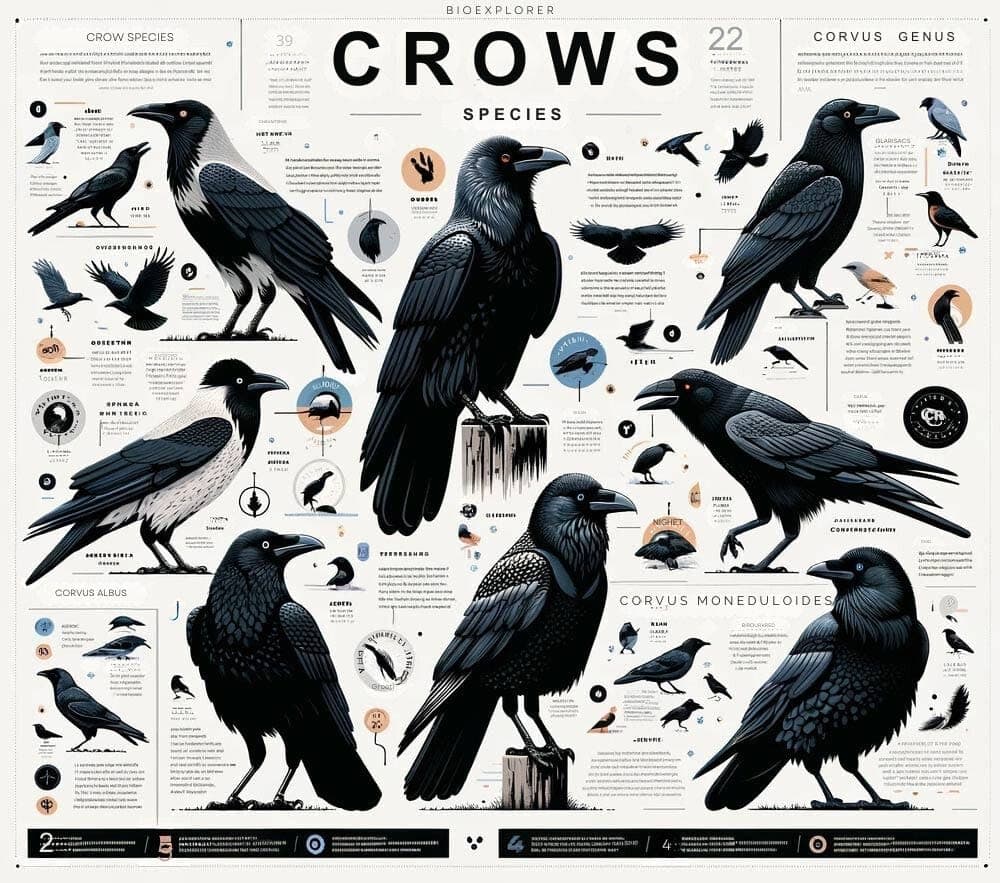
Crows belong to the Corvidae family, a group of birds that also includes ravens, jays, magpies, and nutcrackers. In the United States, the familiar american crow is known scientifically as Corvus brachyrhynchos.
Across the United States, crows are a familiar sight. You may see one walking across a school field, calling from a suburban roof, or searching for food beside a country road. These birds can seem like ordinary parts of daily life, yet they belong to a fascinating family with many different members.
The crow family is called Corvidae. It belongs to the order Passeriformes, which contains many perching birds and songbirds. Within this family, crows and ravens belong to the genus Corvus, while jays and magpies belong to other genera. This means these birds share an evolutionary family but are not all the same kind of bird.
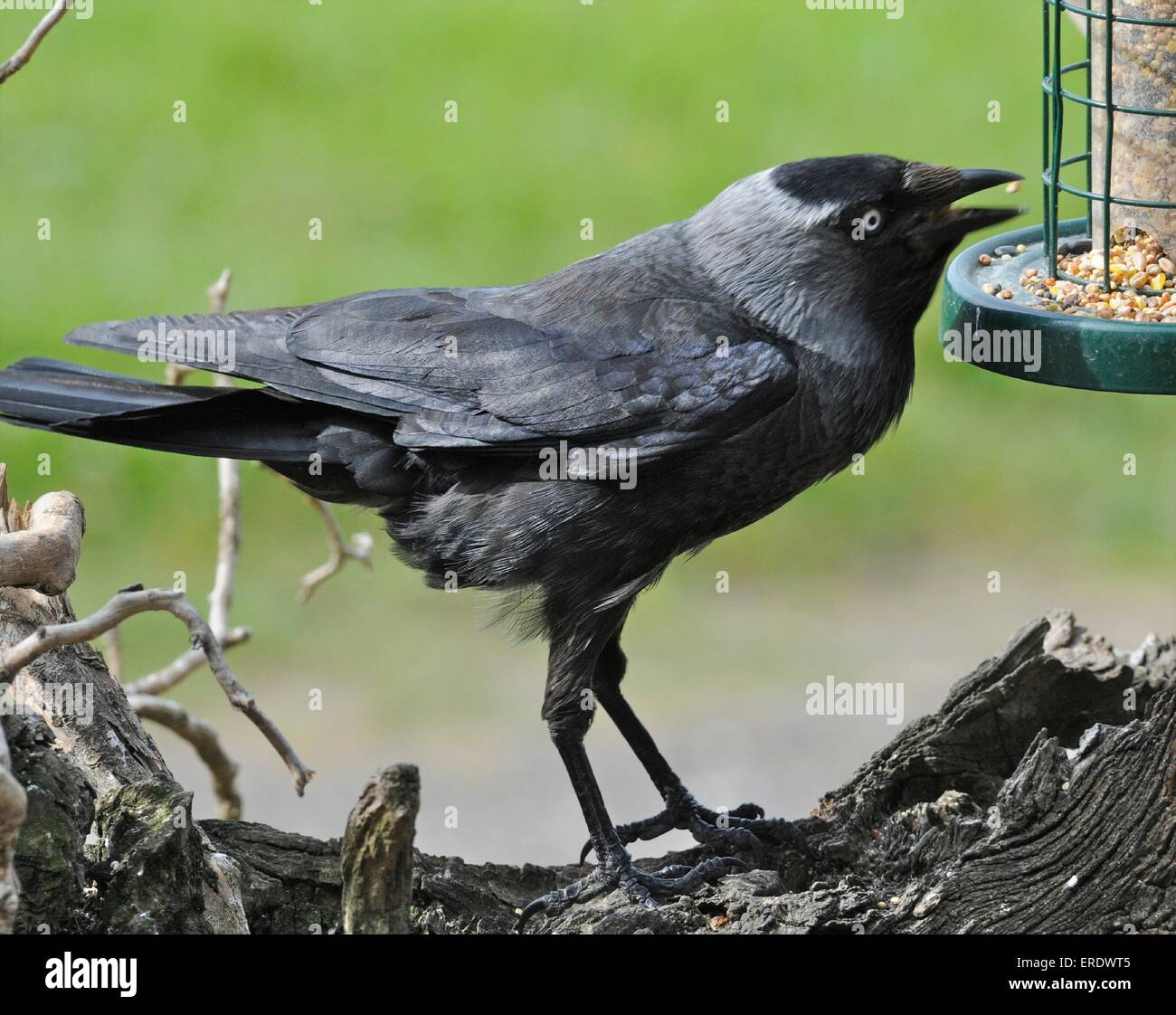
Learning about Corvidae helps explain why crows share certain traits with birds that look quite different. Many corvids have strong bills, varied diets, social habits, and notable learning skills. Their colors, sizes, calls, and habitats can differ greatly, much like the different branches of a large family tree.
Source: brunofuga.adv.br
What Is the Crow Family Called?
The crow family is called Corvidae. The name refers to a biological family of birds that includes crows, ravens, jays, magpies, nutcrackers, and several other related groups. These birds share ancestry, although they can look and behave quite differently.
The American crow is one of the best-known members of this family in the United States. Its scientific name is Corvus brachyrhynchos. You can find American crows in many settings, from city parks and farms to forests, beaches, and residential neighborhoods.
Corvidae is a formal taxonomic family. In biology, a family groups related genera, while a genus groups closely related species. These ranks help scientists describe how organisms are related instead of sorting them only by color, size, or behavior.
Source: earthstar.blog
Common family name
The crow family, also called the corvid family.
Scientific family name
Corvidae.
Order
Passeriformes, the large order of perching birds.
American crow genus
Corvus.
American crow species
Corvus brachyrhynchos.
Why Does the Scientific Name Matter?
Common names can vary by place and language. Scientific names give each recognized species a standard name that researchers can use across countries. For example, Corvus brachyrhynchos identifies the American crow, while Corvus corax identifies the common raven.
The first word, Corvus, is the genus. The second word identifies the species within that genus. Together, the two words make a scientific name, which is usually written in italics.
Are All Black Birds Members of Corvidae?
No. Black plumage does not make a bird a crow or a corvid. American crows have all-black feathers, but so do birds such as common grackles and several blackbird species, which belong to different families.
To identify a bird, look at its size, bill, tail, flight pattern, call, and behavior. A black bird feeding on a lawn may be a crow, a grackle, or another species. Color alone cannot settle the question.
Where Do Crows Fit in Bird Classification?
Crows fit into a hierarchy that starts with broad groups of life and narrows to one species. This system lets scientists show that an American crow is a bird, a perching bird, a member of Corvidae, and a species within Corvus.
Each rank answers a different question. The class Aves tells you that the animal is a bird. The order Passeriformes places it among perching birds. The family Corvidae connects it with related birds such as ravens and jays. The genus and species then identify the particular crow.
Source: shutterstock.com
Kingdom: Animalia
Crows are animals.
Phylum: Chordata
Crows are vertebrates with the defining features of chordates during development.
Class: Aves
Crows are birds.
Order: Passeriformes
Crows belong to the order that includes many perching birds.
Family: Corvidae
Crows share this family with ravens, jays, magpies, and other corvids.
Genus: Corvus
The American crow belongs to a genus that also includes ravens and other crows.
Species: Corvus brachyrhynchos
This is the scientific name of the American crow.
What Is the Difference Between a Family and a Genus?
A family is broader than a genus. Corvidae includes many kinds of related birds, while Corvus includes crows and ravens grouped within one genus. A blue jay, for example, belongs to Corvidae but has the scientific name Cyanocitta cristata, so it is not in the genus Corvus.
Think of a family as a large branch on a tree and a genus as a smaller branch growing from it. The species sits farther down, where the classification identifies a particular kind of bird.
Why Can Scientific Classification Change?
Scientists may revise classifications when new evidence changes their understanding of how species are related. They can study DNA, anatomy, calls, behavior, and geographic patterns to test relationships. A change in classification does not mean the birds suddenly changed; it means the scientific explanation of their relationships has improved.
The American crow offers a useful example. The Northwestern crow was once treated as a separate species, but it was later combined with the American crow after researchers reassessed the evidence. This shows why older field guides may use names or boundaries that differ from newer sources.
Which Birds Belong to the Corvidae Family?
Corvidae contains more than just crows. Its members include ravens, jays, magpies, nutcrackers, and other related birds. The exact species included in a classification can depend on the taxonomic authority and the latest research, but the family contains a wide range of birds found across much of the world.
Some members look much like American crows, while others have bright blue feathers, bold white markings, or long tails. Their shared family relationship reflects evolutionary history rather than a rule that all members must look alike.
Source: brunofuga.adv.br
Crows
These include the American crow, fish crow, and other species in the genus Corvus.
Ravens
The common raven is a large corvid found across parts of North America and other regions of the Northern Hemisphere.
Jays
Blue jays and scrub-jays belong to Corvidae but are placed in genera outside Corvus.
Magpies
Black-billed magpies are familiar corvids in parts of western North America and have long tails with contrasting plumage.
Nutcrackers
These corvids are known for feeding on seeds, including pine seeds, and for storing food.
Are Jays Part of the Crow Family?
Yes. Jays belong to Corvidae, even though they often look different from crows. The blue jay, Cyanocitta cristata, is a familiar eastern North American species with blue, white, and black markings and a noticeable crest.
Jays and crows share family membership, but they do not belong to the same genus. Their differences in color, shape, and calls are useful reminders that a biological family can contain many distinct forms.
Are Magpies Related to Crows?
Yes. Magpies are corvids, so they are part of the same family as crows. The black-billed magpie, Pica hudsonia, lives in western North America and is easy to recognize by its black-and-white plumage and long tail.
Magpies and crows may share some feeding habits and learning skills, but their appearance and behavior are not identical. Their relationship comes from shared ancestry, not simply from their ability to eat a broad range of foods.
Are Nutcrackers in the Same Family?
Yes. Nutcrackers are members of Corvidae. The Clark’s nutcracker, for example, is associated with western mountain forests and feeds heavily on pine seeds. It can carry and store seeds in many locations, helping it find food later.
This behavior also affects the landscape. Seeds that are stored and never recovered may grow into new trees when conditions allow. The role of nutcrackers shows that the crow family can influence plant communities as well as animal food webs.
Are Crows and Ravens in the Same Family?
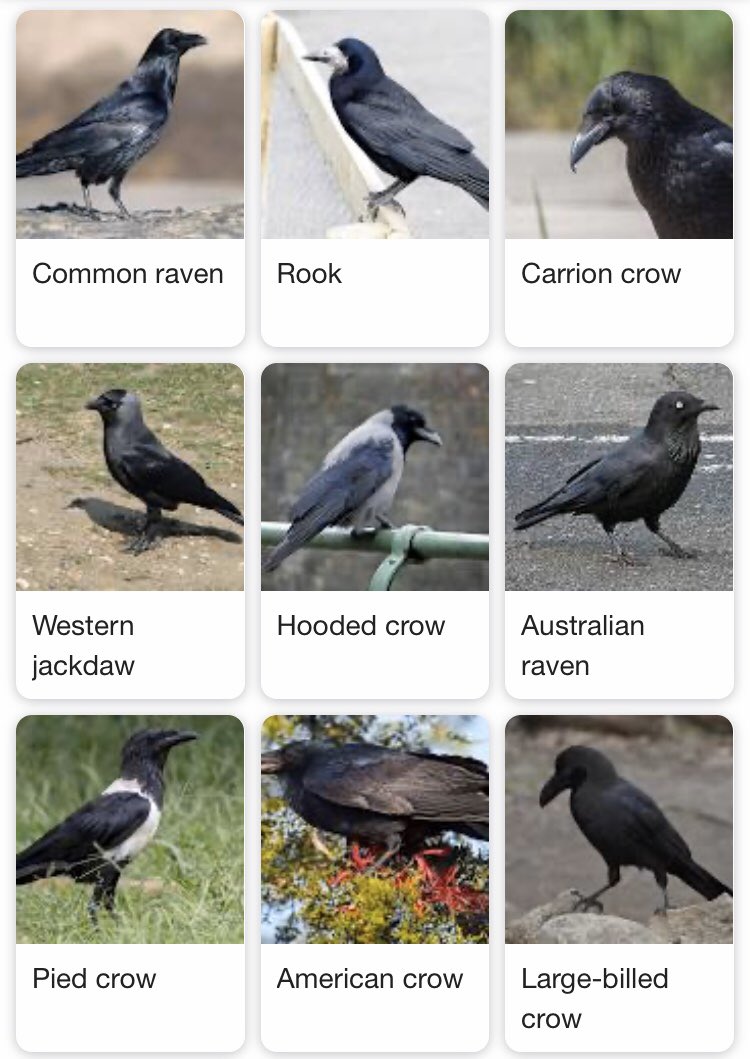
Yes. Crows and ravens both belong to Corvidae, and many familiar species from both groups belong to the genus Corvus. The American crow and common raven are closely related, but they are separate species with clear differences in typical size, bill shape, calls, and flight.
In the United States, American crows are widespread across much of the country. Common ravens also occur in North America, especially in mountainous, forested, and remote areas, though they can live near towns and other human-made settings too. Their ranges overlap in some regions, so location alone may not identify a bird.
Source: ar.inspiredpencil.com
American crow
Usually smaller, with a relatively modest bill, a fairly squared tail, and a familiar caw.
Common raven
Usually larger, with a heavier bill, shaggy throat feathers, a deeper call, and a wedge-shaped tail in flight.
Shared family
Both are corvids and share several physical and behavioral traits because they are related.
How Can You Tell a Crow From a Raven?
Start with overall size when you can compare the birds at the same time. Common ravens are generally much larger than American crows, with heavier bills and longer-looking heads and necks. A single bird seen at a distance can be hard to judge, so size should not be your only clue.
Next, watch the tail in flight. An American crow often has a fairly squared or gently rounded tail, while a common raven usually shows a longer, pointed, wedge-shaped tail. Ravens also tend to have longer, more fingered wing feathers and may use soaring or gliding flight more often.
Listen to the call if you can. American crows often give a familiar caw, while common ravens produce deeper croaks and other rough sounds. Calls vary, and both birds make more than one sound, so combine voice with shape and size.
Best approach
Use several clues together rather than relying on one feature.
Common mistake
Do not assume every large black bird is a raven or every small black bird is a crow.
Does the Word Crow Have a Strict Scientific Meaning?
The word crow is a common name, not a taxonomic rank. It is often used for species in Corvus, but common names do not always match genetic relationships in a simple way. The names crow and raven are useful in everyday bird identification, yet they do not create separate biological families.
Some birds called ravens are more closely related to certain crows than to other birds that also carry the name raven. For accurate identification, use the full species name and a trusted field guide rather than the common name alone.
Why Are Crows Considered Intelligent Birds?
Many crows show strong learning and problem-solving skills. Research on corvids has documented abilities such as remembering food locations, learning from experience, using tools in some species, and responding to social information. These skills make the family an important subject in the study of bird behavior.
Intelligence is not one single skill, and different species do not perform equally in every task. A result from a captive bird or a laboratory test may reveal what a species can learn under those conditions, but it does not prove that every wild crow will act the same way.
Source: www.youtube.com
Memory
Crows can remember useful locations and learn to recognize patterns linked to food or danger.
Problem-solving
Some crows can work through tasks that require more than one action or a change in approach.
Social learning
Crows can learn from encounters with other birds and may change their behavior after social experiences.
Tool use
Tool use is documented in some corvid species, but it should not be assumed to occur in every species or every individual.
Do Crows Recognize Human Faces?
Research on American crows has found that they can learn to recognize human faces associated with threatening experiences. This ability can help them respond to people they have encountered before. It is one reason a crow may react differently to one person than to another.
However, a crow’s behavior does not reveal exactly what it remembers or feels. A bird that calls at someone may be warning other crows, defending a nest, reacting to movement, or responding to a past experience. It is best to observe from a respectful distance instead of assuming the bird has a human-like motive.
How Do Family Groups Help Crows?
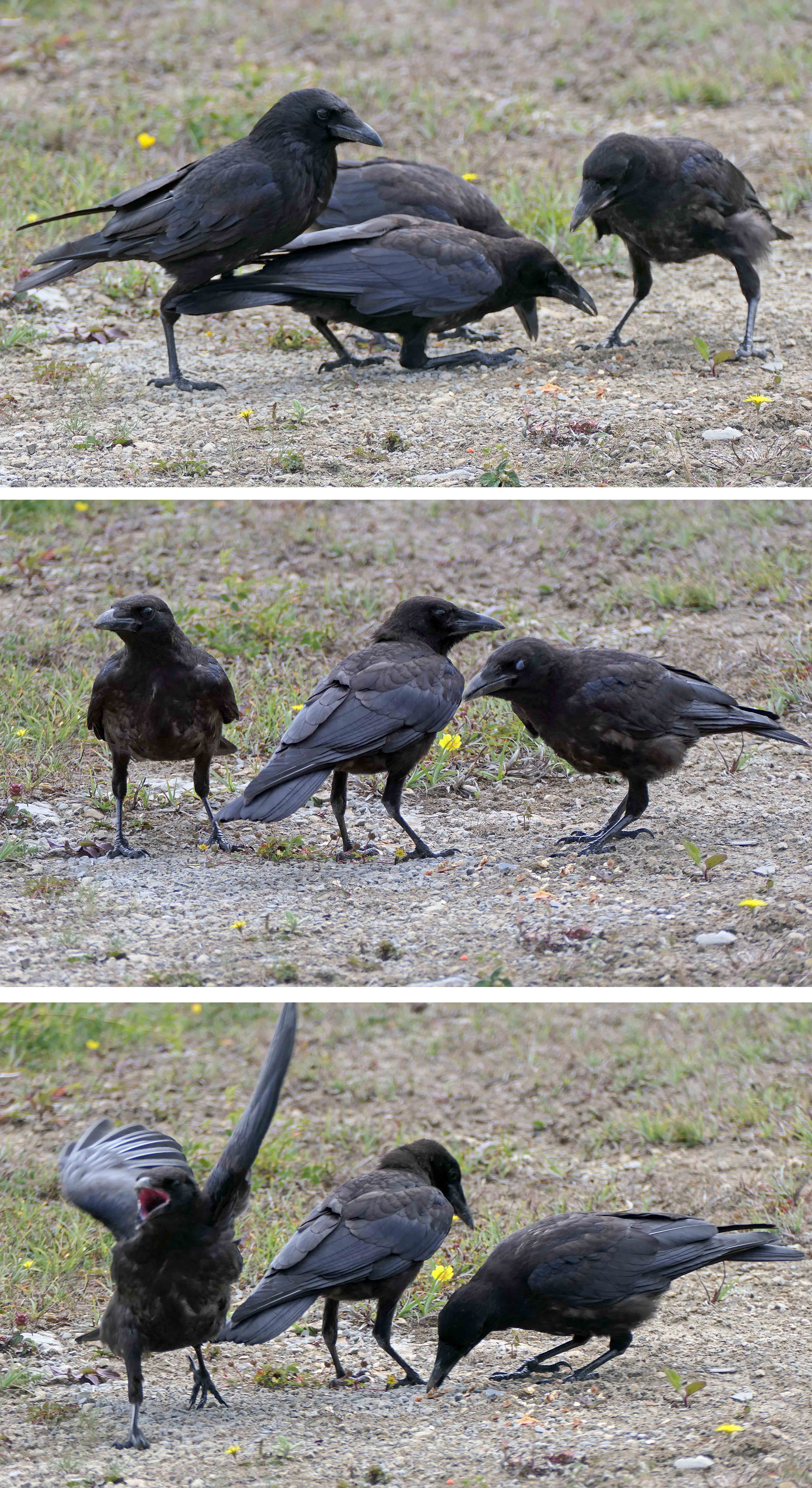
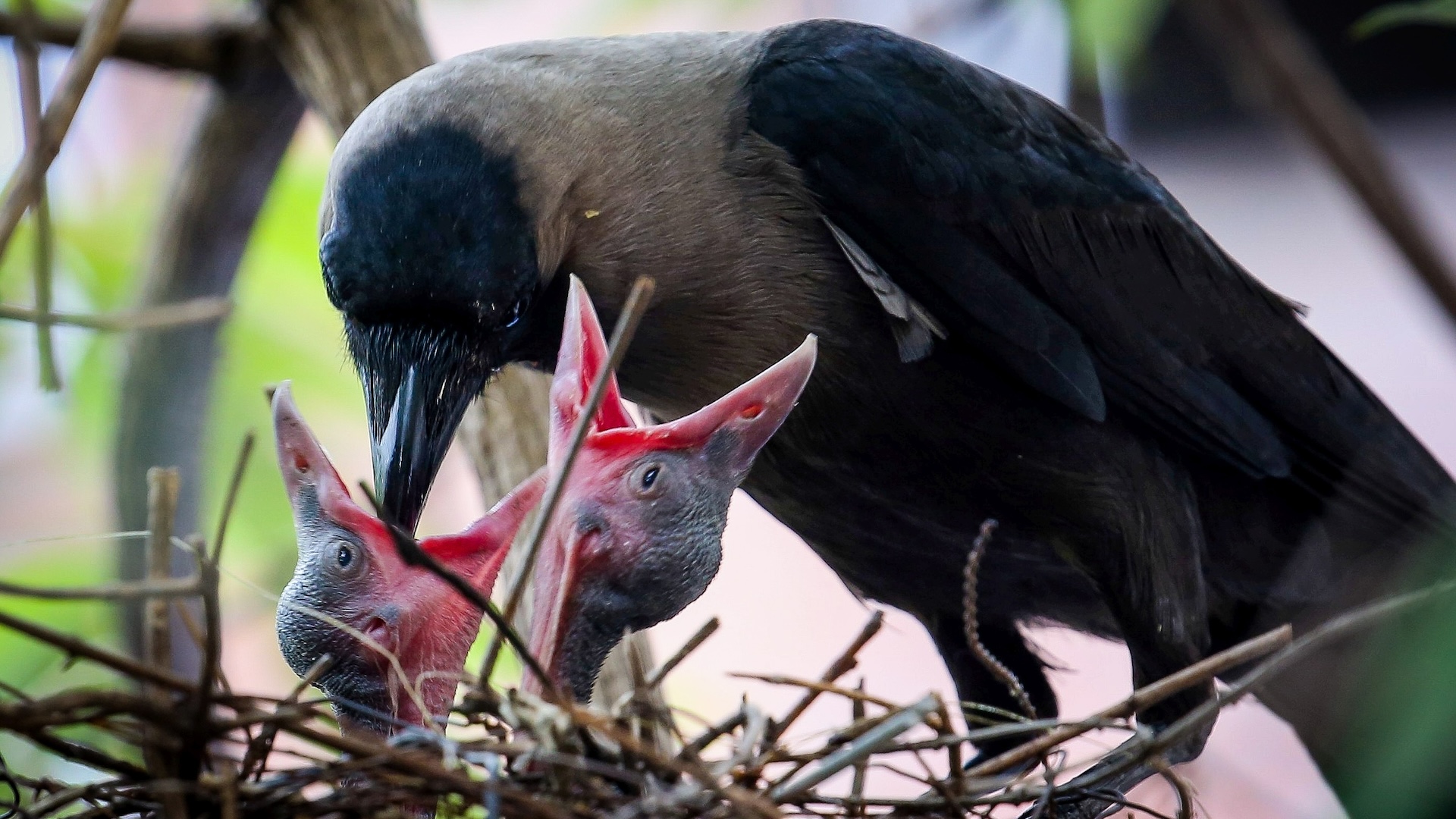
American crows often live in family groups in which young birds may remain with their parents and help raise later broods. These social ties can support learning and may help birds find food or respond to threats.
Outside the breeding season, crows may also join larger flocks and communal roosts. Seeing dozens or hundreds of crows together does not mean they are all one family. A large gathering can bring birds together from different territories.
Where Do Crows Live and What Do They Eat?
American crows live in a wide range of habitats across much of the United States. They use open woodlands, farm fields, lawns, parks, coastal areas, and city neighborhoods. Their ability to use both natural and human-altered habitats helps explain why people see them so often.
Crows are omnivores, which means they eat both plant and animal matter. Their food can include insects, earthworms, seeds, fruit, small animals, eggs, carrion, and food waste. What a crow eats depends on the season, local habitat, and what is available.
Source: www.youtube.com
Natural food
Insects, worms, seeds, fruit, nuts, and small animals.
Other food sources
Carrion and human food waste may be eaten when available.
Useful habitat
Trees for nesting and roosting, along with open areas for feeding.
Seasonal changes
Food choices can shift as insects, fruit, seeds, and other resources change through the year.
Do Crows Help the Environment?
Crows can play several roles in local ecosystems. They eat insects and other small animals, consume fruit and seeds, and feed on some carrion. By using different food sources, they take part in food webs that connect plants, invertebrates, and larger animals.
Their effects depend on the setting. Crows may eat eggs or young birds, but they also consume many other foods. It would be misleading to describe them as only helpful or only harmful. Their role changes with habitat, food supply, and the species around them.
Should You Feed Crows in Your Yard?
You do not need to feed crows to enjoy watching them. If you choose to offer food, first check local rules and keep the area clean. Avoid salty snacks, moldy food, and heavily processed leftovers, and do not leave food where it attracts rodents or creates conflict with neighbors.
Never try to hand-feed a wild crow or encourage it to approach traffic. Keep a safe distance, avoid disturbing nests, and stop feeding if the birds begin to gather in numbers that cause problems. Watching natural behavior is often the safest way to learn about these intelligent birds.
Are Crows Songbirds or Birds of Prey?
Crows are passerines, a group commonly known as perching birds and often associated with songbirds. They are not classified as birds of prey. Hawks, eagles, falcons, and owls belong to different taxonomic groups, even though crows may hunt small animals or eat carrion.
The word songbird can be used in both everyday and scientific contexts. In formal classification, Passeriformes is the order that includes crows and many familiar backyard birds. Crows do not sing like many warblers or thrushes, but they are part of this large order.
Source: animalcorner.org
Crows
Members of Corvidae within the order Passeriformes.
Hawks and eagles
Birds of prey in the order Accipitriformes.
Falcons
Birds of prey in the order Falconiformes.
Owls
Birds in the order Strigiformes.
Why Do Crows Sometimes Chase Hawks?
Crows may mob hawks, owls, and other animals that they view as threats. Mobbing involves calling, approaching, or following a potential predator to drive it away or alert nearby birds. The behavior can be especially noticeable when a predator is near a nest.
This does not make crows birds of prey. A bird’s taxonomic family is based on evolutionary relationships, not on whether it chases another bird or eats animal food. Crows remain corvids even when they defend themselves against a hawk.
How to Identify a Crow Family Member in the United States
To identify a crow or another corvid, start with its size and shape, then check its tail, bill, voice, and behavior. This approach works better than using color alone. A good field guide or a trusted bird identification resource can help confirm the species.
The region matters too. A bird common in the western United States may be rare or absent in the East. Habitat is useful evidence, but it should support physical and vocal clues rather than replace them.
Source: sport.dancingdogsaloon.co.uk
Step 1: Estimate size
Compare the bird with familiar species nearby. Ravens are generally larger than American crows.
Step 2: Check the shape
Look at bill thickness, head shape, wing shape, and tail outline.
Step 3: Listen to the call
A familiar caw often points toward a crow, while a deep croak may suggest a raven, but calls vary.
Step 4: Watch the flight
Notice whether the bird flaps steadily or glides and how its tail looks while airborne.
Step 5: Check location
Use a regional field guide to see which crow and raven species occur in your area.
Which Common Birds Are Mistaken for Crows?
Common grackles, European starlings, and some blackbird species can be mistaken for crows at a distance. Grackles often have longer tails and a different body shape. European starlings are much smaller and may show speckled feathers, especially in some seasons.
A fish crow can be harder to separate from an American crow because the two are closely related and look similar. Their calls can help, but a clear identification may require listening closely and checking the bird’s location and other features.
What Is the Best Way to Learn Corvid Identification?
Practice with birds you can observe clearly and safely. Record the location, habitat, approximate size, call, and any distinctive marks. If you take photographs, include the whole bird and, when possible, capture its tail and bill shape.
Compare your observations with a regional guide from a trusted source such as the Cornell Lab of Ornithology or a local wildlife agency. If the evidence does not support a firm identification, keep the record at a broader level rather than guessing.
Common Misconceptions About the Crow Family
Several common beliefs about crows come from their familiar appearance and behavior. Some are partly true, while others mix up common names with scientific groups. Understanding the difference makes bird identification clearer and helps prevent mistaken claims about these animals.
Myth: All black birds are crows
Many unrelated birds have black feathers. Use shape, size, calls, and behavior to identify them.
Myth: Crows and ravens are the same species
They are close relatives, but the American crow and common raven are distinct species.
Myth: Every corvid belongs to Corvus
Corvidae is the family, while Corvus is just one genus within it.
Myth: Crows are birds of prey
Crows may eat small animals, but their taxonomic order is Passeriformes.
Myth: Every crow has the same behavior
Behavior varies by species, age, season, local food supply, and individual experience.
Does the Crow Family Include Only Birds With Black Feathers?
No. The family includes birds with a range of colors and patterns. Blue jays have blue and white markings, and many magpies show contrasting black and white plumage. Their colors do not make them less closely related to crows.
The family’s identity comes from evolutionary relationships, not a single feather color. This is why taxonomic classification is more reliable than judging a bird by appearance alone.
Does Being in the Same Family Mean Birds Act Alike?
No. Related species may share traits but still differ in diet, habitat, social life, and behavior. An American crow living near a city may use different food sources from a Clark’s nutcracker in a mountain forest.
Shared family membership gives scientists a starting point for understanding relationships. It does not mean that a behavior documented in one species must occur in every other corvid.
A Quick Guide to Crow Family Classification
The table below summarizes the main classification terms and the role each one plays. It is especially useful if you are comparing a field guide, wildlife website, or scientific article that uses several levels of taxonomy.
Family
Corvidae includes crows, ravens, jays, magpies, nutcrackers, and related birds.
Genus
Corvus includes the American crow, common raven, and other closely related species.
Species
Corvus brachyrhynchos is the American crow, while Corvus corax is the common raven.
Which Sources Can Help Confirm the Classification?
The Cornell Lab of Ornithology’s All About Birds profiles list the family and order for American crows and common ravens. The Integrated Taxonomic Information System also provides taxonomic records for Corvidae and Corvus. These sources support the distinction between the family, genus, and species.
For a bird you see outdoors, a field guide or a regional wildlife agency can help with identification. Taxonomic databases are useful for formal names, while field guides are often more practical for comparing visible features and calls.
Cornell Lab of Ornithology
Useful for species profiles, identification clues, habitat, and behavior.
Integrated Taxonomic Information System
Useful for checking scientific names and formal taxonomic ranks.
State wildlife agencies
Useful for local species information and regional guidance.
Frequently Asked Questions
Q
What family do crows belong to?
Crows belong to the Corvidae family, commonly known as the crow family. It includes ravens, jays, magpies, nutcrackers, and other related birds. The American crow belongs to the genus Corvus and has the scientific name Corvus brachyrhynchos.
Q
Are crows and ravens in the same family?
Yes. Crows and ravens belong to Corvidae, and many familiar species from both groups are in the genus Corvus. They are not all the same species, though. The American crow and common raven differ in typical size, bill shape, tail shape, and calls.
Q
Are blue jays part of the crow family?
Yes. Blue jays belong to Corvidae, just like crows. Their scientific name is Cyanocitta cristata, which places them in a different genus from the American crow. Their blue, white, and black feathers make them easy to distinguish from most crows.
Q
Are crows songbirds?
Crows belong to Passeriformes, the order of perching birds commonly associated with songbirds. They do not have the same musical calls as many familiar songbirds, but their taxonomic classification places them in this order. They are not birds of prey.
Q
What is the scientific name of the American crow?
The American crow’s scientific name is Corvus brachyrhynchos. Corvus is its genus, and brachyrhynchos identifies the species. The American crow is widespread across much of the United States and can live in woodlands, farms, parks, and urban areas.
Q
Are magpies related to crows?
Yes. Magpies belong to Corvidae, the same family as crows and ravens. The black-billed magpie is a familiar species in western North America. It differs from a typical American crow in its long tail and contrasting black-and-white plumage.
Q
Are all members of the crow family black?
No. Some corvids are mostly black, but others have blue, gray, brown, or black-and-white plumage. Blue jays and black-billed magpies are clear examples. Family membership reflects shared ancestry, not a requirement to have the same color.
✦ Wrapping Up
Conclusion
Crows belong to the Corvidae family, a group that includes ravens, jays, magpies, nutcrackers, and other related birds. The American crow is Corvus brachyrhynchos, a species in the genus Corvus and the order Passeriformes.
This classification explains why crows share traits with birds that may look quite different. Many corvids learn from experience, adapt to changing habitats, and use a wide range of food sources. Still, each species has its own features and habits, so shared ancestry should not be mistaken for identical behavior.
The next time you see a crow in an American park, field, or neighborhood, look beyond its black feathers. Notice its bill, tail, flight, and call. Those details can help you identify the bird and see how it fits into the wider corvid family.
💡 Key Takeaway
Remember the key distinction: Corvidae is the family, Corvus is the genus, and Corvus brachyrhynchos is the American crow. Use a trusted regional field guide to compare calls, size, shape, and habitat when identifying a bird.
Animal Facts Zone is a family-friendly online resource built for curious minds, students, and wildlife enthusiasts. Founded and edited by Sourov Biswas, the platform breaks down fascinating animal behaviors, species identification guides, and nature trivia into clear, easy-to-read articles.
From backyard butterflies and fireflies to reptiles, birds, and wild matchups, every guide is crafted to answer real questions about the natural world and inspire everyday wildlife appreciation. Whether you are a student researching a species or a nature lover exploring your own backyard, Animal Facts Zone helps you learn something new about the animal kingdom in minutes.
1 thought on “What Family Do Crows Belong To?: Bird Guide”






1 thought on “What Family Do Crows Belong To?: Bird Guide”