The queen butterfly, Danaus gilippus, is a real butterfly species found in parts of the United States and other warm regions of the Americas. It is often confused with the monarch because both have orange wings with dark veins and white spots.
If you enjoy watching butterflies in an American garden, you may have seen a butterfly that looks much like a monarch but seems a little darker or smaller. It could be a queen butterfly. The name sounds royal, but it refers to a species, not a female monarch or a ruler among butterflies.
The queen butterfly belongs to the same genus as the monarch. It feeds on nectar as an adult, and its caterpillars use milkweed plants as food. In warm parts of the United States, especially Florida and Texas, you may spot queens in gardens, open fields, roadsides, and other sunny places where suitable plants grow.
There is no single butterfly that rules every other species. People sometimes use names such as queen, king, or emperor in popular descriptions, but these names do not describe a formal rank in nature. The queen butterfly is worth knowing because of its striking pattern, its life cycle, and its close resemblance to the monarch.
Source: qaqooking.wiki
What Is the Queen Butterfly?
The queen butterfly is a species known by the scientific name Danaus gilippus. It belongs to the family Nymphalidae, a large group commonly called brush-footed butterflies. The species occurs across parts of the Americas, including warm areas of the southern United States.
The queen is related to the monarch butterfly, Danaus plexippus. Both belong to the genus Danaus, which helps explain why their colors and body patterns look so much alike. They are separate species, though, and each has its own range, habits, and identifying details.
The word queen can make it sound as if this butterfly holds a special place above all others. In biology, it does not. The name is simply the accepted common name for this species, much as monarch is the common name for another butterfly.
Source: butterfliesathome.com
Common name
Queen butterfly.
Scientific name
Danaus gilippus.
Family
Nymphalidae, the brush-footed butterflies.
Close relative
The monarch butterfly, Danaus plexippus.
Is the Queen Butterfly a Female Monarch?
No. A queen butterfly is not a female monarch. The two are different species, and both species have males and females. A female monarch is still a monarch, while a queen butterfly is a queen regardless of its sex.
This distinction matters when identifying a butterfly. Do not use the name queen to describe every female butterfly with orange wings. Look at the whole wing pattern and other physical features before making an identification.
How to Identify a Queen Butterfly
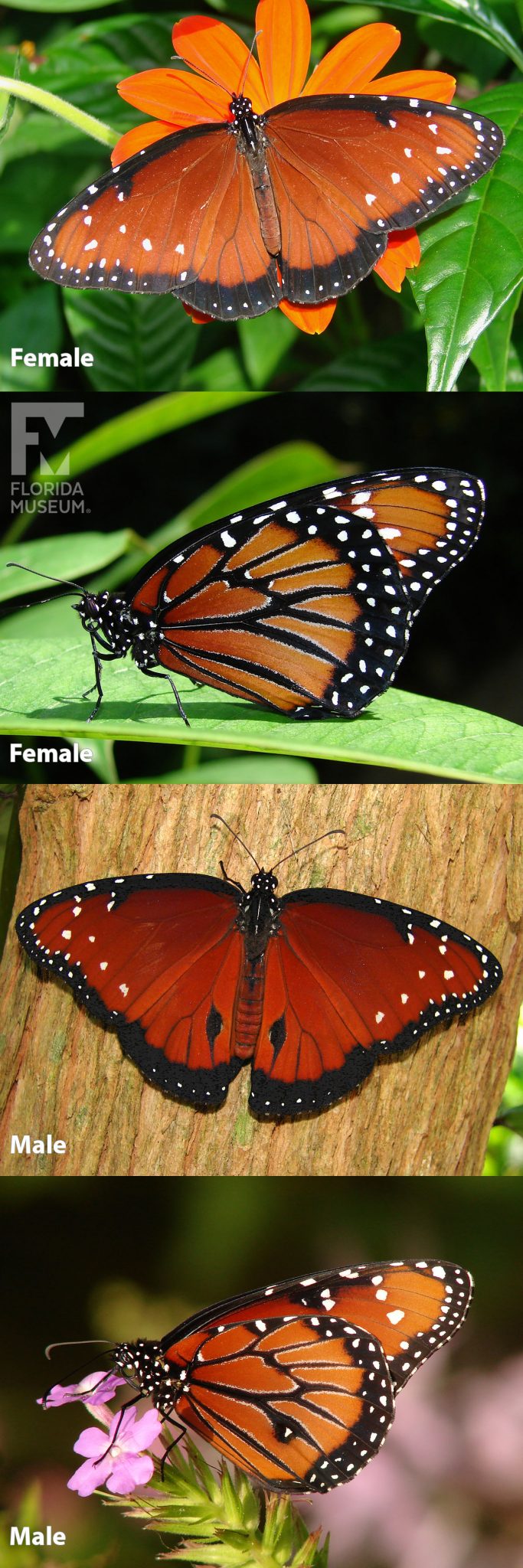
The queen butterfly usually has orange to brownish-orange wings marked with black veins and dark borders. Small white spots appear along the dark outer edges. Its overall look is similar to a monarch, but the queen often appears darker and less brightly orange.
A butterfly’s color can change with lighting, wing wear, and the angle from which you view it. A faded specimen may look less vivid than a fresh one. For that reason, use several features together rather than relying on color alone.
If you see an orange butterfly resting on a flower, watch it without touching it. When the wings open, note the veins, the outer borders, and the spots. A photograph taken from a respectful distance can help you compare those details with a reliable field guide.
Source: stockcake.com
Wing color
Look for orange or brownish-orange wings with dark markings.
Dark veins
The veins stand out against the lighter wing surface.
White spots
Small pale spots usually line the dark wing borders.
Overall appearance
The queen often looks darker and more muted than a typical monarch.
Queen Butterfly vs. Monarch Butterfly
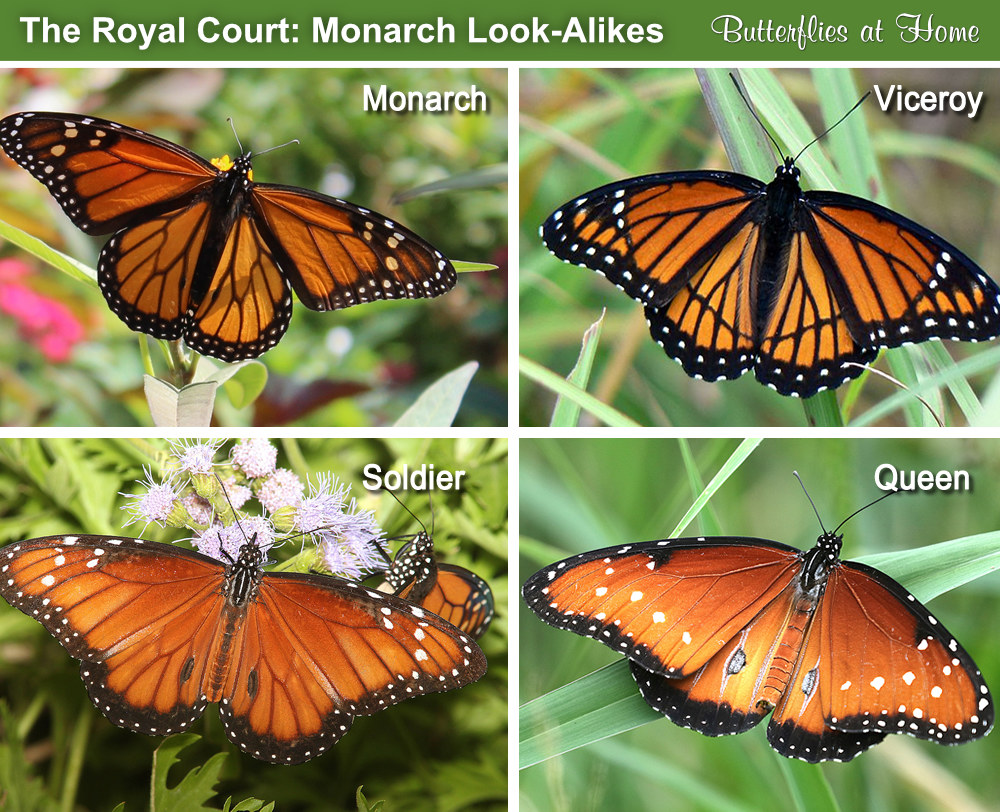
The monarch is usually the first species people think of when they see a large orange butterfly. Its orange wings, black veins, and black borders are familiar across much of North America. The queen shares this basic pattern, so a quick glance may not be enough to tell them apart.
Queens often have a deeper, brownish tone and can show more extensive dark areas on the wings. Monarchs often look brighter orange, but this is only a general clue. Wing wear, light, and individual variation can make the distinction less clear.
Range also helps. Queens are common in warm parts of the southern United States, while monarchs occur across a much broader area of the country during the year. Still, location alone cannot confirm an identification because both species can occur in some of the same places.
Queen
Often has darker orange-brown wings and prominent dark areas.
Monarch
Often has brighter orange wings with clear black veins and borders.
Best approach
Compare several markings and consider the location rather than trusting one color clue.
Can You Identify a Queen Butterfly by Size?
Size can support an identification, but it is not enough on its own. Queen butterflies and monarchs overlap in size, and a butterfly may look smaller when its wings are partly closed or when it is far away.
A photo that shows the entire butterfly, including the wings and body, is more useful than a close crop of one wing. If the markings remain unclear, record the species as a possible queen rather than treating the identification as certain.
Where Does the Queen Butterfly Live in the United States?
In the United States, queen butterflies are most closely associated with warm southern areas, especially Florida and southern Texas. They also occur in other warm parts of the Americas, with their wider range extending into the Caribbean, Central America, and South America.
Queens favor open, sunny places where nectar flowers and suitable caterpillar host plants grow. You may encounter them in gardens, parks, grasslands, roadsides, and open scrub. They can visit planted flower beds as readily as wild blooms when the conditions suit them.
Their presence depends on local weather, available plants, and the season. A warm garden with flowers may attract adults, but a nectar patch alone will not support a breeding population if suitable host plants are absent. The best way to improve a garden for queens is to provide both nectar sources and appropriate host plants.
Source: stockcake.com
Florida
Warm conditions and host plants can support queen butterflies in many areas.
Southern Texas
The warm climate and open habitats can provide suitable feeding and breeding areas.
Other locations
Queens may occur in other warm regions, but sightings depend on local conditions and range.
What Habitats Should You Look For?
Search sunny areas with flowering plants and milkweed relatives. Queens may visit gardens, roadsides, open fields, and other places where nectar and host plants grow together. A quiet walk on a warm day can reveal more than a quick search from a window.
Avoid stepping into tall vegetation or reaching into plants to find a caterpillar. Take photos from the path and leave the plants intact. This protects both the butterfly and the small creatures that may be hidden among the leaves.
What Does the Queen Butterfly Eat?
Adult queen butterflies drink nectar from flowers. Their long, tube-like mouthparts allow them to reach liquid food inside many blooms. Flower nectar supplies energy for flight, feeding, finding mates, and other daily activity.
Caterpillars have a different diet. Queen caterpillars feed on milkweed and related plants in the dogbane family. The exact host plant used depends on the region and the plants available there.
This change in diet is part of the butterfly’s life cycle. A flowering garden can provide food for adults, while host plants allow females to lay eggs where young caterpillars can feed. A garden with both types of plants can serve more of the butterfly’s needs than one with flowers alone.
Adult food
Nectar from flowering plants.
Caterpillar food
Milkweed and certain related host plants.
Garden tip
Grow a range of nectar flowers and regionally suitable host plants without using harmful pesticides.
How to Make a Garden More Welcoming
Choose flowers that bloom at different times so nectar is available across the growing season. Add suitable host plants for your region, and leave some areas of the garden undisturbed. A mix of plants creates more choices for butterflies and other pollinators.
Avoid spraying insecticides on flowers or host plants where butterflies feed and lay eggs. Products that kill pests may also harm caterpillars and other helpful insects. If a plant has a problem, identify the cause first and use the least harmful suitable response.
Plant for nectar
Choose several flowering species suited to local soil, weather, and sunlight.
Include host plants
Use locally appropriate milkweed relatives rather than assuming every plant sold as milkweed is suitable.
Reduce chemical exposure
Avoid broad pesticide use around flowers and caterpillar host plants.
The Queen Butterfly Life Cycle
Like other butterflies, the queen passes through four life stages: egg, caterpillar, pupa, and adult. This process is called complete metamorphosis. Each stage has a different role, from growth to the formation of the winged adult.
The female lays eggs on suitable host plants. After hatching, the caterpillar feeds and grows, shedding its skin as it gets larger. When it is ready, it forms a pupa, also called a chrysalis, where its body changes into the adult form.
An adult later emerges with soft, folded wings. It needs time for the wings to expand and dry before it can fly normally. If you find a newly emerged butterfly, give it space and do not try to pull it from the chrysalis or force its wings open.
Egg
The beginning of the life cycle, usually placed on a suitable host plant.
Caterpillar
The feeding and growth stage.
Pupa
The stage when the caterpillar changes into an adult butterfly.
Adult
The winged stage that feeds on nectar, mates, and lays eggs.
Are Queen Caterpillars the Same as Monarch Caterpillars?
Queen and monarch caterpillars can look alike because the species are related. Both may show contrasting black, white, and yellow bands, which can make a quick identification difficult. The exact pattern and the host plant can offer useful clues, but neither should be treated as perfect proof by itself.
If you find a striped caterpillar, photograph it and the plant on which it is feeding. Do not move it to a different plant just because the leaves look similar. A caterpillar may depend on a specific host, and moving it can reduce its chance of survival.
Why Do Queen and Monarch Butterflies Look Alike?
Queen and monarch butterflies share a similar orange, black, and white pattern because they are close relatives. Their appearance also warns potential predators that they may be unpleasant or harmful to eat. This warning pattern is called aposematic coloration.
The caterpillars feed on milkweed relatives that can contain defensive chemicals. Some of these compounds can remain in the insects as they develop, making them less appealing to certain predators. The level of protection can vary with the host plant and the insect’s biology, so the pattern is not a promise that every individual is equally defended.
The resemblance between related species is one reason careful identification matters. A butterfly’s color can tell you something about its relationships and defenses, but it does not replace close observation. When the view is poor, it is better to record an uncertain identification than to guess.
Shared ancestry
Both species belong to the genus Danaus.
Warning colors
Orange and dark markings can warn predators about chemical defenses.
Careful identification
Similar patterns make it useful to check wing details, host plants, and location.
Is the Queen Butterfly Rare or Endangered?
The queen butterfly is not generally regarded as a rare species throughout its overall range. It can be locally common in suitable warm habitats, especially where host plants and nectar sources are available. However, the chance of seeing one varies from place to place and across the seasons.
A butterfly may be uncommon in one neighborhood but easy to find farther south. Local weather, habitat loss, plant removal, pesticide use, and changes in land management can all affect where butterflies are seen. A lack of sightings in one garden does not prove that a species is endangered.
Do not assume that every queen butterfly population is secure simply because the species has a broad range. Local populations can face local threats. If you want to help, protect flowering habitat, preserve suitable host plants, and avoid unnecessary pesticide use.
Range matters
A species can be common in one region and uncommon in another.
Habitat matters
Host plants, nectar sources, and safe places to rest support local populations.
Avoid broad claims
Use current conservation assessments before calling a species endangered or secure in a specific area.
Does the Queen Butterfly Have a Special Meaning?
In stories, art, and personal reflection, butterflies often stand for change, hope, freedom, or new beginnings. The word queen may add ideas of grace, beauty, or strength. These are cultural and personal meanings, not scientific traits of Danaus gilippus.
A person who sees a queen butterfly during a difficult time may find the encounter meaningful. That feeling can be real and valuable without proving that the butterfly carries a supernatural message. The meaning belongs to the person’s experience, beliefs, and cultural setting.
It helps to keep symbolism separate from natural history. Science can describe the butterfly’s body, life cycle, range, and behavior. Art and personal belief can explore what its appearance means to someone. Both can be discussed clearly without confusing one kind of claim with the other.
Nature
The queen butterfly is a distinct species with recognizable biological traits.
Symbolism
Meanings such as transformation or grace depend on culture and personal belief.
A balanced view
Enjoy the symbolism while keeping scientific claims tied to evidence.
Common Mistakes When Identifying a Queen Butterfly
The most common mistake is calling every orange butterfly a monarch or a queen. Several butterflies share orange wings and dark markings, including the viceroy and soldier in parts of North America. Their patterns overlap enough that a quick glance may lead to an error.
Another mistake is relying only on location. A butterfly seen in Florida may be more likely to be a queen than one seen far north, but location cannot replace physical evidence. Migrating or wandering individuals, seasonal changes, and local range overlap can complicate the picture.
It is also easy to confuse a common name with a scientific category. Queen does not mean the female of another species, and it does not mean that this butterfly is the most powerful or important one. Use the name as a species label, then check the details.
Mistake
Identifying a species from orange color alone.
Better method
Compare the full wing pattern and use a trusted regional guide.
Mistake
Assuming queen means a female monarch.
Better method
Remember that the queen butterfly and monarch are separate species, each with males and females.
Frequently Asked Questions
Q
Who is called the queen of butterflies?
The queen butterfly, Danaus gilippus, is a species commonly known by that name. It has orange-brown wings, dark veins, and white spots. There is no official biological title for the ruler of all butterfly species.
Q
Is the queen butterfly the same as a monarch?
No. The queen and monarch are separate but closely related species in the genus Danaus. Their wing patterns look alike, but queens often have darker, more brownish-orange wings. Check several markings before identifying one.
Q
Where can I see queen butterflies in the USA?
Queen butterflies are most associated with warm parts of the southern United States, especially Florida and southern Texas. Look for them in sunny gardens, open fields, and other places with nectar flowers and suitable host plants.
Q
What plants attract queen butterflies?
Adult queens visit nectar-producing flowers, while their caterpillars feed on milkweed and related host plants. A garden with a variety of local flowers and suitable host plants can support more stages of the life cycle. Avoid harmful pesticide use around these plants.
Q
Is the queen butterfly endangered?
The species is not generally considered rare throughout its full range, but local numbers can differ. Habitat loss, host-plant removal, and pesticide exposure may affect local populations. Check a current regional conservation source for its status in a particular place.
Q
Why does the queen butterfly look like a monarch?
The two species are close relatives and share a similar orange-and-black pattern. Their warning colors may help discourage predators, while chemical defenses can be linked to compounds from their host plants. The resemblance does not make them the same species.
Q
Does seeing a queen butterfly mean good luck?
Some people view butterflies as symbols of change, hope, or good fortune. These meanings depend on personal beliefs and cultural traditions. There is no scientific evidence that seeing a queen butterfly predicts a particular event.
✦ Wrapping Up
Conclusion
The queen butterfly is Danaus gilippus, a real species known for its orange-brown wings, dark veins, and white spots. It is closely related to the monarch and lives in warm parts of the Americas, including the southern United States. Despite its royal name, it does not rule other butterflies, and it is not simply a female monarch.
The best way to recognize a queen is to look at its full wing pattern, consider the location, and compare it with a reliable field guide. If you want to welcome these butterflies into your yard, grow nectar flowers and suitable host plants, and avoid pesticides that can harm caterpillars and adults.
💡 Key Takeaway
Next time you spot an orange butterfly, take a clear photo of its open wings and note where you saw it. Compare the markings with a regional butterfly guide before deciding whether it is a queen, a monarch, or another look-alike.
Animal Facts Zone is a family-friendly online resource built for curious minds, students, and wildlife enthusiasts. Founded and edited by Sourov Biswas, the platform breaks down fascinating animal behaviors, species identification guides, and nature trivia into clear, easy-to-read articles.
From backyard butterflies and fireflies to reptiles, birds, and wild matchups, every guide is crafted to answer real questions about the natural world and inspire everyday wildlife appreciation. Whether you are a student researching a species or a nature lover exploring your own backyard, Animal Facts Zone helps you learn something new about the animal kingdom in minutes.
2 thoughts on “Who Is the Queen of Butterfly?: Meet the Queen Butterfly”




2 thoughts on “Who Is the Queen of Butterfly?: Meet the Queen Butterfly”