The Miami blue butterfly is one of the rarest butterflies in the United States and is often cited as a leading candidate for the rarest. Its survival depends on a small number of suitable coastal habitats in southern Florida. However, there is no single official ranking that proves it is always the rarest butterfly in the country.
In the United States, a butterfly can be hard to find for many reasons. Some live in only one small area, while others depend on plants that grow in a few special places. When roads, buildings, storms, or invasive species change those places, a butterfly may lose much of its chance to survive.
The Miami blue butterfly, known by the scientific name Cyclargus thomasi bethunebakeri, is a striking example. This small blue butterfly is native to southern Florida and has faced a severe loss of habitat. Its decline has made it a major concern for wildlife conservation in the United States.
Still, rarity is not as simple as counting butterflies. A species may have very few adults in one year, yet its numbers can change in the next. Another species may live in a larger population but occupy such a small range that a single disaster could threaten its future. The best answer depends on whether rarity means a tiny population, a restricted range, or a high risk of extinction.
For readers in the United States, the Miami blue offers a useful starting point for understanding rare butterflies. Its story also shows why protecting native plants, coastal habitat, and small wildlife refuges can matter far beyond the animals that most people notice.
Source: a-z-animals.com
Why Is the Miami Blue Butterfly Considered So Rare?
The Miami blue butterfly is considered exceptionally rare because it has a very restricted range and has suffered major population declines. It belongs to a group of small blue butterflies and is associated with warm coastal environments in southern Florida. Its future depends on suitable habitat, host plants, and conditions that allow its young to develop.
For many years, habitat loss and changes to Florida’s coastline placed pressure on the butterfly. Development can remove native vegetation, break a large habitat into smaller patches, and leave a population isolated. When a butterfly has few places left to live, even a local disturbance can have serious effects.
The Miami blue is also vulnerable because small populations have less protection against chance events. A hurricane, a period of unsuitable weather, or the loss of a key patch of host plants may affect a large share of the remaining population. A species spread across many regions may recover from a local setback more easily.
Its story is a reminder that a butterfly does not need to be large or colorful to face a major conservation challenge. The Miami blue is small, and its subtle blue wings may be easy to overlook. Yet its limited range makes its survival important to Florida’s natural heritage.
Source: a-z-animals.com
A small geographic range
The butterfly is associated with a limited part of southern Florida, so suitable habitat is not available everywhere in the state.
Dependence on host plants
Butterfly caterpillars need particular food plants. Without the right plants, adults may visit an area but the next generation may not survive.
Vulnerability to sudden events
Storms, habitat disturbance, and other local changes can have a large impact when populations are already small.
What Does the Name Miami Blue Mean?
Miami blue is the common name for a butterfly subspecies native to Florida. Its scientific name, Cyclargus thomasi bethunebakeri, helps distinguish it from related butterflies. The name reflects its association with the Miami region, although its conservation story extends to other parts of southern Florida.
The name can cause confusion because it sounds like the butterfly lives only within the city of Miami. In practice, its natural range and conservation history concern coastal areas and nearby habitats beyond the city’s urban center.
Scientific identity
The scientific name identifies the Miami blue within butterfly classification and separates it from other small blue butterflies.
Not every blue butterfly is a Miami blue
Several American butterfly species have blue wings. Reliable identification requires attention to markings, size, location, and expert guidance.
Where Does the Miami Blue Butterfly Live?
The Miami blue is associated with coastal habitats in southern Florida, including natural areas with the plants and conditions it needs to complete its life cycle. The region’s warm climate supports many butterfly species, but warm weather alone cannot replace the right habitat.
Florida’s coastal ecosystems include beach edges, scrub, coastal hammocks, and other areas with native vegetation. The precise habitat used by a rare butterfly can be quite narrow within this broader landscape. A patch may look healthy to a person yet lack the specific plants that a butterfly needs to lay eggs and feed its caterpillars.
The butterfly’s history also shows why a map of its former range is not the same as a map of its current distribution. A species may once have occurred across several areas but later disappear from many of them. Conservation workers must establish where populations remain and whether the habitat can support them over time.
For this reason, it is not wise to treat a reported sighting as proof that a stable population exists nearby. A single adult may pass through an area, and records may reflect a different period or a managed conservation effort. Current distribution information should come from recent wildlife agency reports or verified conservation surveys.
Source: animalko.com
Coastal habitat
Natural coastal vegetation can provide shelter, nectar sources, and plants for the butterfly’s young.
Native vegetation
The presence of suitable native plants can matter more than the size or appearance of a green space.
Connected habitat
Patches that remain connected may give butterflies better chances to move between suitable areas, depending on the species and landscape.
Can You See a Miami Blue in the Wild?
Seeing a Miami blue in the wild is difficult because the butterfly is rare and its distribution is limited. It is not a common visitor to suburban gardens, roadside flower beds, or ordinary butterfly feeders. Even people who live in southern Florida may never see one.
Do not enter closed conservation areas or search through fragile vegetation in hopes of finding one. Restricted sites may be managed to protect rare wildlife, and trampling plants can damage the habitat that conservation work is meant to preserve. If you want to learn about the butterfly, look for public programs, approved viewing areas, or educational resources from Florida wildlife organizations.
Use verified information
Check recent information from wildlife agencies or conservation groups before visiting a site.
Observe without disturbing
Keep to marked paths and never capture, handle, or remove a butterfly from a protected area.
What Makes a Butterfly the Rarest in America?
There is no single measure that settles which butterfly is the rarest in the United States. Biologists consider factors such as population size, geographic range, habitat quality, and the likelihood that a species will become extinct. Each measure describes a different part of the problem.
Population size refers to how many individuals live in a population or across the species’ range. Geographic range describes the area where the species occurs. A butterfly may have a relatively large local population but still be at risk because it lives in only one small region.
Conservation status adds another layer. A species may be listed as endangered under federal law, considered threatened, or given another status under a state or scientific assessment. These categories have specific meanings, and they should not be treated as a simple ranking from rarest to most common.
Counts can also change between surveys. Butterfly numbers often vary with weather, seasonal timing, plant growth, and other conditions. A low count in one survey may reflect a real decline, a poor flight season, or the fact that observers missed adults that were present. Reliable assessments use suitable survey methods and consider more than one observation whenever possible.
Source: shutterstock.com
Population size
A very small population can face a higher risk from chance events, disease, and loss of genetic diversity.
Range size
A species that lives in one county, island, or habitat patch may be at risk even when it is locally easy to see.
Habitat quality
The amount of suitable habitat matters more than the total amount of land on a map.
Extinction risk
A formal conservation assessment weighs multiple factors rather than relying on one count or one sighting.
Does Endangered Mean Rarest?
No. Endangered is a conservation category, not a universal label for the species with the fewest individuals. A butterfly may be endangered because its habitat is shrinking or its population is expected to decline, even if another species has fewer known individuals.
Likewise, a species can be extremely rare without appearing at the top of every endangered-species list. Legal protection, scientific assessments, and population surveys may use different criteria and may be updated at different times. When comparing rare butterflies, always ask which measure and date are being used.
Legal status
This describes a species’ status under a particular law and jurisdiction.
Scientific assessment
This evaluates extinction risk using stated criteria and available evidence.
Observed abundance
This describes how many individuals were recorded under particular survey conditions.
Other Rare Butterflies in the United States
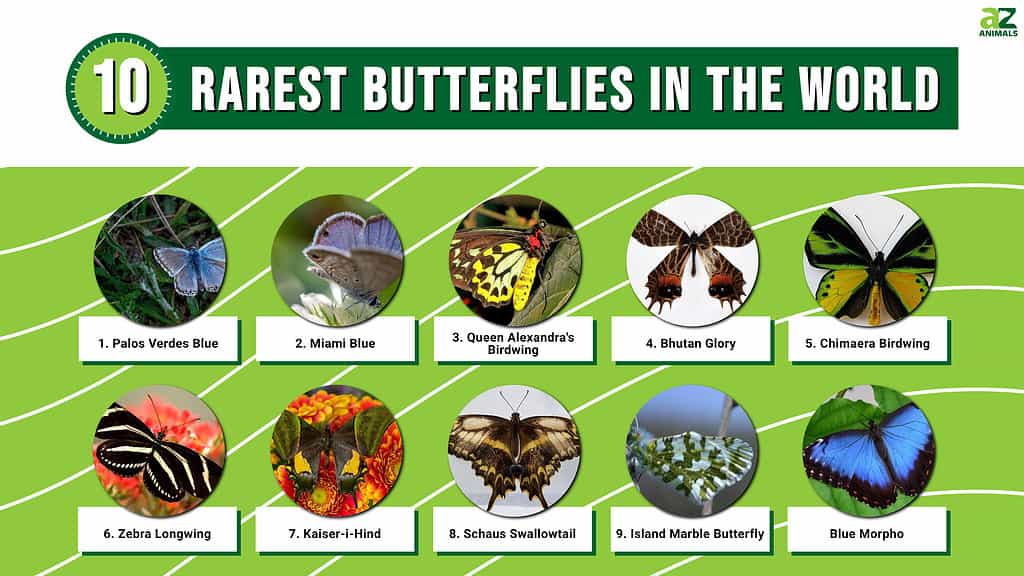
The Miami blue is not the only American butterfly with a fragile future. Several other species have very limited ranges or depend on habitats that have been reduced or changed by human activity. Comparing them helps explain why there is no simple, permanent winner in a contest for the rarest butterfly.
Some rare butterflies live in Florida’s coastal or forest habitats, while others depend on wetlands, grasslands, or particular western ecosystems. Their needs differ, so a conservation plan that helps one species may not work for another. Protecting the right plants and restoring the right landscape are central to each effort.
The examples below are known for their conservation concerns, restricted ranges, or specialized habitat needs. They should not be read as a strict ranking. Population estimates and legal status can change, and the latest agency assessment should be checked before making claims about which species currently has the smallest population.
Source: news.shreestar.com
Schaus swallowtail
Papilio aristodemus ponceanus is a rare Florida butterfly associated with subtropical hardwood hammock habitat. Habitat loss and fragmentation have played a major role in its conservation history.
Saint Francis’ satyr
Neonympha mitchellii francisci is a rare butterfly associated with wetland habitat in North Carolina. Its restricted distribution and specialized habitat needs make conservation work especially important.
Oregon silverspot
Speyeria zerene hippolyta is associated with coastal grasslands in the Pacific Northwest. Loss and change of open coastal habitat have contributed to its decline.
Mission blue
Icaricia icarioides missionensis is a rare butterfly associated with specific native plants in parts of the San Francisco Bay region. Habitat change and the loss of suitable host plants have affected its survival.
How These Butterflies Differ From the Miami Blue
The main difference is the habitat each species needs. The Miami blue is linked to southern Florida’s coastal environments, while the Saint Francis’ satyr depends on wetland conditions and the Oregon silverspot uses coastal grassland habitat. Their survival needs cannot be reduced to one general butterfly garden recipe.
These examples also show that a species can be rare in different ways. A butterfly may be limited to a few sites, depend on a host plant that is disappearing, or face a combination of habitat loss and other pressures. The most useful comparison looks at the causes of rarity as well as the number of butterflies remaining.
Different host plants
Caterpillars of different butterfly species often rely on different plants, so planting any flower is not enough.
Different threats
Wetland drainage, coastal development, invasive plants, and changes to grasslands can affect species in different ways.
Why Are Rare Butterflies Disappearing?
Habitat loss is one of the main reasons rare butterflies decline. When natural land is cleared for roads, homes, farms, or other development, butterflies may lose both the plants their caterpillars eat and the flowers adults use for nectar. Small habitat patches can also become separated from one another.
Changes in habitat quality can be just as serious as outright removal. A wetland may remain on a map but lose the conditions needed by a specialized butterfly. A grassland may become overgrown, or invasive plants may replace native species. In such cases, the land is still present, but its value to the butterfly has fallen.
Climate and severe weather can add pressure. A storm may destroy vegetation or affect a small population within a narrow range. Long-term shifts in temperature and rainfall can also change when host plants grow or when adult butterflies emerge. The effects depend on the species and local conditions, so it is not accurate to blame every decline on one cause.
Pesticides may harm butterflies directly or affect the plants and insects they rely on. Broad pesticide use in a garden or landscape can expose non-target insects to chemicals. The risk varies by product, dose, timing, and exposure, but reducing unnecessary pesticide use is a sensible step for people who want to support native wildlife.
Small populations face added biological risks. When only a few butterflies remain, a chance event can remove a large part of the population. Limited movement between habitat patches can also reduce opportunities for individuals to find mates and maintain genetic diversity. These risks can reinforce one another, making recovery harder.
Source: a-z-animals.com
Habitat destruction
Natural areas may be cleared or divided into isolated patches that cannot support a stable population.
Loss of host plants
Without the right food plants, caterpillars cannot complete their development.
Pesticide exposure
Some chemicals can harm butterflies and other insects that are not the intended target.
Severe weather
Storms and unusual weather can damage habitat or affect small, localized populations.
Invasive species
Non-native plants and animals can change habitat conditions and disrupt local ecological relationships.
Why Small Populations Need Extra Care
A large population may lose some individuals and still have many survivors across its range. A tiny population in one isolated place has less room for error. If a storm damages its only suitable habitat or a disease spreads through the group, the loss may be difficult to reverse.
This is why conservation teams may monitor populations, protect host plants, restore habitat, and raise butterflies under carefully managed programs when appropriate. Captive breeding or releases are not simple substitutes for a healthy wild habitat. Any release must follow scientific planning, genetic considerations, and the relevant permits.
Protect the habitat first
A released butterfly still needs suitable food plants, shelter, and conditions for breeding.
Monitor over time
Repeated surveys help conservation workers distinguish a temporary change from a longer decline.
How Scientists Protect the Miami Blue
Conservation efforts for a rare butterfly begin with finding out where it survives and what it needs. Field workers may survey suitable habitat, record adult sightings, examine host plants, and monitor changes over time. Because butterflies are seasonal and can be difficult to detect, a single visit may not provide a complete picture.
Protecting habitat is a key part of the work. Conservation teams and land managers may preserve natural areas, maintain native vegetation, control invasive plants, and reduce damaging disturbance. These actions can improve the chances that butterflies find places to feed, lay eggs, and complete their life cycle.
Some recovery programs may also use captive rearing or managed releases. Such work needs careful oversight because moving insects can introduce disease, disrupt local genetic patterns, or place butterflies in unsuitable habitat. The success of a release depends on more than the number of individuals released; survival and reproduction after release also matter.
Public awareness can support these efforts, especially when people understand why rare species need quiet, protected habitat. Local residents can report observations through approved wildlife programs, support conservation groups, and avoid disturbing sensitive sites. They should not collect specimens or attempt to relocate butterflies on their own.
Source: i.ytimg.com
Population surveys
Repeated observations help researchers track whether a population is stable, growing, or declining.
Native habitat restoration
Restoring suitable plants and natural conditions can improve habitat for adults and caterpillars.
Careful management
Conservation actions are planned to reduce disturbance and support long-term survival.
Public education
Clear guidance helps visitors enjoy wildlife without harming rare butterflies or their habitat.
Why Releasing More Butterflies Is Not Always Enough
It may seem that releasing many butterflies should solve a population problem, but the result depends on what happens afterward. If the host plants are missing or the habitat remains damaged, released individuals may not survive or reproduce. A short-term rise in sightings does not prove that a self-sustaining population has formed.
Conservation success is better judged by evidence over time. Researchers need to know whether butterflies survive, lay eggs, produce new adults, and maintain a population in suitable habitat. These checks help separate a temporary boost from lasting recovery.
Suitable habitat
The release site must support the butterfly’s full life cycle, not just adult feeding.
Long-term monitoring
Surveys after a release can show whether the population persists and reproduces.
How You Can Help Rare Butterflies in the USA
You do not need to live near the Miami blue’s range to help butterflies. Many of the same actions that support common native butterflies can also benefit local insects and the habitats they share. The most useful approach is to choose plants and practices that fit your region rather than trying to create a generic butterfly garden.
Start with native plants suited to your state and local conditions. Native flowers can provide nectar for adults, while specific host plants give caterpillars the food they need. A garden full of nectar-rich flowers may attract adult butterflies but still fail to support their young if the right host plants are absent.
Avoid unnecessary pesticide use, especially on flowering plants that butterflies may visit. If pest control is needed, identify the problem first and choose a targeted approach that reduces harm to non-target insects. Follow product directions and local rules, and do not assume that a product labeled natural is automatically harmless to wildlife.
You can also protect the habitat around your home. Keep natural vegetation where practical, limit the spread of invasive plants, and avoid clearing every patch of wild growth. A small garden cannot replace a rare butterfly’s entire natural range, but many well-managed spaces can help common native species and support a broader network of habitat.
Source: treehugger.com
Plant local native species
Choose plants that support butterflies native to your area and include host plants for caterpillars where suitable.
Reduce pesticide use
Use targeted pest control only when needed and avoid exposing flowering plants to chemicals that may harm visiting insects.
Keep natural spaces intact
Preserve native vegetation and avoid unnecessary clearing, mowing, or disturbance.
Support habitat protection
Volunteer with reputable local conservation groups or support projects that restore native habitat.
Report sightings responsibly
Use recognized wildlife reporting programs and follow their guidance, especially when a rare species may be involved.
Should You Try to Raise a Rare Butterfly at Home?
No, not without checking the law and getting the required authorization. Rare butterflies may be protected by federal or state rules, and collecting adults, eggs, or caterpillars can harm a small population. Moving a butterfly from one place to another may also expose it to unsuitable conditions or spread disease.
If you want to raise butterflies as an educational project, choose a common species that can legally be kept and use reputable guidance. Learn which host plants it needs, keep the enclosure clean, and plan for proper release only when that is lawful and appropriate. Never take a rare butterfly from the wild to start a home colony.
Check legal protections
Review applicable federal, state, and site-specific rules before collecting or rearing any wild butterfly.
Use a suitable species
A common, legally raised butterfly is a better choice for learning about metamorphosis than a rare wild species.
How to Check Which Butterfly Is Rarest Right Now
The best way to verify a claim about the rarest butterfly is to compare current conservation records rather than rely on a single list. Online articles may use the terms rarest, most endangered, and most threatened as if they mean the same thing. They do not always describe the same biological or legal status.
Begin with the U.S. Fish and Wildlife Service for federal listing and recovery information. Its records can help establish whether a butterfly is protected under the Endangered Species Act and what conservation actions are documented. State wildlife agencies may provide more local information about surveys, habitat management, and current sightings.
For a broader view, consult recognized scientific assessments and conservation databases. Check the date of the assessment, the geographic area it covers, and the definition of rarity used. If two sources disagree, determine whether one describes a local population while the other refers to the entire subspecies or species.
A careful answer should state its limits. For example, it is fair to describe the Miami blue as one of the rarest butterflies in the United States because of its restricted range and serious conservation concerns. It is less reliable to claim that it is definitively the rarest of all American butterflies without a current, comparable assessment of every serious candidate.
Source: amfblog.s3.amazonaws.com
Check federal records
Use the U.S. Fish and Wildlife Service to review listing status, recovery documents, and official species information.
Check state records
State wildlife agencies may have recent information about local populations and conservation work.
Read the date and method
Population estimates and rarity claims need a date, a geographic scope, and a clear basis for comparison.
Avoid unsupported rankings
A list of rare butterflies is not a scientific ranking unless the author explains the data and criteria used.
A Simple Comparison Before You Trust a Claim
When you see an article naming the rarest butterfly, ask whether it identifies a species or subspecies, gives a recent population estimate, and explains where that estimate came from. Also check whether it compares the same type of information across all the butterflies listed.
A report based on a verified field survey is different from an article that repeats a claim from another website. The first may offer direct evidence within its study area and period. The second may be useful for discovery, but its central claim needs to be traced to a reliable source.
Identity
Confirm the scientific name and whether the claim concerns a species, subspecies, or local population.
Evidence
Look for a dated survey, a formal assessment, or a government recovery document.
Comparison
Check whether the source compares similar measures across the species it ranks.
Frequently Asked Questions
Q
What is the rarest butterfly in the USA?
The Miami blue butterfly is one of the rarest butterflies in the United States and is often named as a leading candidate for the rarest. It has a restricted range in southern Florida and has faced severe habitat loss. However, a definitive national ranking depends on the measure used and the latest population evidence.
Q
Is the Miami blue butterfly extinct?
The Miami blue has not simply disappeared from all conservation records. Its history includes severe declines and conservation efforts to protect remaining populations and suitable habitat. Because its status and distribution can change, check current U.S. Fish and Wildlife Service information for the latest verified details.
Q
Where can you find the Miami blue butterfly?
The Miami blue is associated with coastal habitats in southern Florida. Its range is limited, and many areas that once supported suitable habitat have changed. It is not a common garden butterfly, and access to sensitive sites may be restricted to protect wildlife.
Q
What is another rare butterfly in the United States?
The Schaus swallowtail, Saint Francis’ satyr, Oregon silverspot, and Mission blue are other American butterflies with serious conservation concerns. They differ in their ranges, habitat needs, and threats, so they should not be treated as a strict ranking of rarity.
Q
Why are rare butterflies important?
Rare butterflies are part of the natural diversity of their regions and depend on relationships with native plants and habitat. Protecting them can also help conserve other insects, plants, and wildlife that share the same ecosystems. Their decline can warn us that a habitat is changing or losing important ecological features.
Q
Can I keep a rare butterfly I find?
You should not collect or keep a rare butterfly without confirming that it is legal and that you have the required authorization. Handling can injure the insect, and collection can harm a small population. Observe from a respectful distance and report a possible rare sighting through an appropriate wildlife program.
Q
How can I help endangered butterflies in my yard?
Plant native flowers and host plants that suit butterfly species in your region, reduce unnecessary pesticide use, and preserve natural vegetation where possible. These actions can help local native butterflies, although they will not replace the specialized habitat needed by a species such as the Miami blue. Support local habitat restoration and follow wildlife guidance when reporting rare sightings.
✦ Wrapping Up
Conclusion
The Miami blue butterfly is one of the rarest butterflies in the United States. Its limited range in southern Florida and its history of serious habitat loss make it an important focus for conservation. Still, rarity is not a fixed title, and the butterfly with the smallest population can change as new surveys become available.
Other rare butterflies, including the Schaus swallowtail, Saint Francis’ satyr, Oregon silverspot, and Mission blue, face their own challenges. Each depends on habitat that meets its specific needs. Protecting native plants, preserving natural areas, and reducing unnecessary pesticide use can help support butterflies across the country.
The clearest answer is to call the Miami blue a leading candidate for the rarest butterfly in the USA, rather than claim that every other species has been ruled out. For the most current picture, compare recent federal and state conservation records and pay attention to the dates and methods behind population claims.
💡 Key Takeaway
To learn more or help rare butterflies, start with the U.S. Fish and Wildlife Service and your state wildlife agency. Check current conservation records, plant regionally native species, avoid collecting rare insects, and support the protection of natural habitat.
Animal Facts Zone is a family-friendly online resource built for curious minds, students, and wildlife enthusiasts. Founded and edited by Sourov Biswas, the platform breaks down fascinating animal behaviors, species identification guides, and nature trivia into clear, easy-to-read articles.
From backyard butterflies and fireflies to reptiles, birds, and wild matchups, every guide is crafted to answer real questions about the natural world and inspire everyday wildlife appreciation. Whether you are a student researching a species or a nature lover exploring your own backyard, Animal Facts Zone helps you learn something new about the animal kingdom in minutes.
1 thought on “What Is the Rarest Butterfly in the USA?: A Guide”






1 thought on “What Is the Rarest Butterfly in the USA?: A Guide”