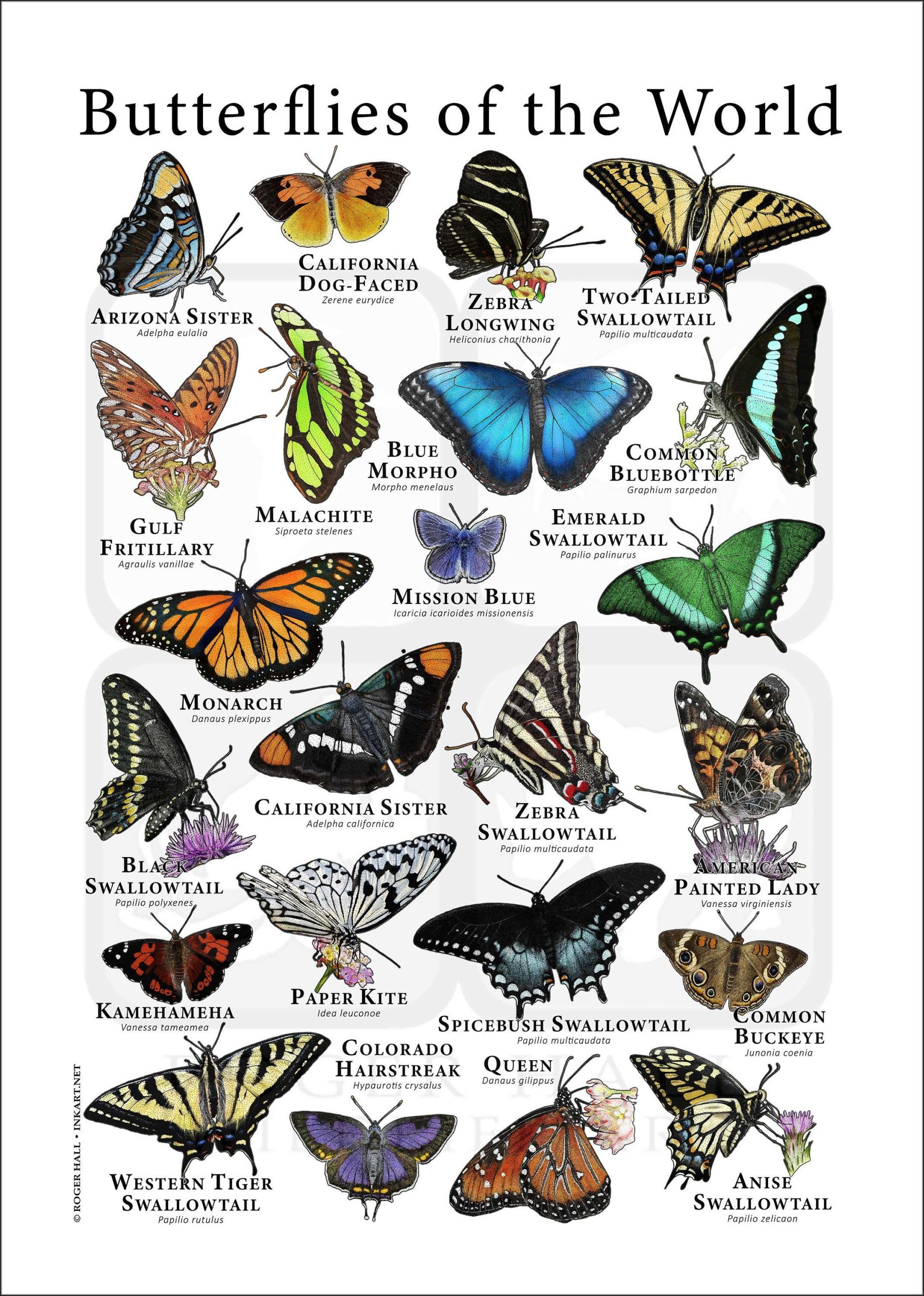
The monarch butterfly is widely regarded as one of the most famous butterflies in the world, especially in the United States. Its orange-and-black wings, remarkable migration, and close link to milkweed make it easy to recognize and remember.
Across the United States, monarch butterflies are a familiar sight in gardens, parks, fields, and along roadsides. Their bright orange wings stand out against green leaves, and their black veins create a pattern that is easy to spot. For many Americans, seeing a monarch is one of the first moments that makes the natural world feel close and alive.
The monarch is famous for more than its color. Some monarchs travel from Canada and the northern United States to wintering areas in Mexico, making one of the most remarkable insect migrations known. Their journey, their unusual life cycle, and their need for milkweed have made them a major focus of butterfly education and conservation.
There is no official worldwide ranking that names a single butterfly as the most famous. Fame depends on where people live, what they learn in school, and which species appear in local art and culture. Still, the monarch is a strong answer for the United States because it combines a recognizable appearance with an extraordinary natural story.
Source: i.pinimg.com
Why Is the Monarch Butterfly So Famous?
The monarch butterfly is famous because it brings together three traits that people find easy to remember: bold colors, long-distance migration, and a close relationship with a particular group of plants. Each trait makes the butterfly interesting on its own. Together, they have turned the monarch into a familiar symbol of nature across much of North America.
Its bright orange wings make it easy to notice while it feeds on flowers or rests in the sun. Its migration adds a story of movement and survival. Its dependence on milkweed gives people a practical way to help monarchs in their own yards and communities.
Schools, nature centers, gardens, and conservation groups often use monarchs to teach children and adults about insects, life cycles, food webs, and habitat loss. This public attention has helped the species become one of the best-known butterflies in the United States.
Source: i.pinimg.com
A striking appearance
Orange wings with black veins and black borders make monarchs easy to recognize from a short distance.
An unusual migration
Some populations travel hundreds or thousands of miles between breeding areas and seasonal wintering sites.
A memorable life cycle
The change from egg to caterpillar, chrysalis, and adult butterfly offers a clear example of complete metamorphosis.
A conservation symbol
Monarchs help people understand how the loss of host plants, flowers, and safe habitat can affect wildlife.
Is the Monarch Officially the World’s Most Famous Butterfly?
No official global measure ranks butterflies by fame. Researchers can study species distribution, population trends, and public interest, but fame is not a single biological trait with a standard ranking. Calling the monarch the most famous butterfly is best understood as a common judgment rather than a proven worldwide title.
The monarch is especially recognizable in North America. In other places, people may be more familiar with local swallowtails, peacock butterflies, or other colorful species. The monarch remains a strong choice when the question concerns a butterfly with broad public recognition and a remarkable natural history.
How to Recognize a Monarch Butterfly
You can often identify a monarch by its orange wings, thick black veins, and dark outer borders dotted with small white spots. The wings may look brighter or darker depending on sunlight, age, wear, and viewing angle. When the butterfly rests with its wings open, the orange-and-black pattern is usually easy to see.
Monarchs have a wingspan commonly around 3.5 to 4 inches, although individual butterflies vary. Their bodies are dark, with pale markings, and their legs and antennae are typical of butterflies. A close look at the wing pattern can help separate a monarch from other orange butterflies found in American gardens.
The most useful identification clue is the full pattern rather than color alone. Several other butterflies have orange wings, and some can look similar at a glance. Check the veins, border, white spots, body shape, and overall size before deciding which species you have seen.
Source: vocabineer.com
Wing color
The upper wings are mainly orange with dark veins and black edges.
White spots
Small white spots line the black wing borders and also appear on the body.
Wing shape
The wings are broad and have a smooth outline, without the long tail-like extensions found on many swallowtails.
Flight
Monarchs often glide between groups of steady wingbeats, especially when moving through open spaces.
Monarch or Viceroy: How Can You Tell the Difference?
The viceroy is a common look-alike in parts of the United States. Both species have orange wings with black markings, so a quick glance may not be enough. The clearest usual clue is the black line that crosses the hindwing of a viceroy.
Monarchs generally lack that extra hindwing line. Viceroys are often smaller, but size alone is not a safe identification rule because individual butterflies vary. Look at the entire pattern, and use a reliable regional field guide when you need a confident identification.
Monarch
Usually larger, with orange wings, black veins, and a black border marked by white spots.
Viceroy
Usually smaller, with a distinct dark cross-line on the hindwing in addition to its orange-and-black pattern.
Are All Monarchs Orange?
The familiar adult monarch has orange wings, but the shade can vary from pale orange to deep orange-brown. Lighting, age, and wing wear can change how the color appears. Newly emerged adults may also look different from older butterflies whose wings have been exposed to weather.
A monarch with unusual colors should not be identified by color alone. Check the vein pattern and border markings, and consider whether the butterfly is damaged or newly emerged. Unusual appearance does not automatically mean that it belongs to a different species.
The Monarch Butterfly Migration Explained
The monarch’s migration is one of the main reasons it has become so famous. In eastern North America, many monarchs that develop during the late summer and fall travel south toward mountain forests in central Mexico. There they gather in sheltered areas for the winter before moving north again as conditions allow.
The route can span thousands of miles, yet a single butterfly does not usually complete the entire annual journey from the southern wintering grounds to the far northern breeding areas and back. Several generations take part in the cycle. Butterflies that emerge during spring and summer often reproduce and die after a much shorter adult life than the migratory generation.
Late-season monarchs can enter a reproductive pause that helps them conserve energy during migration and winter. They may live for months, unlike many summer adults that live for only a few weeks. The timing of this change depends on environmental cues, including day length and temperature.
Western monarchs follow a different pattern. Many overwinter along the California coast and in other coastal areas of the western United States. Their routes, numbers, and seasonal movements differ from those of eastern monarchs, so the two populations should not be treated as one identical group.
Source: i.pinimg.com
Spring movement
Monarchs leave wintering areas and move north as temperatures and host plants permit.
Breeding season
Females lay eggs on milkweed, and new generations develop during spring and summer.
Fall migration
Many late-season monarchs travel toward wintering areas instead of reproducing right away.
Winter rest
Monarchs gather at suitable sites where local conditions offer shelter from harsh weather.
How Do Monarchs Find Their Way?
Monarch navigation appears to involve more than one cue. Research supports a role for the sun and an internal timekeeping system that helps butterflies interpret its position. Other environmental signals may also contribute during travel and when monarchs approach familiar wintering regions.
Scientists continue to investigate the details of monarch navigation. It would be too simple to say that every butterfly follows a single fixed road or relies on one sense alone. Wind, temperature, habitat, and the butterfly’s physical condition can all affect the route and success of its journey.
Do All Monarchs Migrate?
No. Migration depends on the population and local conditions. Some monarchs in warmer areas may breed for more of the year, while eastern and western North American populations are known for their seasonal movements to wintering sites.
A monarch seen in a southern state may be passing through, breeding locally, or staying in an area with suitable plants and weather. Its location alone does not prove where it began its journey or where it will go next.
What Do Monarch Butterflies Eat?
Monarch caterpillars feed on milkweed plants, which are essential host plants for their development. Adult monarchs drink nectar from flowers to obtain sugar and other nutrients. These two food sources serve different purposes, and a garden that offers only nectar flowers may attract adults without providing the plants needed for reproduction.
Female monarchs usually place their eggs on milkweed leaves or other suitable parts of the plant. After hatching, the caterpillars eat milkweed foliage as they grow through several stages. They later form a chrysalis, where their bodies change into adult butterflies.
Milkweed also plays a role in monarch defense. Many milkweed species contain chemicals called cardenolides, which monarch caterpillars can take up and retain. These chemicals can make monarchs unpleasant or harmful to some predators, although this protection is not absolute and does not prevent every attack.
Source: i.ytimg.com
Egg stage
The female lays eggs on milkweed that can support the developing caterpillars.
Caterpillar stage
The larva eats milkweed leaves and grows through several molts.
Chrysalis stage
The caterpillar transforms inside a protective casing called a chrysalis.
Adult stage
The adult drinks nectar from flowers and may mate, lay eggs, or migrate depending on the season and population.
Which Flowers Attract Adult Monarchs?
Adult monarchs visit many nectar-producing flowers. In American gardens, suitable native options vary by region, climate, soil, and season. A mix of plants that bloom at different times can offer food throughout more of the butterfly season.
Native asters, goldenrods, blazing stars, and other local wildflowers can provide useful nectar, depending on the region. Choose plants that fit your area rather than relying on one universal list. Avoid treating every plant sold as butterfly-friendly as equally useful for monarchs.
Provide a range of bloom times
Choose flowers that open in spring, summer, and fall so nectar is available across the season.
Favor suitable native plants
Regional native flowers often support local insects and fit local growing conditions.
Avoid pesticide exposure
Pesticides can harm butterflies and other insects, so use prevention and nonchemical methods whenever practical.
Can You Feed Monarchs Sugar Water?
A garden with healthy nectar plants is generally a better long-term food source than a homemade sugar-water feeder. Sugar water does not replace milkweed for caterpillars, and it may not supply the same range of nutrients as natural nectar. Poorly maintained feeders can also attract unwanted insects or develop contamination.
If you find a monarch that appears weak, first consider whether it is cold, injured, newly emerged, or simply resting. Do not handle its wings unnecessarily or assume that it needs feeding. Protecting habitat is usually more useful than trying to feed individual wild butterflies.
Other Famous Butterfly Species Worth Knowing
The monarch may be the best-known butterfly in much of the United States, but several other species have strong claims to fame. Some are common in home gardens, while others are celebrated for unusual colors or impressive size. Knowing a few of them makes butterfly watching more rewarding.
The species below are not ranked by a formal fame score. Each is well known for a different reason, and the butterfly you see most often will depend on where you live. Regional field guides can help you narrow down which species are likely to appear in your area.
Source: i.pinimg.com
Painted lady
A widespread orange, brown, and black butterfly known for its broad distribution and long-distance movements.
Eastern tiger swallowtail
A large North American butterfly with yellow wings and dark tiger-like stripes; females can also have dark forms.
Red admiral
A dark butterfly with bold red-orange bands and white markings, often seen in gardens and open spaces.
Mourning cloak
A dark butterfly with a pale yellow wing edge and blue spots; adults can survive winter in suitable climates.
Blue morpho
A tropical butterfly famous for the brilliant blue appearance of its upper wings, which comes from structural effects rather than blue pigment alone.
Common buckeye
A North American butterfly with prominent eyespots that may help distract or deter predators.
Why Is the Blue Morpho So Well Known?
The blue morpho is famous for its intense blue wing surfaces. The color is largely produced by tiny structures in the wing scales that reflect light in particular ways. This is called structural coloration, and it differs from color created mainly by pigments.
The blue morpho lives in tropical parts of Central and South America, not in the wild across most of the United States. It is often featured in nature exhibits and educational materials because its wings demonstrate how physical structures can produce vivid colors.
Why Are Swallowtails Popular?
Swallowtails are a familiar group because many species are large, colorful, and easy to notice while feeding on flowers. Their hindwings often have tail-like extensions, although the exact pattern varies among species. Several swallowtails live across the United States, making them common subjects for gardens and nature walks.
The eastern tiger swallowtail is especially recognizable in the eastern United States. Its yellow-and-black pattern resembles that of a tiger, while some females have a darker form. Other swallowtails may show blue, black, yellow, or green markings, so a regional guide is helpful.
How to Help Monarch Butterflies in Your Yard
The most useful way to help monarchs is to create habitat that supports both caterpillars and adults. That means planting suitable milkweed, offering nectar flowers, reducing pesticide exposure, and keeping some areas of the yard safe for insects. Even a small garden can provide food or a resting place, although no single yard can solve the larger problems facing monarch populations.
Start by checking which milkweed species are native or suitable for your region. Different species grow in different soils and climates, and a plant that thrives in one state may struggle in another. Native plant societies, local extension offices, and regional conservation groups can help you choose suitable options.
Planting milkweed is helpful, but it is not a guarantee that monarchs will visit or reproduce. Butterflies need the right season, weather, and habitat conditions. A diverse planting that provides nectar and host plants over time is more useful than a yard built around one plant alone.
Source: i.pinimg.com
Plant regionally suitable milkweed
Choose species that fit your local climate and growing conditions rather than planting every type available.
Add nectar plants
Grow flowers with different bloom times to provide food across the warmer months.
Limit pesticide use
Avoid spraying flowering plants when butterflies or other pollinators may be present, and use nonchemical controls when possible.
Keep some habitat natural
Where practical, leave suitable areas for native plants and insects instead of removing every leaf or flower.
Learn before raising caterpillars
Rearing monarchs can expose them to disease or poor conditions if done incorrectly, so follow current guidance from a reputable conservation or research organization.
Should You Grow Tropical Milkweed?
Tropical milkweed is sold in some garden centers, but it is not the best choice for every region. In places where it survives through the winter, it may remain available longer than native milkweeds and can affect monarch behavior or parasite dynamics. The risks depend on local climate and management, so advice should be tailored to the area.
Where possible, choose native milkweed species suited to your location. If tropical milkweed is already growing in your garden, seek region-specific guidance about managing or replacing it rather than assuming every plant needs the same treatment. Good habitat planning takes local conditions into account.
Are Monarch Butterflies Endangered?
Monarch conservation status depends on the population, location, and assessment system being discussed. Eastern and western North American monarchs face concerns linked to habitat loss, changes in milkweed and nectar resources, pesticides, weather, and conditions at their wintering sites. Their numbers can also vary from year to year.
Conservation labels and legal protections may change as agencies review evidence. It is best to check current information from the relevant government wildlife agency or recognized conservation body before making a claim about a specific legal status. Regardless of the label, habitat protection remains a practical way to support monarchs.
Common Myths About the Monarch Butterfly
The monarch’s fame has also created some common misunderstandings. Knowing what the evidence supports helps people enjoy these butterflies without spreading inaccurate claims. Their migration is remarkable, but it does not mean every monarch behaves in the same way.
One common myth is that every monarch makes the full journey from Canada to Mexico and back during its own lifetime. In fact, several generations usually take part in the annual cycle. Another mistake is to assume that all orange butterflies are monarchs, even though many species have orange wings or similar markings.
Source: i.pinimg.com
Myth: Every monarch migrates to Mexico
Migration differs among populations, and some monarchs live in warmer areas where they may breed locally.
Myth: One butterfly completes the entire annual cycle
Several generations commonly take part in the northward movement and seasonal return.
Myth: Monarchs eat milkweed as adults
Caterpillars eat milkweed leaves, while adults mainly drink nectar from flowers.
Myth: All orange butterflies are monarchs
Viceroys, painted ladies, fritillaries, and other species can have orange wings, so check the pattern.
Myth: A butterfly garden needs only milkweed
Milkweed supports caterpillars, but nectar plants also provide food for adults.
Do Monarchs Have Natural Predators?
Yes. Birds, spiders, insects, and other animals may prey on monarch eggs, caterpillars, pupae, or adults. Chemicals obtained from milkweed can make monarchs less appealing to some predators, but this defense does not make them immune to attack.
Predator relationships are complex. Some animals can tolerate monarch toxins, and others may eat only certain life stages. The monarch’s survival depends on many factors, including habitat, weather, food supply, disease, and predation.
Can Monarch Butterflies Bite or Sting?
Adult monarch butterflies do not have stingers, and they do not bite people as a form of defense. Their mouthparts are adapted to draw up liquids, especially nectar. They are generally safe to observe outdoors without touching them.
The best way to handle a monarch is not to handle it at all unless there is a clear reason and you know how to do so safely. Their wings are covered in tiny scales that can be rubbed off, and unnecessary handling may injure the butterfly.
Frequently Asked Questions
Q
What is the most famous type of butterfly?
The monarch butterfly is widely regarded as one of the most famous butterflies, particularly in the United States. Its orange-and-black wings, long-distance migration, and dependence on milkweed make it easy to recognize and popular in nature education. There is no official global ranking of butterfly fame.
Q
What is the rarest butterfly in the United States?
There is no single answer that covers every meaning of rare. Some butterflies have extremely small ranges or very limited populations, while others are rare only in certain regions. The correct answer depends on the current population evidence and whether you mean federally listed species, local rarity, or a species that is seldom seen. Check current U.S. Fish and Wildlife Service information for conservation status.
Q
How long does a monarch butterfly live?
Many monarchs that develop during spring and summer live for several weeks as adults. The late-season migratory generation can live for months because it enters a reproductive pause and survives the journey to its wintering grounds. Lifespan varies with season, weather, predators, and other conditions.
Q
Why do monarch butterflies migrate?
Many North American monarchs move to warmer wintering areas because cold conditions and limited food make winter survival difficult in their breeding regions. Eastern monarchs commonly travel to Mexico, while many western monarchs overwinter along the California coast and nearby areas. Migration patterns vary by population.
Q
What plants attract monarch butterflies?
Milkweed provides food for monarch caterpillars, while nectar-rich flowers feed adults. The best plant choices depend on your region, soil, climate, and flowering season. Native milkweed and a range of suitable native flowers can help create useful habitat.
Q
What is the difference between a monarch and a viceroy butterfly?
Both butterflies have orange wings with black markings, but a viceroy usually has a dark line crossing its hindwing. Monarchs generally lack that line and are often larger. Check the complete wing pattern because size and color can vary.
Q
Are monarch butterflies poisonous?
Monarchs can retain defensive chemicals called cardenolides from the milkweed eaten by their caterpillars. These chemicals can make them harmful or unpleasant to some predators. Their level of protection varies, and it is not accurate to say that every predator is affected in the same way.
✦ Wrapping Up
Conclusion
The monarch butterfly is one of the most famous butterflies in the world, and it is especially well known across the United States. Its orange-and-black wings make it easy to recognize, while its long-distance migration and unusual life cycle make it a favorite subject for nature lovers. Although no official ranking proves that it is the single most famous butterfly everywhere, the monarch is a convincing answer for North American readers.
Other species, including swallowtails, painted ladies, red admirals, and blue morphos, are famous for their own colors and behaviors. Learning to recognize these butterflies can make an ordinary walk through a park or garden more interesting. Each sighting also offers a chance to notice the plants and habitats that insects need to survive.
If you want to help monarchs, begin with suitable milkweed, nectar-rich flowers, and fewer pesticides. Choose plants that fit your region, and remember that habitat protection matters more than trying to attract a butterfly on demand. Small changes can support wildlife while helping you learn more about the natural world around you.
💡 Key Takeaway
To support monarch butterflies, find out which milkweed species are suitable for your area, plant native nectar flowers that bloom at different times, and avoid unnecessary pesticide use. Then watch for the monarch’s orange-and-black wings and compare its markings with those of similar butterflies.
Animal Facts Zone is a family-friendly online resource built for curious minds, students, and wildlife enthusiasts. Founded and edited by Sourov Biswas, the platform breaks down fascinating animal behaviors, species identification guides, and nature trivia into clear, easy-to-read articles.
From backyard butterflies and fireflies to reptiles, birds, and wild matchups, every guide is crafted to answer real questions about the natural world and inspire everyday wildlife appreciation. Whether you are a student researching a species or a nature lover exploring your own backyard, Animal Facts Zone helps you learn something new about the animal kingdom in minutes.