No, every crow is not a raven. Crows and ravens are different kinds of birds in the same family, Corvidae. They share many traits, but they differ in size, calls, tail shape, and flight style.
If you spot a large black bird in an american backyard, parking lot, field, or forest, you might wonder whether it is a crow or a raven. Both birds have dark feathers, strong bills, and sharp minds. From far away, they can look almost like copies of each other.
The key is to look beyond the black feathers. In the United States, the American Crow is widespread in towns, farms, parks, and wooded areas. The Common Raven is much larger and is especially familiar in the West, the northern states, and mountain regions. Their ranges overlap, so location can help, but it cannot settle every sighting.
Bird identification works best when you use several clues at once. Size, tail shape, bill size, voice, and flight can point toward an answer. One clue alone may mislead you, especially when a bird is far away or seen in poor light.
Source: birdsaffection.com
Are Crows and Ravens the Same Bird?
No. Crows and ravens are distinct birds, even though they belong to the same family, Corvidae. This family also includes jays, magpies, and other intelligent birds. Their shared family explains why crows and ravens look and behave alike in many ways.
Both crows and ravens belong to the genus Corvus, which includes many crow and raven species around the world. The names crow and raven are common names, not two neat taxonomic groups that divide every species in the same way. Some birds called ravens are more closely related to certain crows than to other ravens.
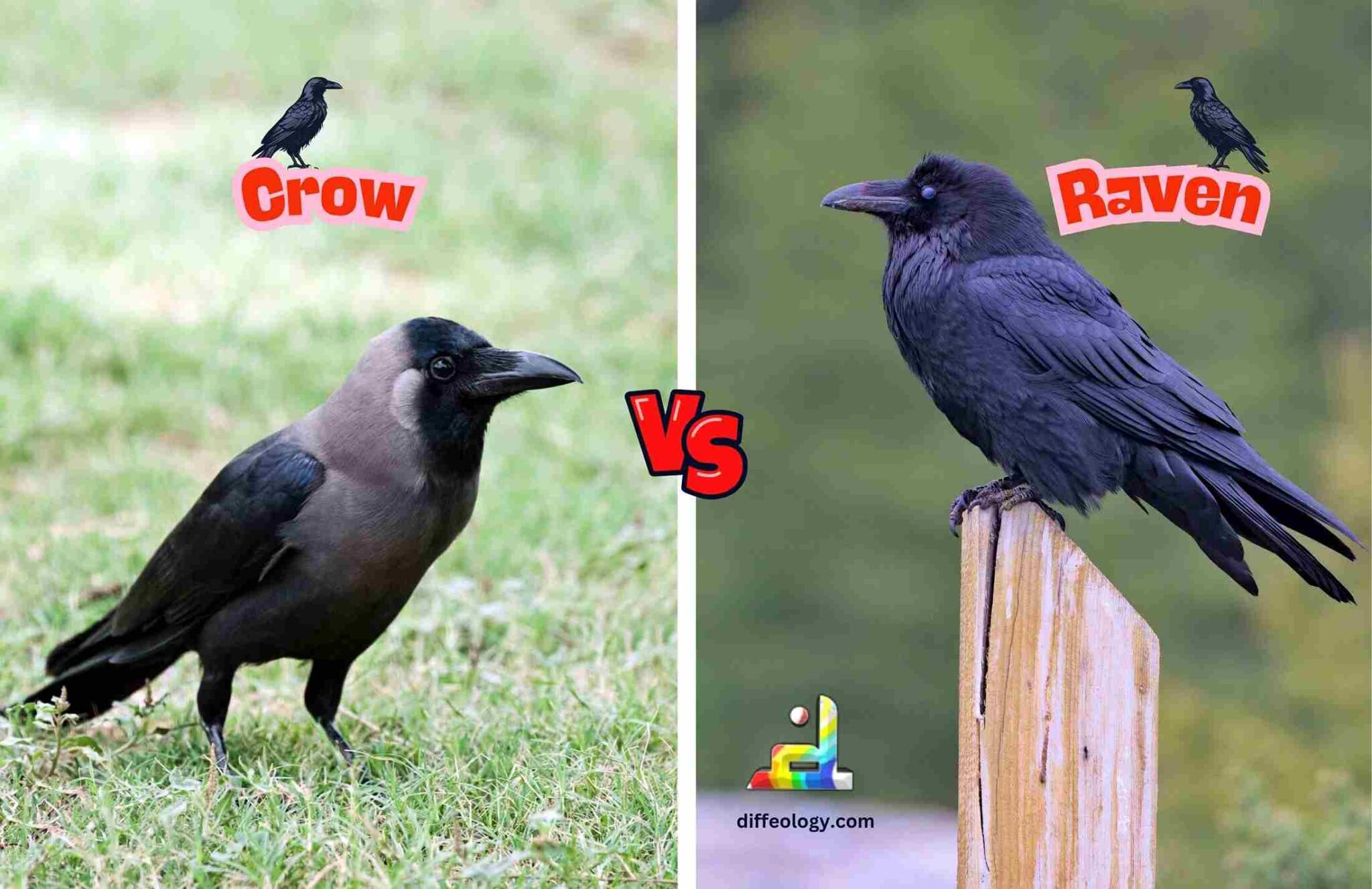
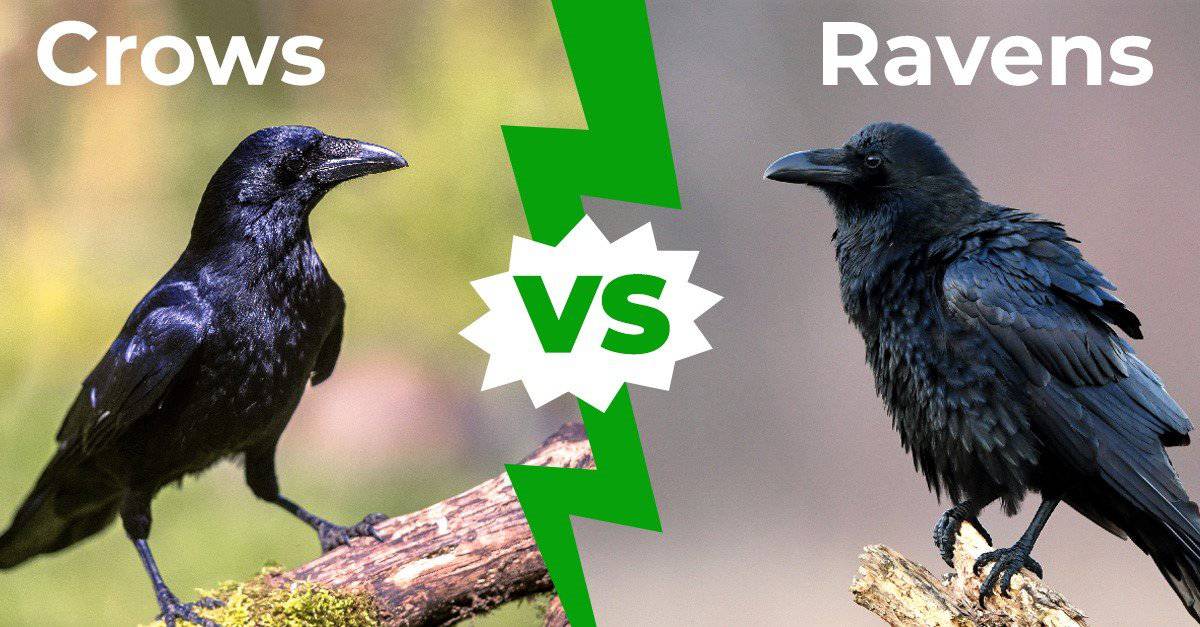
In the United States, the most familiar comparison is between the American Crow, Corvus brachyrhynchos, and the Common Raven, Corvus corax. These are separate species with clear differences in their usual size, shape, calls, and habits.
Think of them as close relatives rather than two names for the same bird. A raven is not simply an old crow, a male crow, or a crow that has grown unusually large. It belongs to a different species.
Source: diffeology.com
American Crow
A widespread North American species often seen in neighborhoods, parks, farms, open fields, and wooded areas.
Common Raven
A larger species found across much of western and northern North America, including mountains, deserts, forests, and some urban areas.
Shared family
Both are members of Corvidae, a family known for varied calls, flexible diets, and complex behavior.
Why Do People Mix Them Up?
The confusion starts with their appearance. Both birds are usually black from head to tail, with dark bills, dark legs, and feathers that can shine in sunlight. Their body shapes also overlap enough to make a distant bird hard to identify.
A lone crow may look much larger than it really is when it sits close to the observer. A raven seen high above a road may look smaller than expected. Without a nearby object for comparison, judging size can be tricky.
Their names also cause confusion. In everyday speech, people sometimes use crow for almost any large black bird. Bird identification requires more care because a black bird could be a crow, a raven, a grackle, or another species.
How to Tell a Crow From a Raven
The easiest way to separate a crow from a raven is to combine several clues. Look at the bird’s size, bill, throat feathers, tail, voice, and flight. These features are most useful when you can observe the bird clearly and have time to compare them.
For American birdwatchers, the table below compares the American Crow with the Common Raven. These are typical field marks, not rules that make every sighting certain. Distance, posture, age, feather wear, and lighting can change how a bird appears.
Source: learn.podium.school
Body size
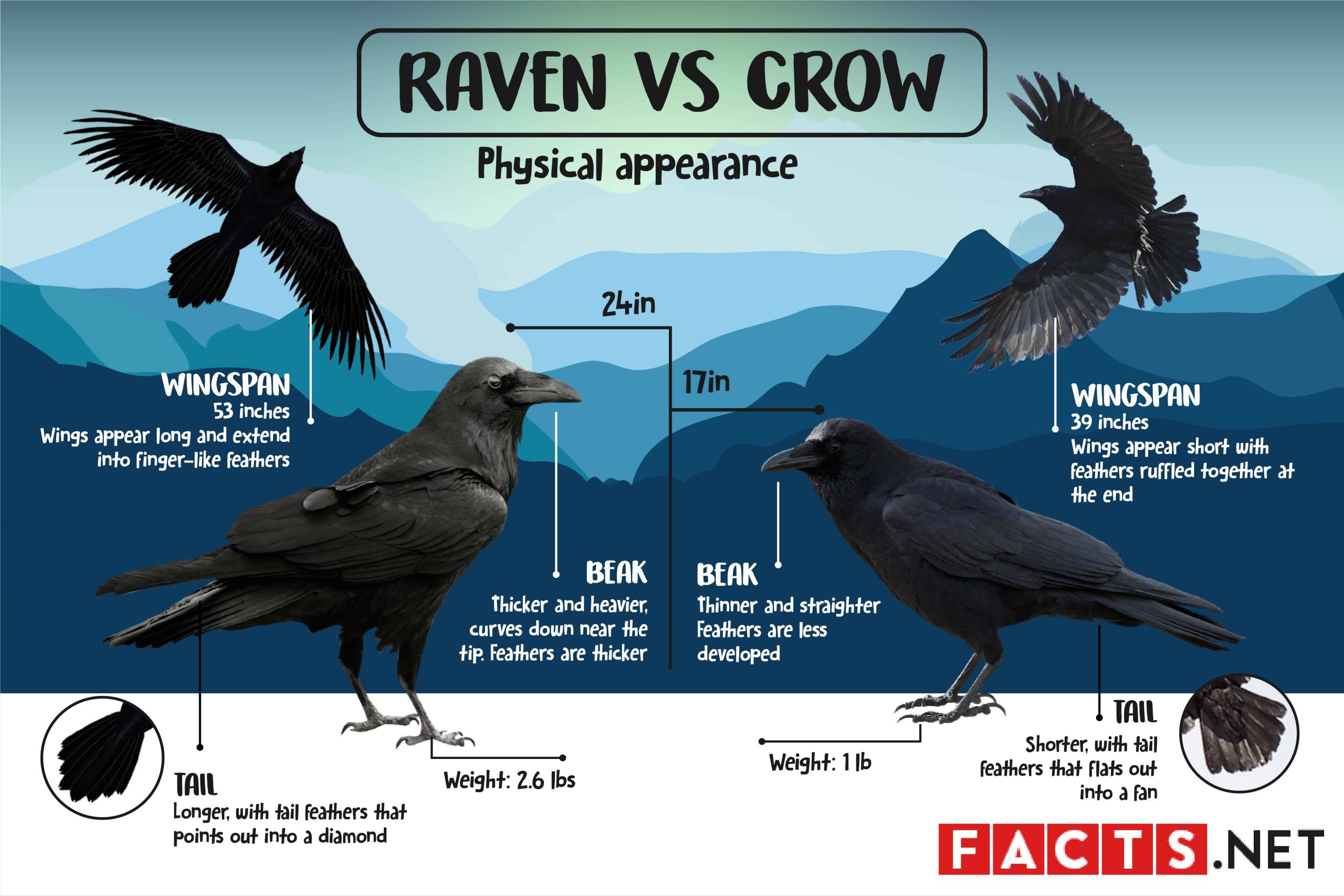
American Crows are usually about 16 to 21 inches long. Common Ravens are roughly 22 to 27 inches long, so they are generally much larger.
Bill
A raven has a heavier, longer-looking bill. A crow’s bill is more moderate in proportion to its head.
Throat feathers
A raven often has long, shaggy throat feathers. A crow’s throat usually looks smoother.
Tail
A raven’s spread tail often forms a wedge or diamond. A crow’s tail usually forms a rounded fan or a squarer shape.
Flight
Ravens often glide and soar on long wings. Crows usually fly with steady, regular wingbeats.
Voice
Crows often give a familiar caw. Common Ravens frequently make deep croaks, grunts, and rough calls.
Check the Bill and Throat
A raven’s bill is one of its strongest clues. It looks heavy and deep, much like a thick tool attached to the front of the head. The feathers around its throat may hang in loose points, giving the neck a shaggy look.
An American Crow has a strong bill too, but it usually looks less massive. Its throat feathers tend to sit closer to the body. These details can be hard to see through binoculars at a great distance, so avoid making a firm identification from one unclear feature.
Watch the Tail While the Bird Flies
The tail can be especially useful when a bird passes overhead. A Common Raven’s middle tail feathers are longer than the outer ones, so the spread tail often looks like a wedge or diamond. An American Crow’s tail feathers are more even in length, creating a rounded or square-ended fan.
Do not expect every tail view to be perfect. A crow may hold its tail in a way that makes it look pointed, and feather molt can change the outline. If the tail is folded, hidden, or viewed from the wrong angle, use other clues.
Differences in Size, Color, and Shape
Common Ravens are usually larger and heavier than American Crows. A raven can have a broad chest, thick neck, long wings, and a powerful bill. An American Crow looks more compact, with a smaller head and a less bulky neck.
Color is less useful because both species are mostly black. In good light, their feathers may show blue, violet, or greenish shine, but the exact effect depends on the light and viewing angle. A raven is not necessarily darker than a crow, and a crow is not a different color simply because it looks smaller.
Age and feather condition can also affect appearance. Worn crow feathers may look brownish or uneven, while fresh feathers may look glossy. Young ravens and crows can differ from adults in subtle ways, so size and shape remain more helpful than small changes in color.
Source: countericons.blogspot.com
Relative size
A Common Raven often looks close to the size of a Red-tailed Hawk, while an American Crow is distinctly smaller. This comparison is most helpful when the birds are seen together or near a familiar object.
Wing shape
Ravens have long wings with long, separated-looking primary feathers at the tips. Crow wings are generally shorter and broader in outline.
Body outline
Ravens often look long and heavy, with a thick neck. Crows usually have a more compact outline, although posture can change what you see.
Can a Large Crow Be Mistaken for a Raven?
Yes. A large American Crow can seem raven-sized when seen alone, especially if it is close to you or holding its feathers loosely. A raven far away may also seem smaller than it is.
Do not identify a bird by size alone. Watch its tail in flight, listen to its calls, and look at its bill. If the clues do not agree, record the sighting as an uncertain crow or raven rather than forcing an answer.
Do Crows and Ravens Sound Different?
Yes. Their calls can help you identify them even when you cannot see their bodies clearly. American Crows often make a series of familiar caws, while Common Ravens commonly produce deep, rough croaks and resonant calls.
A crow’s voice is not limited to one sound. It can make rattles, clicks, short notes, and other calls during social contact or alarm. Ravens also have a varied range of sounds, including grunts and harsh calls. The difference is often in the tone and quality rather than in a simple rule that one species makes only one sound.
If you hear a deep, echoing croak from a large black bird in a western canyon or mountain area, a raven is worth considering. If you hear repeated caws from several black birds gathered in a neighborhood tree, American Crows may be the better fit. Neither setting proves the identity by itself.
Source: x.com
Crow calls
Often sharp and familiar, with repeated caws and a range of other sounds used in social settings.
Raven calls
Often lower and rougher, with deep croaks, grunts, and other varied vocal sounds.
Best listening method
Listen to several calls if possible. Compare the sound with a reliable recording of the local species rather than relying on a single brief note.
Can a Raven Caw Like a Crow?
Ravens can make a range of sounds, and some calls may seem less typical than the deep croak people expect. Crows also make sounds other than caws. A short or unusual call is not enough to settle an identification.
If you are unsure, pair the sound with visual clues. A large bird with a heavy bill, shaggy throat, and wedge-shaped tail is more likely to be a raven than a crow, especially when it also gives a deep croak.
Where Do Crows and Ravens Live in the United States?
American Crows are widespread across the United States. They live in cities, suburbs, farms, open woodlands, beaches, and many other places where they can find food and nesting sites. Their ability to use both natural and human-made habitats helps explain why so many people see them often.
Common Ravens occur across much of western and northern North America, including many mountain areas, forests, deserts, grasslands, and coastal regions. They also occur in parts of the Northeast and other areas, and they can live near people when suitable food and nesting places are available.
The two species overlap in some parts of the country. This means that a large black bird in California, the Pacific Northwest, or a mountainous region could be either species. In other places, habitat and range can help narrow the options, but the bird’s features should still guide the final identification.
Source: storage.googleapis.com
Neighborhoods and suburbs
American Crows are common around lawns, streets, school grounds, parks, and open spaces. Common Ravens also use some towns and cities, especially in areas where they are established.
Mountains and open country
Common Ravens are well suited to mountain slopes, open deserts, cliffs, and broad rural landscapes. Crows also use open country, so habitat is a clue rather than proof.
Eastern United States
American Crows are familiar in many eastern communities. Ravens occur in some eastern and northeastern areas too, so local distribution matters.
Can You Identify a Raven by Location Alone?
No. Location can make one species more likely, but it cannot confirm the bird by itself. A raven may turn up in a town, and a crow may appear in a remote forest or mountain valley.
For a useful location check, compare the sighting with a current regional bird guide or a trusted range map. Then look for the bill, tail, body size, and voice. This method avoids confusing a likely identification with a certain one.
Are Crows and Ravens Similar in Intelligence and Behavior?
Crows and ravens are both intelligent birds. Members of the corvid family can learn from experience, solve some problems, remember useful information, and adjust their behavior to new situations. Their intelligence is one reason they do so well in changing environments.
American Crows are often seen in groups. They may gather at feeding sites, call to one another, mob a hawk or owl, and form large communal roosts. Common Ravens are often seen alone or in pairs, though they may gather at rich food sources such as a carcass or landfill.
These patterns are common, not absolute. A raven can join other ravens at a food source, and a crow may forage alone. Social behavior can support an identification, but it should not replace physical clues.
Both birds eat a varied diet. They may take insects, seeds, fruit, small animals, carrion, and human food waste when available. Their flexible feeding habits help them use many habitats, but people should not feed them spoiled food or leave trash open.
Source: facts.net
Learning
Both species can learn from repeated experiences and adapt their behavior to familiar people, places, and food sources.
Social life
Crows often gather in groups, while ravens are frequently seen alone or in pairs outside of major food sources.
Feeding
Both are omnivores and scavengers. Their diets shift with season, habitat, and the food available.
Does Intelligence Make One Species a Raven?
No. A bird that solves a puzzle, remembers a person, or opens a container is not automatically a raven. Both crows and ravens can show flexible problem-solving behavior.
Behavior can be fascinating to watch, but species identification still depends on physical features, calls, and location. It is best to enjoy the behavior without treating one clever action as proof of identity.
Frequently Asked Questions
Q
Is a raven just a big crow?
No. A Common Raven is a separate species, not a large individual American Crow. Ravens are generally bigger and have a heavier bill, shaggy throat feathers, a longer wedge-shaped tail, and a deeper voice.
Q
Are all black birds either crows or ravens?
No. Other black or mostly black birds in the United States include Common Grackles, European Starlings, and several blackbird species. Their size, shape, calls, and other field marks can help separate them from crows and ravens.
Q
Can crows and ravens mate with each other?
American Crows and Common Ravens are distinct species, and they are not known as a normal interbreeding pair in the wild. Their shared genus does not mean that they routinely mate or produce young together.
Q
Which is more common in American backyards, crows or ravens?
American Crows are more familiar in many neighborhoods across the country. Common Ravens also visit some yards, especially in western and northern regions, rural areas, and places with suitable habitat. The most likely species depends on where you live.
Q
How can I identify a crow or raven from a photo?
Look at the bill, throat, body proportions, and tail. A heavy bill, shaggy throat, and wedge-shaped tail suggest a Common Raven, while a more moderate bill and rounded or square tail suggest an American Crow. If the photo lacks clear views of these features, the identification may remain uncertain.
Q
Are ravens and crows both part of the Corvidae family?
Yes. Both belong to Corvidae, the bird family that also includes jays and magpies. Their close relationship explains many shared traits, but each species keeps its own physical features, calls, and behavior.
✦ Wrapping Up
Conclusion
Not every crow is a raven. Crows and ravens are related members of the Corvidae family, but the American Crow and Common Raven are separate species. Their black feathers may look alike, yet their size, bills, throat feathers, tails, calls, and flight often reveal the difference.
For a bird you see in the United States, start with the overall shape. Then check the bill and tail, listen to the call, and consider the habitat. A combination of clues is far more reliable than judging by color or size alone.
You do not need to identify every bird with perfect certainty. Taking a moment to watch its movement, listen to its voice, and note its shape is a useful first step. With practice, the two birds become easier to tell apart.
💡 Key Takeaway
The next time you see a large black bird, look for three clues: the shape of its tail in flight, the size of its bill, and the sound of its call. Use all three before deciding whether it is a crow or a raven.
Animal Facts Zone is a family-friendly online resource built for curious minds, students, and wildlife enthusiasts. Founded and edited by Sourov Biswas, the platform breaks down fascinating animal behaviors, species identification guides, and nature trivia into clear, easy-to-read articles.
From backyard butterflies and fireflies to reptiles, birds, and wild matchups, every guide is crafted to answer real questions about the natural world and inspire everyday wildlife appreciation. Whether you are a student researching a species or a nature lover exploring your own backyard, Animal Facts Zone helps you learn something new about the animal kingdom in minutes.