Ravens sleep at night in sheltered spots such as tall trees, cliff ledges, and other elevated places. Many young and nonbreeding ravens gather at shared roosts, while breeding pairs often spend the night near their nesting territory.
Across the United States, Common Ravens settle down after a day of searching for food, soaring over open land, and exploring their surroundings. In Alaska, they may gather near forest edges or rocky slopes. In western states, cliffs and tall conifers can offer safe places to rest. Ravens that live near towns may also use large structures and wooded areas.
A raven’s sleeping place is called a roost. It is not always the same place as its nest, and the bird may use a different site when the weather, food supply, or level of disturbance changes. Some ravens sleep alone or with a mate, while others join groups that may include many birds.
The choice of roost reflects a balance between shelter, safety, and access to food. A high branch or cliff ledge can provide a clear view of the surroundings, while a sheltered spot can help reduce exposure to wind and rain. In colder months, a shared roost may also offer social benefits.
Ravens do not follow one strict sleeping rule. Their habits vary with age, season, local habitat, and breeding status. Understanding these differences helps explain why one raven may vanish into a wooded hillside at dusk while another joins a group that returns to the same general area night after night.
Bing
Where Do Ravens Sleep at Night?
Ravens sleep in places that provide a stable perch, some protection from the elements, and a reasonable level of safety. Tall trees, rocky ledges, cliffs, and elevated structures are common options. The exact choice depends on the landscape and the individual bird’s needs.
In the United States, Common Ravens live in a wide range of habitats, from Alaska and the Rocky Mountains to deserts, forests, coastlines, and some urban areas. A raven in a remote mountain region may choose a cliff ledge, while one in a forested area may settle among the branches of a large tree.
The sleeping site does not need to be a nest. Outside the breeding period, an adult raven may spend the night on a branch or ledge without building anything there. The bird’s main concern is finding a suitable place to perch and remain undisturbed until morning.
Bing
Tall trees
Large trees offer strong branches and elevated perches. Dense foliage can provide some shelter from wind and precipitation.
Cliffs and rocky ledges
Rock faces may provide broad, stable resting places, especially in mountainous or rugged areas. Overhangs can offer additional protection.
Human-made structures
Ravens sometimes roost on bridges, towers, industrial structures, and abandoned buildings when these sites offer suitable perches and relatively low disturbance.
Shared roosts
Some ravens gather with other birds at a regular nighttime resting area, especially when they are not breeding.
Do Ravens Sleep in Trees?
Yes. Trees are among the places where ravens sleep, particularly in landscapes with mature forest or scattered large trees. A raven can grip a branch with its feet and settle into a resting posture above the ground.
The highest branch is not always the best choice. A sturdy branch with enough room to balance may be more useful than a thin branch exposed to strong gusts. Nearby foliage, the shape of the tree, and the presence of other birds may also influence the choice.
Ravens may use trees near open ground because such locations provide access to feeding areas. Still, seeing a raven perch in a tree during the day does not prove that it sleeps there. Birds may use many perches before choosing a nighttime roost.
Do Ravens Sleep on Cliffs?
Ravens often use cliffs for nesting and resting in rocky regions. A ledge can provide a stable perch, and a rock overhang may shield a bird from some wind and rain.
Cliff habitat is especially relevant in parts of the western United States and Alaska, where rocky terrain is widespread. However, not every raven sleeps on a cliff, and a nesting cliff is not necessarily the bird’s nightly roost.
A raven perched on a cliff after sunset may simply be resting before moving to another spot. Observers should avoid approaching unstable slopes or cliff edges to get a closer look.
Do Ravens Sleep Alone or in Groups?
Ravens can sleep alone, with a mate, or in a communal roost with other ravens. Their social pattern depends on whether they are breeding, how food is distributed, and what suitable resting places are available.
Common Ravens are often seen alone or in pairs while moving through their territory. Established breeding pairs tend to defend a home area, so they may not join large groups as regularly as younger birds do. Nonbreeding ravens are more likely to gather where food and roosting opportunities are available.
A communal roost is a place where multiple birds spend the night. Some raven roosts are small, while others can hold many individuals. The size of a roost varies with local conditions, and there is no single group size that applies to every population.
Bing
Breeding adults
A paired raven may remain close to its mate and nesting territory rather than joining a large communal group.
Young and nonbreeding birds
These ravens may gather at shared feeding sites and roost together when the conditions suit them.
Changing food supplies
A dependable food source can draw ravens into an area, sometimes supporting a nearby communal roost.
Why Do Ravens Gather Before Nightfall?
Ravens may gather before dark because they are moving toward a familiar roost or following other birds toward a suitable place to sleep. Their evening movements can look like a planned meeting, but the reasons may vary among individuals.
Communal roosts can help birds gain information about food sources. A raven may notice where other ravens have been feeding and follow them to a useful area the next day. Research summarized by the U.S. Department of Agriculture describes ravens using shared roosts and exchanging information about food locations.
A group can also provide a wider network of alert birds. More individuals may notice a threat, although a large gathering does not remove the risk of predation or disturbance. Social benefits are plausible parts of the explanation, but researchers cannot assume that every raven gathers for the same reason.
Do Ravens Return to the Same Roost Every Night?
Some ravens use established roosting areas repeatedly. U.S. Department of Agriculture guidance reports that raven roost sites can remain in use from year to year unless disturbed, and replacement sites may be nearby. This pattern shows that familiar roosts can be important parts of a local bird population’s routine.
Returning to the same general area does not mean a raven must land on the same branch every night. Wind, rain, disturbance, and the presence of other birds may change where it settles within a roosting area.
Ravens may also move between different roosts when several suitable sites are available. A roost that appears empty on one evening may be busy on another, so a single visit is not enough to establish a regular pattern.
How Do Ravens Choose a Safe Sleeping Place?
Ravens choose roosts by balancing shelter, access, and safety. A site that looks ideal to a person may be less useful to a raven if it exposes the bird to strong winds, frequent disturbance, or an easy approach by a predator.
Height can be useful because it gives a bird a clear view and keeps it away from many ground-level threats. Yet height alone does not make a site safe. A high perch with little protection may be less suitable in a storm than a sheltered ledge or a sturdy branch among other trees.
Food also affects where ravens spend the night. A bird that feeds in a remote valley may roost nearby, while another may travel between a feeding area and a traditional roost. Ravens are capable fliers, and some populations make substantial daily trips between resting and feeding sites.
Bing
Shelter
Branches, foliage, and rock overhangs can reduce exposure to wind or precipitation, although no natural perch protects a bird from every weather condition.
Low disturbance
A place with fewer people, vehicles, and sudden noises may be more suitable for undisturbed rest.
A clear view
An elevated perch can help a raven detect approaching animals or other changes around the roost.
Nearby food
Access to feeding areas can influence the location of a roost and the routes ravens take at dawn.
Do Ravens Have Predators at Night?
Ravens face risks from predators throughout their lives, although the threat depends on the region and the bird’s age. Eggs and young ravens are vulnerable to nest predators, while adults may face threats from large birds of prey and other animals.
A raised roost can reduce exposure to some ground predators, but it is not a guarantee of safety. An owl or another capable predator may still threaten birds in certain settings. The value of a particular perch depends on the local predator community and the surrounding terrain.
Communal roosting may help some birds detect danger, but it can also make a gathering easier to notice. Ravens therefore benefit from suitable habitat and alert behavior rather than relying on group size alone.
Can Ravens Sleep During Bad Weather?
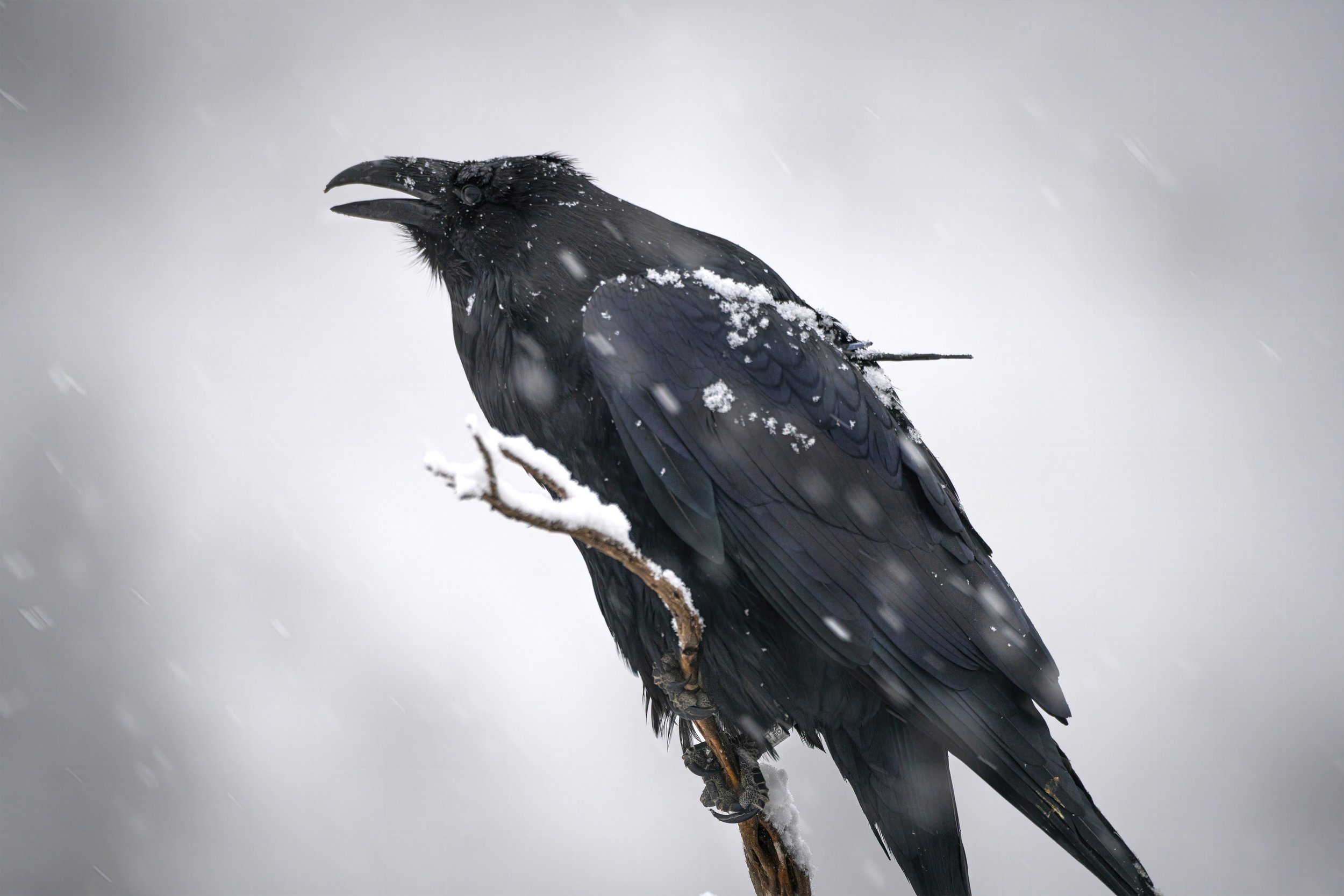
Yes. Ravens rest during rain, cold, and wind, but they may change their position or choose a more sheltered site when conditions become harsh. Their thick plumage provides insulation, and their feet and posture help them remain perched in ordinary weather.
In strong winds, a bird may select a more protected branch or a position close to the trunk. During cold weather, it may tuck its bill into its feathers and reduce exposed body surface. These behaviors help conserve heat, but they do not make ravens immune to severe storms or prolonged exposure.
If a raven appears motionless in poor weather, that alone is not proof that it is sick or injured. Birds often remain still while resting. A bird that cannot perch, has an obvious injury, or remains grounded and unresponsive may need help from a licensed wildlife rehabilitator.
Where Do Ravens Sleep in Winter?
In winter, ravens continue to use trees, cliffs, and other elevated sites, but some populations make greater use of communal roosts. Shared resting areas may provide shelter and social benefits when cold nights and limited daylight shape the birds’ daily routines.
The U.S. Department of Agriculture’s Common Ravens wildlife guidance describes roosts in large stands of trees and brush, on cliffs, bridges, industrial sites, abandoned buildings, and mining towers. The same guidance notes that communal roosts tend to receive their heaviest use during winter, when shelter and warmth may be valuable.
Winter habits differ across the United States. A raven in Alaska faces different weather and daylight conditions from a raven in a milder part of California. Local food sources, wind exposure, snow, and the availability of sheltered sites all affect where birds spend the night.
Bing
Cold regions
Ravens may favor sheltered roosts that reduce exposure to cold winds and allow them to rest with other birds.
Milder regions
Birds may continue to use familiar trees, cliffs, or structures without a major change in roosting location.
Areas with steady food supplies
Food sources such as carcasses or accessible waste may influence where ravens gather and which roosts they use.
Does Group Sleeping Keep Ravens Warm?
Gathering at a communal roost may help ravens benefit from sheltered surroundings and, under some conditions, reduce heat loss. However, the amount of warmth gained by crowding together depends on how the birds perch and how exposed the site is.
It would be misleading to say that ravens always huddle tightly together like some small birds. They may occupy separate branches or ledges within the same roosting area. The shared site itself can provide benefits even when individual birds remain some distance apart.
Communal roosting has several possible advantages, including information exchange and shared vigilance. Warmth may be one factor, especially in winter, but it should not be treated as the sole reason ravens gather.
Do Ravens Migrate to Find Winter Roosts?
Common Ravens are generally residents rather than long-distance seasonal migrants. Many remain in the same broad region throughout the year, although their daily movements and local ranges may change as food and weather conditions shift.
Young birds and nonbreeding individuals may travel farther than established breeding pairs. In Alaska, the state wildlife agency reports that nonbreeding ravens can travel substantial distances between roosts and daytime feeding areas. Such movements are not the same as a regular migration between distant summer and winter ranges.
A raven that disappears from one location in winter may have moved to a nearby feeding area or roost. Its absence does not necessarily mean it has left the region.
What Time Do Ravens Go to Sleep?
Ravens usually settle at their nighttime roost around dusk, when daylight fades and finding food becomes harder. They often begin leaving the roost around dawn, when there is enough light to travel and forage. The exact times change with the season and local conditions.
There is no fixed bedtime that applies to every raven in the United States. In summer, daylight lasts much longer in northern states such as Alaska, so evening activity may continue later by the clock. In winter, shorter days can shift the birds’ active period toward earlier sunsets.
Weather and food can affect the routine, too. A raven feeding on a valuable carcass may remain in the area longer than one that has finished feeding. Human disturbance, bright lights, or a change in roost conditions may also alter the timing of its movements.
Bing
Before sunset
Ravens may finish feeding, move toward a familiar resting area, or join other birds that are gathering near a communal roost.
At dusk
Many ravens settle on branches, ledges, or other suitable perches as daylight declines.
At dawn
Ravens begin leaving roosts and heading toward feeding areas as light returns.
Do Ravens Sleep All Night Without Waking?
Ravens spend much of the night resting, but it is not safe to assume that every bird sleeps continuously from dusk until dawn. Birds can shift position, respond to sounds, and become alert when something disturbs them.
A raven that raises its head or changes its perch during the night may simply be reacting to its surroundings. A brief movement does not necessarily mean the bird is fully active or has abandoned its roost.
Researchers cannot determine a particular raven’s sleep pattern from a single distant observation. Without direct monitoring, the most reliable conclusion is that the bird is using the site for nighttime rest.
Why Might Ravens Be Active After Dark?
Ravens are mainly active during daylight, but nighttime movement can occur. A bird may be disturbed by people, bright lights, loud noises, weather, or another animal. It may then move to a different perch or fly to a quieter part of the roost.
Seeing a raven flying after dark does not automatically mean it has a nocturnal lifestyle. A single flight may be a response to disturbance, and an observation made in poor light can also lead to mistaken identification.
If you hear a raven-like call late at night, consider other possible sources. Owls, other birds, and even sounds made by people or equipment can be confusing after dark. Listen for repeated calls and watch from a safe distance before deciding which animal made the sound.
Do Ravens Sleep in Their Nests?
Ravens do not need to sleep in their nests every night. A nest is a structure built mainly for breeding, egg incubation, and raising young, while a roost is a place used for resting. The two can be close together, but they serve different purposes.
Common Ravens build nests on cliffs, in trees, and on structures such as towers, poles, billboards, and bridges. The nest is usually a substantial platform of sticks and other materials, with a lined cup where eggs are laid. Its location reflects the need to protect eggs and young, not simply the need for a nighttime perch.
During the breeding season, a raven may remain near its nest and territory. An adult guarding a nest or caring for young may use nearby perches, while a bird that is not breeding may select a communal roost farther away. The routine depends on the stage of the breeding cycle and local conditions.
Bing
Before breeding
Ravens may rest in trees, on cliffs, or at other suitable roosts without using a nest.
During nesting
Adults may stay close to the nest to protect eggs or young and may use nearby perches to rest.
After the young leave
The family may use a wider range of resting places as the young become more independent.
Do Baby Ravens Sleep in the Nest?
Young ravens sleep in the nest while they are nestlings. The nest provides a place where they can remain while their parents bring food and care for them. The adults also help protect the young during this vulnerable stage.
Once young ravens leave the nest, their sleeping habits can change as they gain strength and independence. A fledgling may still rely on its parents while learning to move around and find food, so leaving the nest does not mean it is immediately self-sufficient.
If you find a young raven on the ground, do not assume it has been abandoned. Fledglings may spend time outside the nest while their parents remain nearby. Keep pets away, watch from a distance, and contact a licensed wildlife rehabilitator if the bird is injured or appears to be in immediate danger.
How Is a Roost Different From a Nest?
The simplest distinction is purpose. A nest is used for reproduction, while a roost is used for resting. A nest may be made from sticks, moss, grass, and other materials, but a raven can roost on an ordinary branch or rock ledge without building a structure.
A nest is usually tied to a breeding territory and may be used repeatedly across seasons. A communal roost, by contrast, may bring together birds that are not related and do not share a nest. These birds can benefit from gathering even if they spend the day in different places.
The terms should not be used interchangeably when describing raven behavior. A report of ravens sleeping in a tree does not establish that they are nesting there, and a large group at dusk is not necessarily a breeding colony.
How to Observe Ravens Going to Their Night Roost
You can often learn where local ravens roost by watching their movements near sunset without following or disturbing them. Begin in a public place where ravens feed or perch during the day, then note the direction they travel as the light fades. Repeat the observation on several evenings before concluding that you have found a regular roost.
A single raven flying toward a wooded area may be heading to feed, meet another bird, or rest briefly. A group of ravens repeatedly flying toward the same general location is stronger evidence of a communal roost, but it still does not prove that every bird remains there all night.
Use binoculars if you have them, and keep a comfortable distance. Avoid entering private land, climbing cliffs, approaching industrial structures, or using a bright flashlight to inspect sleeping birds. A calm observer is more likely to see natural behavior than someone who repeatedly approaches the roost.
Bing
Choose a viewing spot
Select a safe, legal place with a view of the area where ravens are active before sunset.
Watch the direction of flight
Look for repeated movements toward the same patch of trees, rocky slope, or other elevated area.
Record the conditions
Note the date, sunset conditions, weather, number of birds, and approximate direction of travel.
Repeat the observation
Compare several evenings to see whether the same area is used regularly.
Leave the birds undisturbed
Do not approach sleeping birds, play raven calls to attract them, shine lights into the roost, or attempt to handle them.
Signs That You May Have Found a Raven Roost
One useful sign is repeated evening traffic toward a specific area. If ravens arrive near dusk and remain perched after the sky darkens, the location may be a nighttime roost. Returning birds on multiple dates provide better evidence than a single sighting.
Another clue is a morning departure. Ravens leaving the same area around dawn may be returning to feeding sites. The pattern becomes more convincing when both evening arrivals and morning departures occur over several days.
Do not rely on droppings, feathers, or calls alone. These signs may show that birds visit a place, but they cannot establish that ravens sleep there every night. Other bird species may also use the same trees or structures.
What If Ravens Stop Using a Roost?
A roost may become less attractive after repeated disturbance, habitat changes, storms, or shifts in food availability. The birds may move to another suitable site, sometimes nearby. A quiet roost that was busy last month may not remain active throughout the year.
If ravens stop appearing, first consider ordinary changes in weather, daylight, and feeding patterns. Look from the same safe observation point on several evenings before assuming that the roost has been abandoned.
Avoid trying to force the birds back by feeding them or approaching their former roost. Ravens are wild animals, and human food can create conflict or expose them to unsafe items. Respecting their choice of resting place is the best way to observe them responsibly.
Common Misconceptions About Raven Sleeping Habits
Raven roosting behavior can be easy to misread because many of its details happen after dark. A bird may be hidden in a tree, a group may leave a site without warning, or a familiar perch may be empty on a particular evening. These changes are normal and do not necessarily indicate a problem.
One common mistake is assuming that all ravens sleep together. Some do gather in communal roosts, but many are seen alone or in pairs, especially when breeding. Another mistake is assuming that a nest is the only place a raven can sleep.
It is also misleading to say that ravens always sleep in the same tree or always choose the highest point available. Roost selection is flexible, and the best site depends on shelter, disturbance, food, weather, and the surrounding habitat.
Bing
Misconception: Every raven sleeps in a group
Reality: Communal roosting occurs, but individual and paired resting patterns are also common.
Misconception: Ravens sleep in their nests year-round
Reality: Nests serve a breeding purpose, and ravens can rest in many places away from the nest.
Misconception: A raven on the ground is always injured
Reality: A bird may forage or rest on the ground, though clear signs of injury or distress warrant professional wildlife advice.
Misconception: Ravens are fully nocturnal because one flew after dark
Reality: Ravens are mainly active during daylight, and an isolated nighttime flight may reflect disturbance or unusual local conditions.
Are Ravens and Crows the Same When It Comes to Roosting?
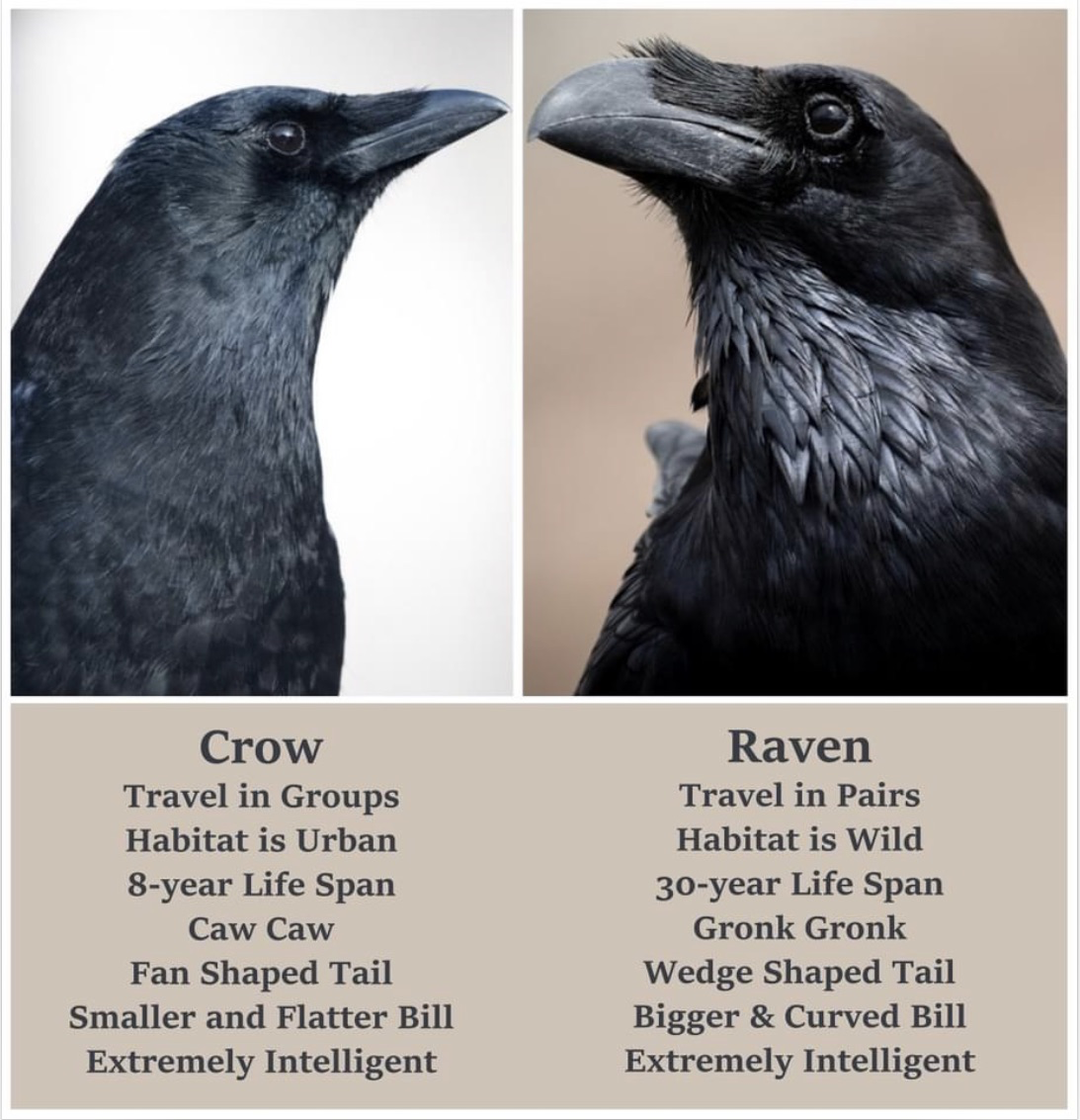
Ravens and crows belong to the same bird family, but they are different species and do not always share the same social habits. American Crows are well known for forming very large winter roosts in some parts of the United States. Common Ravens also roost communally, but they are often more solitary or paired during ordinary daily activity.
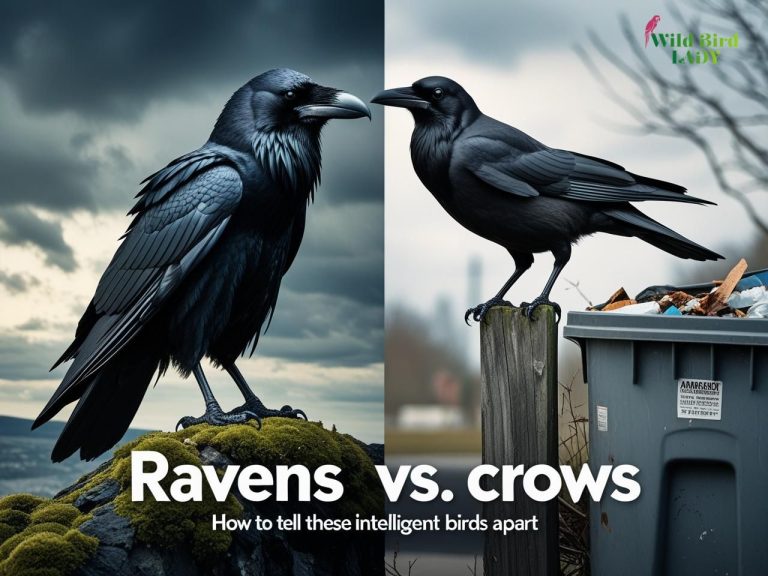
This distinction matters when interpreting a large black-bird gathering at dusk. A group may include crows rather than ravens, particularly in places where American Crows are abundant. Size, tail shape, bill shape, flight style, and voice can help distinguish them.
American Crows generally have a fan-shaped tail, while Common Ravens have a more pointed, wedge-shaped tail in flight. Ravens are also larger and often have heavier bills and shaggy throat feathers. Observing these features from a distance is more reliable than judging a bird by color alone.
Frequently Asked Questions
Q
Where do ravens sleep when it rains?
Ravens may choose sheltered branches, dense tree cover, rock overhangs, or other protected perches when it rains. The exact location depends on the available habitat and how severe the weather is. They may change positions or move to a different site if wind or rain makes a perch unsuitable.
Q
Do ravens sleep in the same place every night?
Some ravens repeatedly use familiar roosting areas, but they do not have to use the exact same perch every night. Weather, disturbance, food supplies, and social behavior can affect their choice. A regularly used roost may remain active for years, although individual birds and groups can change.
Q
Do ravens sleep with their mates?
A breeding pair may rest near one another and remain close to its territory. However, the precise arrangement varies with the season and circumstances. Not every paired raven spends every night on the same branch or at the same roost.
Q
How many ravens sleep together at night?
There is no fixed number. Some roosts contain only a few birds, while others can hold many individuals. The size depends on local habitat, food availability, the number of nonbreeding birds, and whether the site serves as a regular communal roost.
Q
Do ravens sleep in cities?
Yes, ravens may roost in or near developed areas if suitable trees, ledges, or structures are available. They can use bridges, towers, industrial sites, and wooded urban spaces. Their presence near buildings does not mean that they are domesticated or dependent on people.
Q
Why do ravens gather on rooftops at dusk?
A rooftop may provide an elevated resting perch or a place to pause before flying to a nearby roost. Several ravens gathering there may be socializing, responding to food nearby, or moving toward a communal sleeping area. The rooftop is not necessarily where they will spend the entire night.
Q
Should I feed ravens to make them return to a roost?
No. Feeding is not a reliable way to encourage a natural roosting pattern, and food can draw birds into conflict with people or expose them to harmful items. Observe from a distance instead, keep garbage secured, and follow local wildlife rules.
✦ Wrapping Up
Conclusion
Ravens usually sleep in elevated places that offer a useful balance of shelter, safety, and access to their surroundings. Trees, cliffs, rocky ledges, and certain human-made structures can all serve as nighttime resting sites. Some ravens sleep alone or near a mate, while young and nonbreeding birds may gather at communal roosts.
Their habits change with the season, weather, breeding status, and local food supply. A familiar roost may be used for years, yet a raven can choose a different perch or move to another site when conditions change. A nest is mainly for raising young, so it should not be confused with an ordinary sleeping place.
If you want to find a local raven roost, watch the birds’ movements near sunset from a safe, legal viewing point. Look for repeated evening arrivals and morning departures over several days. Give the birds room to rest, and let their natural behavior guide what you learn.
💡 Key Takeaway
Choose a quiet viewing spot, observe raven flight paths around dusk for several evenings, and record where the birds settle without approaching, feeding, or disturbing them.
Animal Facts Zone is a family-friendly online resource built for curious minds, students, and wildlife enthusiasts. Founded and edited by Sourov Biswas, the platform breaks down fascinating animal behaviors, species identification guides, and nature trivia into clear, easy-to-read articles.
From backyard butterflies and fireflies to reptiles, birds, and wild matchups, every guide is crafted to answer real questions about the natural world and inspire everyday wildlife appreciation. Whether you are a student researching a species or a nature lover exploring your own backyard, Animal Facts Zone helps you learn something new about the animal kingdom in minutes.
1 thought on “Where Do Ravens Go To Sleep At Night?: Their Roosts”







1 thought on “Where Do Ravens Go To Sleep At Night?: Their Roosts”