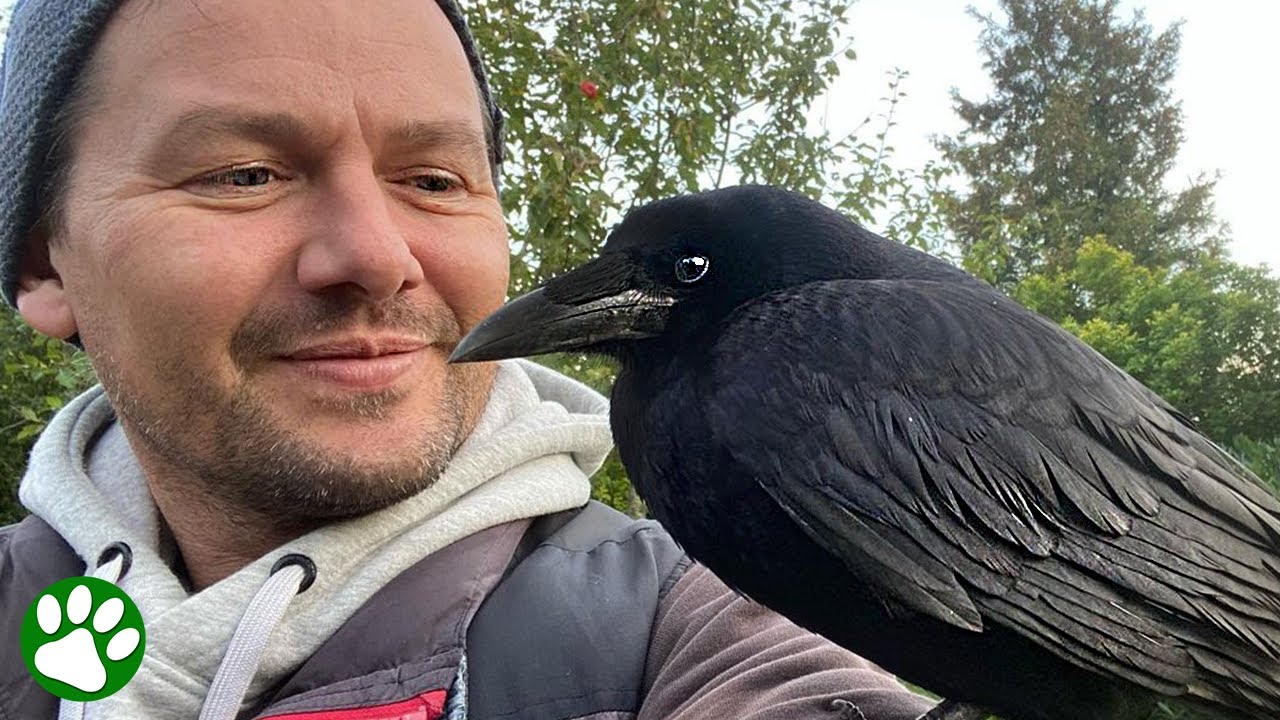
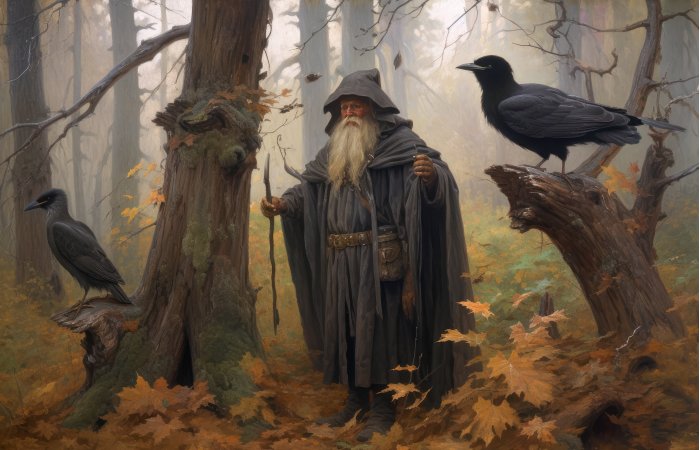
Yes, ravens can form trusting bonds with humans, but not every raven will become friendly. Wild ravens may learn to recognize a person, approach them for food, or choose to spend time nearby. Their trust grows through calm, safe, and repeated contact, not through force or constant feeding.
Across the United States, common ravens live in places that range from the rocky cliffs of Alaska to forests, deserts, mountains, and some busy towns. These large black birds often draw attention with their deep calls, strong beaks, and clever behavior. If a raven visits your yard or watches you from a fence, you may wonder whether it could become your friend.
The answer depends on the bird, its past experiences, and the setting. Ravens are members of the crow family, Corvidae, a group known for complex social behavior and flexible problem-solving. Research on corvids shows that some can learn about individual humans and adjust their behavior based on past encounters. Still, a bird that accepts your presence is not always seeking a close bond.
A wild raven may come closer when it sees you as a low-risk presence. It may also visit a place because food is easy to find, not because it feels affection for a person. The best way to build trust is to let the bird make its own choices while keeping a safe distance and respecting wildlife rules.
Source: Bing
Why Can Ravens Become Friendly With Humans?
Ravens can become comfortable with people because they are intelligent, curious, and able to learn from experience. A raven that sees a person behaving calmly may gradually decide that the person poses little danger. If the same person appears often in a safe setting, the bird may learn to predict what will happen next.
This ability to learn is useful in the wild. Ravens must find food, avoid threats, compete with other animals, and adjust to changing conditions. Recognizing a familiar person can help a raven decide whether to approach, wait, or fly away.
Friendliness is not a fixed trait shared by all ravens. One bird may investigate a person at close range, while another may keep its distance for years. Age, past encounters, hunger, nesting activity, and local conditions can all affect how a raven responds.
Source: Bing
Learning from experience
Ravens can connect a person’s actions with later outcomes. Calm encounters may lead to greater tolerance, while frightening encounters may make the bird more cautious.
Curiosity
Ravens often investigate unfamiliar objects and situations. A bird that watches or approaches you may be exploring rather than seeking companionship.
Social intelligence
Ravens live in complex social settings and exchange information through behavior and calls. Their social skills may help them respond differently to familiar and unfamiliar people.
Individual differences
A raven’s personality and history matter. Even birds living in the same area may show very different levels of comfort around humans.
Can Ravens Recognize Individual People?
Yes, evidence from corvid research supports the idea that these birds can distinguish among individual humans. One well-known line of research involved American crows that learned to associate particular human faces with a threat. The birds later responded differently to those faces, even after time had passed.
That finding supports the broader idea that corvids can remember meaningful encounters with people. It does not mean every raven has the same memory ability in every setting, nor does it prove that a raven remembers someone with affection. Recognition and friendship are different things.
For someone hoping to earn a raven’s trust, the practical lesson is simple: your behavior matters. Repeated calm encounters may help the bird learn that you are predictable. Sudden movements, chasing, or attempts to grab it may create the opposite association.
What recognition means
The bird may respond to a familiar person differently from a stranger because it has learned from earlier encounters.
What recognition does not prove
It does not establish that the raven loves the person, wants physical contact, or will always approach.
What Does Raven Friendship Look Like?
A friendly raven may tolerate your presence, watch you without alarm, or approach when you are nearby. It might return to the same yard or outdoor space on different days. These behaviors can suggest familiarity, but each needs to be judged in context.
A raven may also approach because it expects food or has learned that people leave useful scraps behind. That behavior can look like a special bond, especially when the bird seems to wait for one particular person. Yet a food-related habit does not tell us exactly what the bird feels.
A more reliable sign of growing trust is a gradual change in the bird’s behavior while it remains free to leave. For example, it may continue normal activities while you sit at a distance, instead of stopping everything to watch you or flying away at once. Even then, calm tolerance is not the same as a human-style friendship.
Source: Bing
It stays nearby without signs of alarm
A raven may keep feeding, resting, or moving about while you remain at a respectful distance.
It returns to the same place
Repeated visits may reflect a safe resting area, a useful food source, or familiarity with the people nearby.
It watches your actions
The bird may pay attention to what you do and adjust its movements. Observation alone does not prove affection.
It approaches by choice
A raven that closes the distance without being cornered is showing comfort in that moment. Let it decide how close to come.
It keeps a comfortable escape route
A relaxed wild bird can move away when it wants. Do not block its path or treat its failure to escape as trust.
Do Ravens Show Affection?
Ravens show complex social behaviors, including close associations with mates and other ravens. They may engage in play, exchange calls, and spend time near familiar individuals. Such behaviors show that raven social life is rich, but they do not give us a direct translation of the bird’s feelings toward a human.
A raven that follows a person, brings an object nearby, or makes repeated calls may be responding to curiosity, learned routines, food expectations, or other factors. People often interpret these actions as gifts or greetings. Those interpretations may feel meaningful, but they are not always supported by evidence.
The fairest approach is to appreciate the behavior without claiming certainty about its emotional meaning. You can build a positive relationship by allowing the bird to approach and leave freely, without demanding a particular response.
Look for patterns
Several calm encounters are more informative than one dramatic moment.
Respect uncertainty
A behavior may have several explanations. Avoid assuming that it has the same meaning as a human gesture.
How to Build Trust With a Wild Raven Safely
The safest way to encourage trust is to make yourself predictable and give the raven control over the distance between you. You do not need to touch the bird, call it into your hand, or feed it every day. In many cases, simply sharing an outdoor space without disturbing the raven is the best start.
Before you take any action, check local and state wildlife rules. Feeding wildlife may be restricted in some parks, towns, or protected areas. Rules can also differ by species and location, so do not assume that an action allowed in one place is permitted everywhere.
If the bird is wild and healthy, keep the relationship low-pressure. Avoid baiting it into traffic, encouraging it to enter your home, or teaching it to depend on people for food. The goal is to make encounters safer, not to turn a wild animal into a pet.
Source: Bing
Step 1: Learn the Raven’s Normal Routine
Start by observing from a distance. Notice where the raven rests, how it moves through the area, and whether it visits at similar times. Do not follow it toward its nest or roost, and avoid lingering close to a site where adults may be raising young.
Give the bird enough room to continue its normal behavior. If it stops feeding, repeatedly looks toward you, raises alarm calls, or moves away, increase the distance. A bird that flies off is giving a clear signal that it wants space.
Choose a quiet place
Observe from a public path or another lawful location where you will not block the bird’s movement.
Keep your movements slow
Avoid sudden gestures, loud calls, and direct approaches.
Step 2: Be Calm and Predictable
If you regularly pass through the area, follow the same route when practical and avoid changing your behavior to get a reaction. You can pause at a distance and let the raven decide whether to watch or ignore you. Do not stare it down or move closer every time it looks at you.
A raven may need many encounters before it appears relaxed. Some will never choose to approach. That is a normal outcome, not a sign that you have failed.
Let the raven set the pace
Do not close the gap just because the bird remains still.
Avoid testing its trust
Reaching toward it, trying to touch it, or deliberately startling it can damage the sense of safety you are trying to build.
Step 3: Do Not Make Food the Center of the Relationship
Food can draw ravens close, but feeding is not necessary to earn their tolerance. Regular handouts can change an animal’s behavior, bring birds into conflict with neighbors, and expose them to unsafe food. Human food scraps may also contain excess salt, sugar, seasonings, or other ingredients that are poor choices for wildlife.
If feeding is prohibited or discouraged in your area, do not do it. Even where it is allowed, avoid hand-feeding and never use food to lure a raven into a dangerous place. Natural food sources and a clean habitat are more appropriate ways to support wildlife.
Never feed from the hand
Close contact can lead to pecking, defensive behavior, or a bird becoming too bold around people.
Keep waste secure
Use closed trash containers and avoid leaving scraps that attract ravens to roads or busy public areas.
Do not use food to trap or capture
A wild raven must remain free to leave, and capture may require specific legal authorization.
Step 4: Watch for Signs That You Should Back Away
A raven that repeatedly retreats, gives alarm calls, or makes defensive passes may feel threatened. During nesting season, adults can become more protective of their nest or young. A bird that seems calm at other times may react strongly if you approach a nest site.
Back away slowly and choose another route if needed. Do not throw objects, shout at the bird, or retaliate if it swoops. If the behavior creates a safety concern in a public area, contact the relevant park authority or wildlife agency for advice.
Repeated retreat
The raven keeps moving away whenever you approach. Stop closing the distance.
Alarm calls
Loud, repeated calls may signal concern or alert other birds. Give the raven more space.
Defensive swooping
Move away from the area and avoid the likely nest zone. Do not try to catch or confront the bird.
How Long Does It Take for a Raven to Trust a Person?
There is no reliable number of days or weeks that applies to every raven. A bird that often sees people in a safe setting may become comfortable sooner than one that has been chased, trapped, or harmed. Some ravens may tolerate a familiar person for years without ever approaching closely.
Trust is not a straight line. A raven that comes near one day may stay far away the next because of a dog, a new person, a food shortage, a nearby predator, or activity around its nest. Weather, season, and competition with other ravens can also affect its behavior.
Instead of setting a deadline, look for gradual changes. Does the raven continue its usual activity while you remain at a distance? Does it leave without panic when something changes? Does it approach voluntarily without being lured? These signs can help you judge comfort without forcing contact.
Source: Bing
Early stage
The raven watches from a distance and may leave when you move. Give it room and keep your behavior calm.
Growing familiarity
The bird may continue normal activity while you are present, though it still maintains space.
Comfortable tolerance
The raven may remain nearby or approach voluntarily in a familiar setting. This still does not mean it wants to be touched.
A change in behavior
If the bird becomes wary again, respect the change. Do not assume earlier comfort gives you permission to move closer.
Can a Raven Remember Someone for Years?
Corvid research supports long-term memory for important encounters, including encounters with humans. The strongest examples often involve learning about threats. These findings suggest that a raven may retain information about a familiar person well beyond a single meeting.
However, the exact duration of a particular wild raven’s memory for a friendly human is not established by simply observing repeated visits. The bird may remember a location, a routine, a food source, or a person. More than one cue may guide its response.
For that reason, do not use a raven’s return as proof that it remembers you fondly. Treat each visit as a fresh opportunity to behave calmly and allow the bird to choose how it responds.
Memory can support recognition
A raven may learn to distinguish familiar people from others.
Memory does not guarantee trust
Past comfort can change if the situation becomes threatening or unpredictable.
Can You Keep a Raven as a Pet in the United States?
In the United States, keeping a wild raven as a pet is generally not a simple or lawful option. Common ravens are native wild birds, and federal protections may apply under the Migratory Bird Treaty Act. State and local laws may add further restrictions on possession, capture, transport, or rehabilitation.
Legal details depend on the species, the activity, the location, and any applicable permit or exemption. A person should not assume that finding a young raven, receiving one from someone else, or raising a bird from an egg makes possession legal. Before taking any action, contact the appropriate state wildlife agency or a licensed wildlife rehabilitator.
Ravens also have needs that are difficult to meet in a typical home. They require space, opportunities to move and explore, suitable food, social and mental stimulation, and specialized veterinary care. Their strength, curiosity, and complex behavior can make close confinement stressful for the bird and challenging for the keeper.
Source: Bing
What If You Find a Baby Raven?
Do not assume a young bird is abandoned just because it is on the ground. Many young birds leave the nest before they can fly well. Their parents may remain nearby and continue feeding them, even when people cannot see the adults.
Observe from a distance and keep children and pets away. If the bird is injured, in immediate danger, or clearly unable to move normally, contact a licensed wildlife rehabilitator or your state wildlife agency for guidance. Do not take it home or try to raise it yourself.
If you have already picked up the bird, avoid feeding it or giving it water by mouth. Improper food or liquid can cause serious harm. Ask a qualified rehabilitator what to do next and follow their instructions.
Keep pets away
Dogs and cats can injure a young raven even if they seem curious rather than aggressive.
Do not offer random food
Bread, milk, seasoned leftovers, and unsuitable supplements are not proper substitutes for a wild bird’s diet.
Contact qualified help
A licensed rehabilitator can assess whether the bird needs intervention and explain lawful next steps.
Can a Licensed Rehabilitator Keep a Raven?
Wildlife rehabilitators may be authorized to care for certain injured or orphaned wild birds under the permits and rules that apply to their work. Rehabilitation aims to restore a bird to health and return it to the wild when possible, not to make it a pet.
Some birds cannot be released because of permanent injuries or other limits. Any long-term placement must follow the applicable legal and professional requirements. A member of the public should never assume that a bird needing care can be kept at home.
Rehabilitation is specialized care
It involves proper housing, nutrition, health assessment, and decisions about release.
Permits matter
The authority to possess or care for a wild raven depends on the relevant laws and permissions.
Are Ravens More Friendly Than Crows?
Neither ravens nor crows are universally more friendly toward people. Both belong to the corvid family, and both can learn from experience. Their behavior depends on individual history, local conditions, access to food, and the way people treat them.
In much of the United States, American crows are common in neighborhoods, parks, farms, and city streets. Common ravens often use mountains, forests, deserts, coastlines, and open country, though they also occur in some developed areas. Because people see crows more often in many neighborhoods, they may have more chances to observe crows at close range.
Ravens are generally larger than American crows and have heavier bills, shaggy throat feathers, and a deeper voice. Those traits can make a raven seem more imposing, but size alone does not tell you whether a bird will be approachable. A wary raven may avoid people, while a familiar crow may appear quite bold.
Source: Bing
Ravens
Often seen in wild and open landscapes, although some populations live near people. Their responses vary from cautious avoidance to comfortable tolerance.
American crows
Common in many residential settings and often easy to observe near people. Familiarity with human activity does not mean every crow wants direct contact.
What matters most
Judge each bird by its behavior and setting rather than assuming that one species is always friendlier.
Can a Raven and a Crow Both Befriend Humans?
Yes, either species may become familiar with a person. Both can learn which places are safe and which human actions predict a threat or a food source. Neither species is guaranteed to form a close relationship with an individual.
The same respectful approach works for both. Give the bird space, avoid sudden movements, follow local rules, and do not encourage risky behavior. If a crow or raven stays away, let it do so without trying to force a connection.
Avoid species-based assumptions
A bird’s individual behavior is more useful than a broad claim that ravens or crows are always friendlier.
Keep wildlife wild
Observe and appreciate the bird without trying to capture, handle, or confine it.
What Can Stop a Raven From Trusting You?
A raven may avoid a person because it has learned that people can be dangerous, because the setting feels unsafe, or because it has no reason to approach. You cannot always tell which factor is responsible. Trying harder by moving closer may increase fear instead of building trust.
Some behaviors that people see as rejection are simply normal wild-bird behavior. Ravens need to watch for predators, protect their young, compete for food, and maintain a safe distance from unfamiliar animals. A bird that flies away is not being rude; it is making a choice that helps it survive.
The best response to distance is to respect it. If you stop approaching, avoid repeated calls, and let the raven continue its daily activities, you reduce the pressure on the bird. A positive outcome may be nothing more than the raven feeling safe enough to remain in the same area.
Source: Bing
Past frightening encounters
A raven that has been chased or harassed may be cautious around people. Do not try to overcome that fear through closer contact.
Nesting and young
Adult ravens may react defensively when people approach a nest or young birds. Leave the area and avoid disturbing them.
Dogs and other pets
Even a calm pet can make a raven feel threatened. Keep pets under control and do not let them chase birds.
Unpredictable human behavior
Running toward the bird, shouting, throwing objects, or trying to touch it can make future encounters less comfortable.
Food-related conflict
Competition, crowds, or people who feed wildlife can change how ravens behave around one another and around humans.
What Should You Do if a Raven Swoops at You?
Move calmly away from the area rather than approaching the bird or trying to fight it off. A raven that swoops may be defending a nest or young, although the reason cannot be confirmed from one pass alone. Look for a nearby nest zone and choose another route.
Protect your face if needed, but do not throw stones or other objects at the bird. Keep children and pets away from the area. If repeated defensive behavior creates a risk for people using a public path, contact the relevant park staff or wildlife agency.
Leave the immediate area
Increase distance and avoid returning close to the same location while the bird remains defensive.
Do not retaliate
Harming the bird can worsen the situation and may violate wildlife laws.
Seek local guidance
Park managers or wildlife officials can advise on recurring conflicts without unnecessary harm to the bird.
What Research Can Tell Us About Human-Raven Bonds
Research on corvid intelligence offers a strong basis for understanding why ravens can learn about people. Studies of related species have examined recognition, social learning, problem-solving, and responses to threats. These findings show that corvid behavior can be flexible and shaped by experience.
One important distinction is that evidence from American crows or other corvids does not automatically establish every detail of human-raven relationships. Different species and situations can produce different results. A claim about a particular raven should be based on what is known about that bird, not on an assumption that all corvids behave alike.
There is also a difference between a behavior that can be observed and an emotion that must be inferred. A raven returning to a yard is observable. The reason for its return may be food, shelter, familiarity, curiosity, or several factors at once. Calling the bird a friend may be a meaningful human description, but it should not be confused with a proven account of the bird’s inner experience.
For readers, this careful approach does not make ravens less remarkable. It gives their behavior the respect it deserves. You can appreciate their memory and social skills while admitting that their exact feelings toward a person remain uncertain.
Source: Bing
Documented
Corvids show advanced learning and memory, and research on American crows demonstrates that some can distinguish human faces associated with threats.
Supported interpretation
A raven may learn that a familiar person is predictable and relatively safe, which can change how close it chooses to remain.
Not established for every encounter
A specific raven’s affection, loyalty, or motive cannot be confirmed simply because it visits or approaches someone.
Why Is It Better Not to Promise a Friendship?
Promising that any raven can befriend a person may encourage people to approach too closely, feed wildlife against local rules, or take a young bird from its parents. Those actions can harm the bird and create avoidable conflict.
A more useful message is that ravens can become familiar with people, and some may choose to approach. Whether a close relationship develops depends on the bird and the circumstances. Respect for its freedom should remain the main goal.
Protect the bird’s choices
Let it decide whether to approach, remain nearby, or leave.
Keep claims grounded
Describe what the raven does rather than claiming to know exactly what it feels.
Frequently Asked Questions
Q
Will a wild raven come to you if it likes you?
It may approach if it feels safe, recognizes you, or expects something useful from the area. However, approaching does not prove affection. Let the bird choose the distance, and do not try to lure it close or touch it.
Q
Can you make a raven trust you?
You cannot guarantee that a wild raven will trust you, but you can avoid actions that frighten it. Remain calm, keep a safe distance, avoid its nest, and let it leave whenever it wants. Some birds may become more comfortable over time, while others may always stay wary.
Q
Do ravens bring gifts to humans?
There are reports of ravens and other corvids leaving objects near people, but the motive behind a particular object is difficult to establish. It may reflect curiosity, play, food-related behavior, or another learned action. There is no basis for assuming that every object left by a raven is a deliberate gift in the human sense.
Q
Can a raven bond with one person more than others?
A raven may respond differently to people based on past encounters and familiar routines. It might approach one person while avoiding another. This can suggest that the bird has learned to distinguish between them, but it does not prove an exclusive emotional bond.
Q
Is it safe to touch a friendly raven?
No. Even a raven that seems comfortable around you is a wild animal with a strong beak and its own limits. Touching or restraining it can cause stress or injury. Keep your hands away and contact a licensed wildlife rehabilitator if the bird appears injured or needs help.
Q
Should I feed a raven to become its friend?
Feeding is not required to build familiarity and may be restricted by local rules. Regular handouts can change the bird’s behavior and attract it to unsafe places. A better approach is to provide a calm environment, manage trash responsibly, and observe the raven without creating dependence.
✦ Wrapping Up
Conclusion
Yes, ravens can become friendly with humans. Their intelligence and ability to learn from experience allow them to recognize familiar people and adjust their behavior after repeated encounters. Some may approach, stay nearby, or appear relaxed around someone they know, while others will keep their distance.
The key is to understand what trust means for a wild bird. A raven does not need to land on your hand or accept food to have a positive relationship with your presence. If it can continue its normal activities without fear, that is already a worthwhile result.
Give the raven space, avoid disturbing its nest, follow local wildlife rules, and never try to turn a wild bird into a pet. Let each encounter happen on the bird’s terms. The best human-raven relationship is one built on patience, observation, and respect for the animal’s freedom.
💡 Key Takeaway
Choose a quiet place where you can observe a wild raven from a respectful distance. Keep your movements calm, avoid feeding or touching it, and allow the bird to decide whether to remain nearby. If it leaves, let it go.
Animal Facts Zone is a family-friendly online resource built for curious minds, students, and wildlife enthusiasts. Founded and edited by Sourov Biswas, the platform breaks down fascinating animal behaviors, species identification guides, and nature trivia into clear, easy-to-read articles.
From backyard butterflies and fireflies to reptiles, birds, and wild matchups, every guide is crafted to answer real questions about the natural world and inspire everyday wildlife appreciation. Whether you are a student researching a species or a nature lover exploring your own backyard, Animal Facts Zone helps you learn something new about the animal kingdom in minutes.