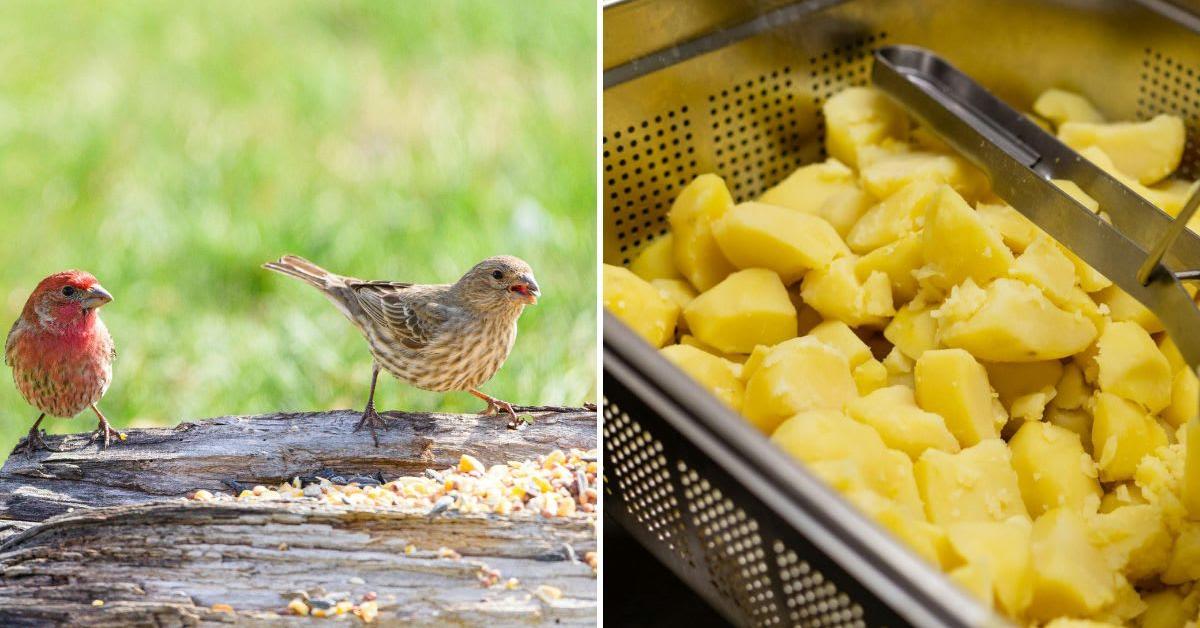
People put potatoes in bird feeders to offer birds a soft, filling food, but plain, fully cooked potato is the safer choice. Raw potato, green potato, sprouts, salt, butter, and other seasonings should stay out of backyard feeders.
Across the United States, backyard bird feeding is a simple way to enjoy wildlife, from Northern Cardinals in the East to Black-capped Chickadees in northern states and California Scrub-Jays in the West. You may have seen a tip suggesting that a potato can attract hungry birds to a garden feeder. The idea sounds easy, but the type of potato and the way you serve it matter more than the novelty of the trick.
Potatoes are not a natural staple for most wild songbirds. Some birds may eat small pieces of plain cooked potato, yet familiar foods such as black-oil sunflower seeds, suitable seed mixes, and mealworms are often better choices for common feeder visitors. A potato is best viewed as an occasional extra, not a replacement for a balanced diet or a proven way to attract a particular species.
The safest approach is to use a small amount of plain, fully cooked potato with no salt, oil, butter, milk, gravy, or spices. Remove the skin if its condition is uncertain, let the potato cool, cut it into tiny pieces, and offer only what birds can eat quickly. If your goal is to support healthy wild birds, clean feeders, fresh water, native plants, and suitable bird food will usually do more than an unusual kitchen leftover.
Source: Bing
Why Do People Put Potatoes in Bird Feeders?
People add potatoes to bird feeders because potatoes are common household foods, easy to prepare, and rich in starch. When cooked until soft, a potato can be broken into small pieces that some birds may sample. This makes it an appealing idea for people who want to use a plain kitchen ingredient rather than throw it away.
The practice is sometimes promoted as a way to give garden birds extra energy, especially during cold weather. Starchy food provides calories, but that does not mean potato is the best food for wild birds. Birds need diets that fit their species, size, age, and season, and a single human food cannot meet all those needs.
There is also a practical distinction between a food that a bird may eat and a food that is recommended for regular feeding. A bird might peck at a cooked potato without gaining any special benefit from it. For most backyard birds in the United States, a suitable seed mix or another species-appropriate food is a more reliable option.
Source: Bing
To offer extra calories
Cooked potato contains carbohydrates that can provide energy, but it lacks the full range of nutrients birds need. It should never become a major part of a wild bird’s diet.
To use plain leftovers
An unseasoned cooked potato may seem like a useful way to reduce food waste. Only offer it if it is fresh, safe, and suitable for the intended birds; compost questionable leftovers instead.
To try an unusual feeder food
Some people experiment with different foods to see what local birds inspect. An unusual food may attract little interest, and there is no guarantee that it will bring more birds to the yard.
Does a Potato Attract More Birds?
A potato is not a dependable bird attractant. Some birds may investigate a small piece, while others ignore it completely. The species visiting a yard depend more on local habitat, season, feeder design, nearby cover, and the foods birds already recognize.
If you want to attract a wider range of birds, match the food to the species you hope to see. Sunflower seeds can appeal to many common seed-eating birds, while mealworms may suit insect-eating species such as bluebirds when offered appropriately. Native flowers, shrubs, and trees can provide natural food and shelter throughout the year.
Best for general backyard feeding
Choose a suitable seed blend or black-oil sunflower seeds, and keep the feeder clean and dry.
Best for insect-eating birds
Consider suitable mealworms or a habitat with native plants that support insects.
Can Wild Birds Eat Potatoes?
Some wild birds may eat small pieces of plain cooked potato, but tolerance does not make it an ideal food. Birds have different dietary needs, and a food that one species samples may be unsuitable or unappealing to another. There is limited reason to assume that ordinary backyard birds need potato as part of a healthy diet.
Cooking softens the potato and makes it easier to break into small pieces. However, cooking does not turn a seasoned side dish into safe bird food, and it should not be used to salvage rotten or moldy potatoes. Keep the portion small and treat it as an occasional extra rather than a daily meal.
Potato leaves, stems, and sprouts are not suitable feeder foods. Potato plants belong to the nightshade family and contain glycoalkaloids, including solanine and chaconine. Green skin and sprouts can have elevated levels, so green or sprouted potatoes should not be offered to wild birds.
Source: Bing
Plain cooked potato
A tiny amount may be offered occasionally if it is fully cooked, cooled, fresh, and free of seasoning. It is optional, not a recommended staple.
Raw potato
Avoid offering it. Raw pieces are firm, offer little practical advantage, and may be harder for birds to handle. Never use green or sprouted raw potato.
Potato skins
Do not use green, sprouted, dirty, or questionable skins. For a cautious feeding approach, peel a fresh potato before cooking and offer only the soft flesh.
Potato chips and fries
Do not feed these as a substitute for bird food. They often contain excess salt, oil, or seasoning and offer little nutritional value for wild birds.
Which Backyard Birds Might Try Cooked Potato?
Generalist birds that sample a broad range of foods may investigate soft potato pieces, but a species-specific preference should not be assumed. American Crows, Common Grackles, European Starlings, and some jays eat varied foods in different settings. That does not establish cooked potato as a preferred or beneficial food for any of them.
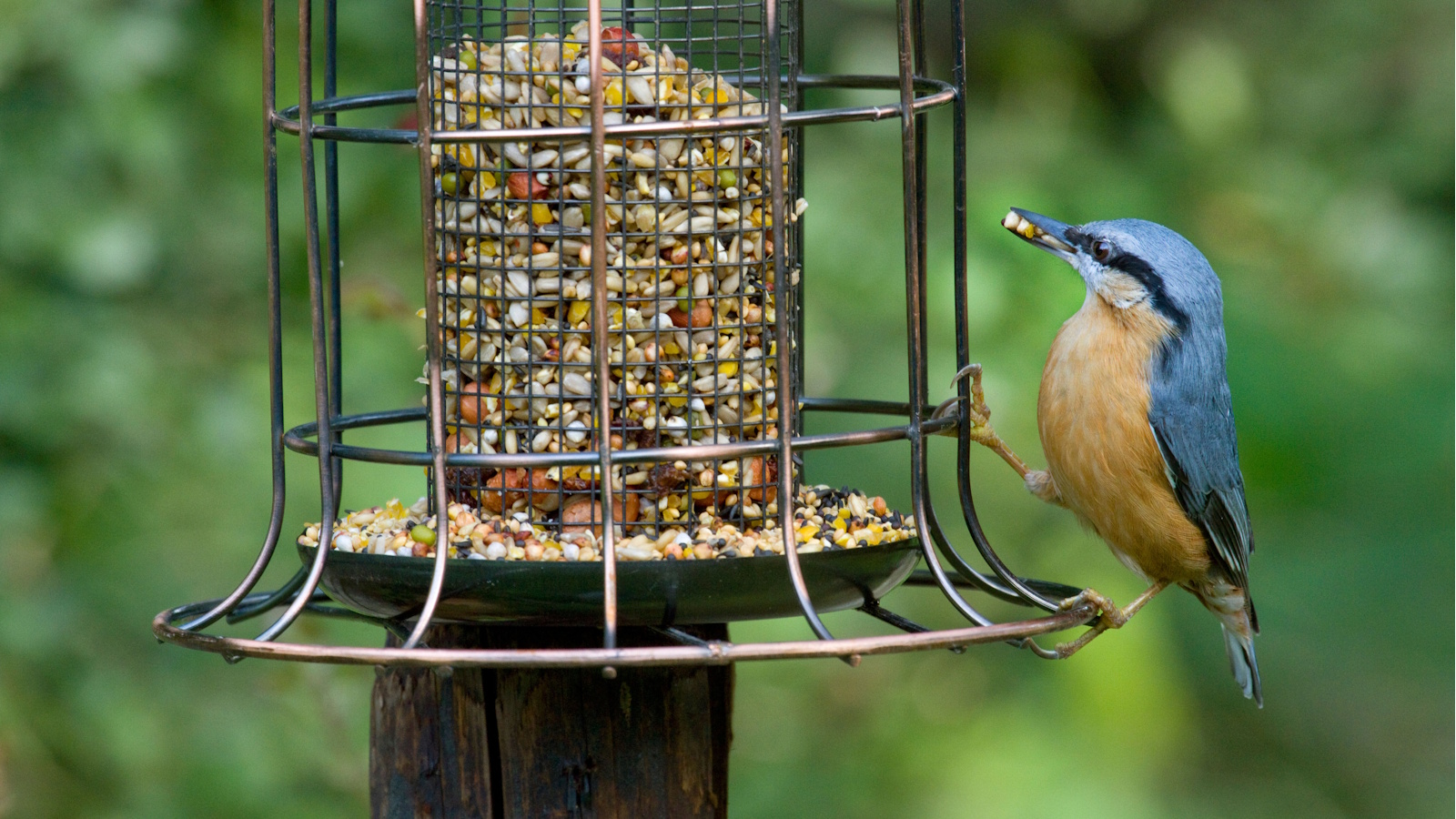
Small songbirds such as chickadees, finches, and nuthatches are usually better served by foods suited to their usual diets. A large piece of potato may be difficult for a small bird to handle, and a soft, starchy food may not meet its nutritional needs. If a bird ignores the potato, remove it instead of leaving it out in the hope that it will eventually eat it.
Do not target a species with potato alone
Use food known to suit that species and provide suitable shelter and water.
Watch without disturbing
Observe from a distance and remove the food if it spoils or attracts unwanted pests.
Why Cooked Potato Is Safer Than Raw Potato
Cooked potato is softer than raw potato, so a bird can peck at small pieces more easily. Heat also reduces some naturally occurring compounds in potatoes, but it does not make every potato safe. Green or sprouted potatoes, rotten food, and plant parts should still be excluded.
Raw potato offers no clear advantage as a feeder food. Hard pieces can be awkward for small birds to handle, and large chunks may be left behind. Because a bird feeder is not the place to test an uncertain food, the safest choice is to rely on established bird foods and use cooked potato only as an optional, tiny extra.
Never try to make a potato suitable by adding ingredients that people enjoy. Salt, butter, oil, cream, cheese, gravy, garlic, onion, and seasoning blends can introduce excess salt, fat, or other ingredients that are unnecessary or potentially harmful. If the potato was cooked as part of a meal, prepare a separate plain portion before adding any seasoning.
Source: Bing
How to Prepare a Potato for Birds
If you decide to offer potato, start with a fresh, firm potato that has no green patches, sprouts, rot, or mold. Wash it, peel it as a cautious extra step, and cook it thoroughly in plain water without salt or other additions. Let it cool fully before handling it for the feeder.
Cut the soft flesh into very small pieces rather than placing a whole potato or a large wedge outside. Smaller pieces are easier to inspect and remove, and they reduce the chance that food will sit untouched for long periods. Do not mash the potato with milk, butter, or sauces, and do not add sugar or sweeteners.
Choose carefully
Use a fresh potato with no green areas, sprouts, decay, or mold.
Cook it plainly
Boil or otherwise cook the potato thoroughly without salt, oil, butter, milk, or seasoning.
Cool and cut
Wait until it reaches room temperature, then cut it into tiny pieces suitable for small birds.
Serve a small amount
Offer only what birds can eat promptly, and do not leave a large pile available all day.
Can You Microwave a Potato for Birds?
A plain potato can be cooked in a microwave if it is heated all the way through and allowed to cool completely. The key is not the cooking appliance but the result: the flesh should be soft, fresh, and free of added ingredients. Check that no part remains hot before offering it.
Do not place a warm potato in a feeder and assume outdoor air will cool it quickly. Birds can approach before the food has cooled, and uneven heating may leave hot spots. Preparing the food ahead of time and checking it by touch is the simpler option.
How to Offer Potato Without Making a Mess
A shallow, washable dish is a better choice for a small amount of cooked potato than a standard tube feeder designed for dry seed. Wet foods can cling to narrow openings, collect debris, and make feeder cleaning harder. A simple dish also lets you see how much food remains.
Place the dish in a spot where you can check it often and clean the area with ease. Avoid putting it beside a window where birds may strike the glass, directly above a busy walkway, or in a place where cats can hide and ambush feeding birds. Nearby shrubs can offer cover, but dense cover right at the dish can also conceal predators.
The goal is not to keep potato available around the clock. Add a very small portion when you can monitor it, then remove the remains and clean the dish. If the food is ignored, do not keep adding fresh portions; switch to a more suitable food.
Source: Bing
Where Should You Put the Dish?
Choose a stable location that is easy to see and reach for cleaning. Birds need a chance to notice danger, and you need to be able to remove food before it becomes stale. A clean feeding station with a clear approach is more useful than an elaborate setup that is difficult to maintain.
Keep food away from areas where pets eat or roam. If squirrels, rats, raccoons, or other animals regularly visit the spot, stop offering potato and review the feeding setup. Leftovers can attract mammals and insects as well as birds, so a small portion and prompt cleanup matter.
Use a washable dish
Choose a shallow, sturdy surface that can be cleaned after every use.
Keep the area tidy
Pick up dropped pieces and remove uneaten food promptly.
Avoid unsafe access
Keep the dish away from pets, hidden predator cover, and places where birds may collide with windows.
How Long Can Cooked Potato Stay Outside?
There is no single safe outdoor time for every temperature and setting. Heat, moisture, sunlight, insects, and animal contact can all make cooked food spoil or become contaminated more quickly. Do not treat potato as a dry seed that can remain in a feeder for days.
Offer only a portion that can be checked and removed promptly. In hot weather, be especially cautious and clear away leftovers quickly; if the potato becomes wet, slimy, sour-smelling, moldy, or dirty, discard it. Never return outdoor leftovers to human food or store them for another feeding.
Check often
Inspect the dish while the food is available and remove leftovers before they deteriorate.
Discard questionable food
Do not rinse off mold or spoilage and offer the food again.
Potato Compared With Common Bird Foods
If you want to feed birds well, the best choice depends on which species visit your yard. Potato is an optional food with limited value as a regular feeder item, while established bird foods are easier to match to common feeding habits. The comparison below is a practical guide, not a claim that every bird in a group eats the same diet.
A varied backyard habitat can do more for birds than adding unusual scraps. Native plants provide seeds, berries, nectar, and insects at different times of year. Clean water and safe nesting cover can help birds meet needs that a feeder alone cannot supply.
Source: Bing
Black-oil sunflower seeds
A widely useful option for many common seed-eating backyard birds. Store them dry and remove spoiled or damp seed.
Species-appropriate seed mixes
Can serve several local species, though mixes with lots of filler may leave more waste beneath the feeder.
Mealworms
May suit insect-eating birds such as bluebirds when offered in a suitable feeder and in appropriate amounts.
Plain cooked potato
An occasional extra that some birds may sample. It is moist, spoils faster than dry seed, and is not a complete food.
Native plants
Offer natural food and cover and can support insects that many birds eat. They require planning but can benefit wildlife beyond feeder visitors.
What Is Better for Winter Birds?
During cold weather in the United States, birds may need reliable access to suitable food, especially when snow or ice limits natural foraging. A clean feeder stocked with appropriate seed is a more dependable option than a potato that may freeze, dry out, or spoil. The exact food depends on the birds in your region.
Keep feeders accessible and clean, and do not assume that every bird needs supplemental food. Some species forage for insects, berries, or other natural foods, even in winter. A garden with native shrubs and trees can provide useful food and shelter when conditions change.
For common seed eaters
Offer suitable seed, such as black-oil sunflower, in a clean feeder.
For insect eaters
Use appropriate insect food where recommended, and maintain natural habitat.
For all visiting birds
Keep feeding stations clean and provide safe cover and a reliable source of clean water where practical.
Common Potato Feeding Mistakes to Avoid
The main risk is treating a human food as automatically safe for wildlife. Birds are small, and the amount of salt or seasoning in a familiar meal may be unsuitable for them. A few simple checks can prevent most avoidable problems.
Do not leave a whole potato outside or attach it to a feeder with string, wire, or a skewer. Such arrangements may fall, create an entanglement hazard, or attract unwanted animals. Use a stable dish, keep portions small, and remove the food when you are done observing.
Avoid feeding potato chips, fries, mashed potatoes made with dairy, or potato dishes with sauces. If the potato has been cooked with onion, garlic, or other seasonings, do not offer it to wild birds. When ingredients are uncertain, the safer choice is to discard the food or compost it where appropriate.
Source: Bing
Never Use Green or Sprouted Potatoes
Green color and sprouts are warning signs that a potato may contain elevated glycoalkaloid levels. These compounds can be harmful, and ordinary cooking should not be relied on to make a green or sprouted potato safe for birds. Do not cut away one green patch and assume the rest is suitable for feeding wildlife.
The same caution applies to leaves, stems, and sprouts from potato plants. Keep them out of feeding dishes and compost them securely if birds or other animals could reach the pile. If you are uncertain about a potato’s condition, choose another food instead.
Green skin
Do not offer the potato, even if the flesh looks normal.
Sprouts or damaged areas
Discard it as feeder food rather than trying to salvage it.
Mold or rot
Never offer spoiled food, even if only a small area appears affected.
Do Not Confuse Potato With Potato Chips
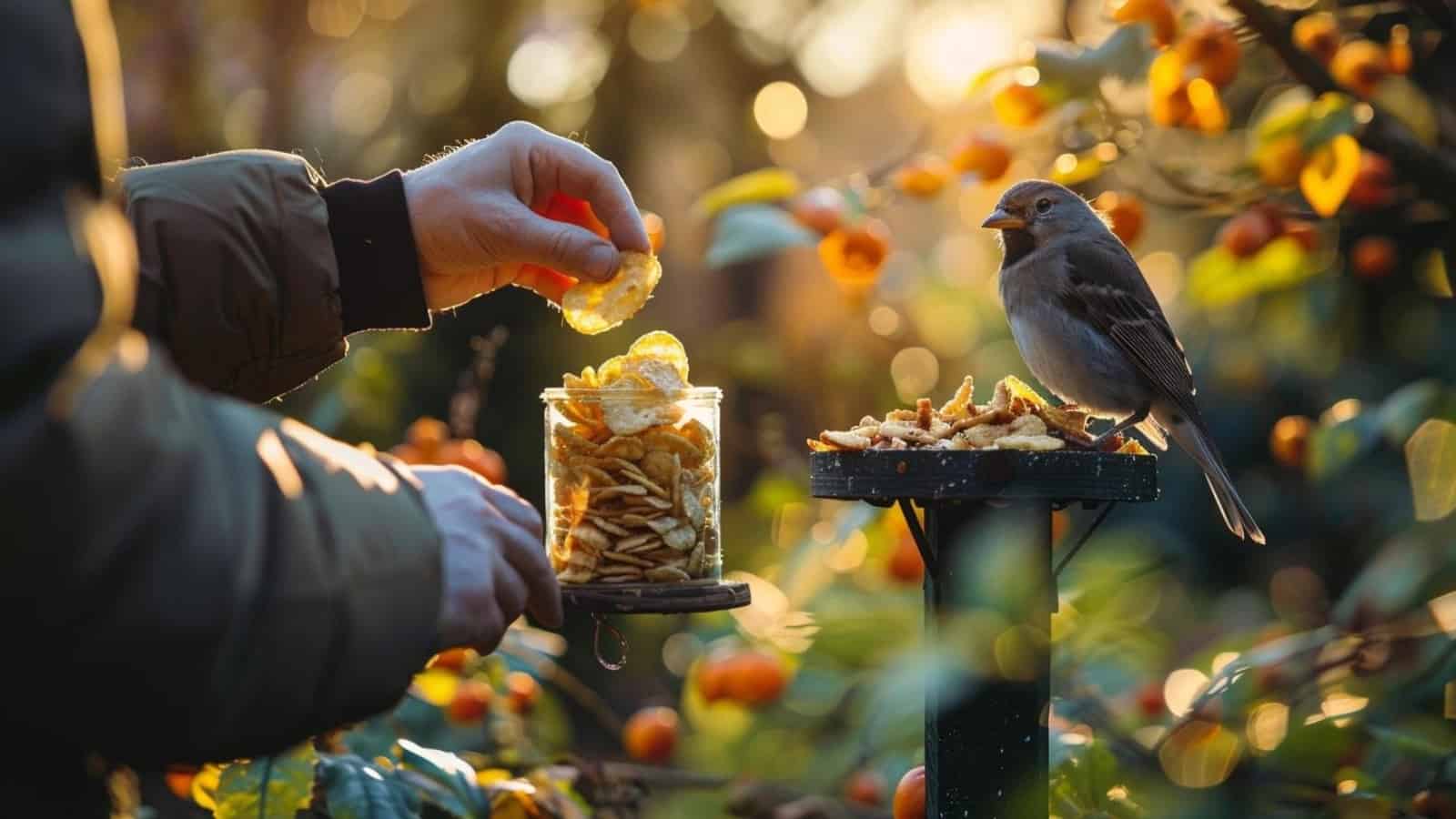
Potato chips are not a suitable shortcut. They can contain salt, flavorings, and added oils, and their crisp texture does not make them better for birds. Fries and seasoned potato wedges have similar drawbacks.
Plain potato flesh and processed potato snacks are different foods. If you want to offer an occasional cooked piece, prepare it separately without additions. Better still, use a food made for wild birds and reserve kitchen scraps for compost when their suitability is uncertain.
How to Tell Whether Your Feeding Setup Is Working
A successful feeding setup is clean, safe, and suited to the birds that visit. You do not need to measure success by how quickly a potato disappears or how many birds gather at once. Bird numbers change with weather, season, local food supplies, and nearby habitat.
Watch for birds feeding normally, using the area without repeated collisions, and leaving the station without signs of distress. Check whether the food stays fresh and whether pests are gathering below the dish. If the potato remains untouched, spoils quickly, or attracts rats and other unwanted visitors, stop offering it.
A simple routine is often best: provide suitable food in modest amounts, clean the feeding surface, and observe from a distance. If you find sick or dead birds near a feeder, stop feeding temporarily, remove food and debris, and clean the equipment carefully. Follow current wildlife-health guidance from your state wildlife agency or the appropriate public health authority before restarting.
Source: Bing
Signs You Should Stop Offering Potato
Stop using potato if it is ignored repeatedly, attracts unwanted mammals, becomes contaminated, or makes the feeding area hard to keep clean. A feeding practice should benefit wildlife without creating avoidable risks for birds or people. There is no need to persist with a food that offers little clear value.
If you see an ill or injured bird, avoid handling it with bare hands. Contact a licensed wildlife rehabilitator or your state wildlife agency for advice. If a feeder has been associated with a cluster of sick birds, remove it from use until you have cleaned it and checked current local recommendations.
Food stays uneaten
Remove it and switch to suitable bird food rather than leaving it outside.
Pests increase
Stop offering scraps and clean the area, including spilled seed and food debris.
Birds appear sick
Pause feeding, follow local wildlife-health guidance, and seek qualified help when needed.
Frequently Asked Questions
Q
Should I put a raw potato in my bird feeder?
No. Raw potato is not a useful default food for wild birds, and green or sprouted potatoes can contain elevated levels of harmful glycoalkaloids. If you choose to offer potato at all, use a tiny amount of fresh, plain, fully cooked potato that has cooled completely.
Q
Can birds eat cooked mashed potatoes?
Some birds may sample plain cooked mashed potato, but avoid mash containing butter, milk, cream, cheese, salt, gravy, or seasoning. It is moist and can spoil quickly, so offer only a tiny amount in a washable dish and remove any leftovers promptly. Suitable bird food is usually the better choice.
Q
Do potatoes help birds survive winter?
Potatoes provide carbohydrates, but there is no strong basis for treating them as a special winter food for wild birds. Appropriate seed, species-suitable food, natural forage, shelter, and clean water are more dependable ways to support backyard birds. A potato should never replace their usual food.
Q
Can I put potato peels in a bird feeder?
It is better not to use potato peels as feeder food, especially if they are green, sprouted, dirty, or damaged. Green and sprouted parts may contain higher levels of glycoalkaloids. If you offer potato, use the soft flesh of a fresh, plain cooked potato instead.
Q
Will a potato attract crows, blue jays, or cardinals?
There is no guarantee that a potato will attract any of these birds. Crows and jays eat varied foods, while cardinals commonly take seeds and other natural foods. Local habitat, season, and the food already available influence which species visit. Use suitable food for the birds you hope to support rather than relying on potato.
Q
Can I leave a potato in the feeder all day?
Leaving moist cooked potato out all day is not a good routine. It can spoil, become contaminated, and attract pests, especially in warm or wet weather. Offer only a small amount when you can monitor it, then remove leftovers and clean the dish.
✦ Wrapping Up
Conclusion
The reason people put a potato in a bird feeder is simple: plain cooked potato is an easy household food that some birds may sample. Yet it is not a special bird-attracting trick, and it is not a required part of a wild bird’s diet. Its value is limited, so there is little reason to make it a regular feeder item.
If you decide to try it, choose a fresh potato, cook it without seasoning, let it cool, and offer only a few tiny pieces in a clean dish. Never use green, sprouted, rotten, or moldy potatoes, and avoid chips, fries, and rich leftovers. Remove uneaten food quickly and keep the feeding area clean.
For most U.S. backyards, suitable seed, species-appropriate food, native plants, safe shelter, and clean water are better long-term choices. These help you support local birds without relying on a questionable kitchen scrap. When in doubt, skip the potato and choose food designed for the birds you want to help.
💡 Key Takeaway
If you want to try potato, offer only a tiny amount of fresh, plain, fully cooked and cooled potato in a washable dish, remove leftovers promptly, and favor suitable wild bird food for regular feeding.
Animal Facts Zone is a family-friendly online resource built for curious minds, students, and wildlife enthusiasts. Founded and edited by Sourov Biswas, the platform breaks down fascinating animal behaviors, species identification guides, and nature trivia into clear, easy-to-read articles.
From backyard butterflies and fireflies to reptiles, birds, and wild matchups, every guide is crafted to answer real questions about the natural world and inspire everyday wildlife appreciation. Whether you are a student researching a species or a nature lover exploring your own backyard, Animal Facts Zone helps you learn something new about the animal kingdom in minutes.