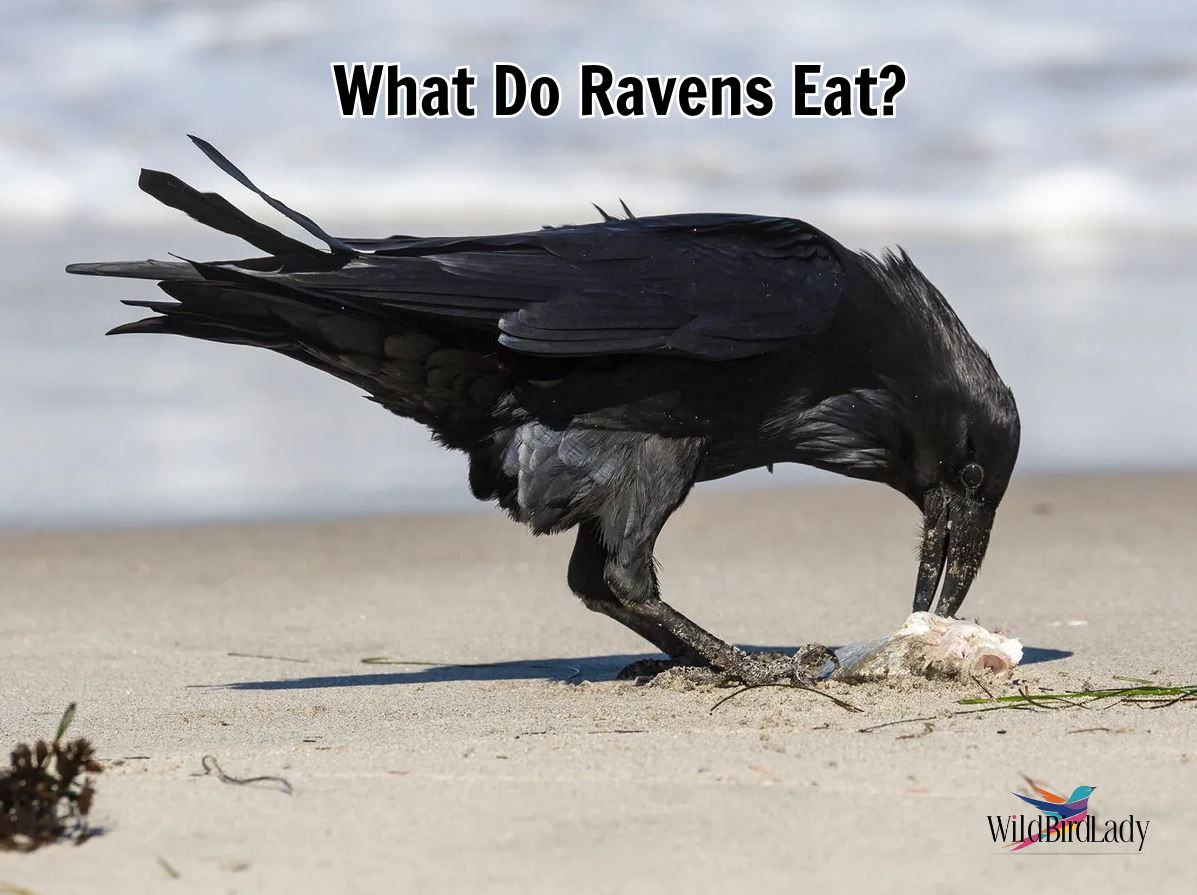
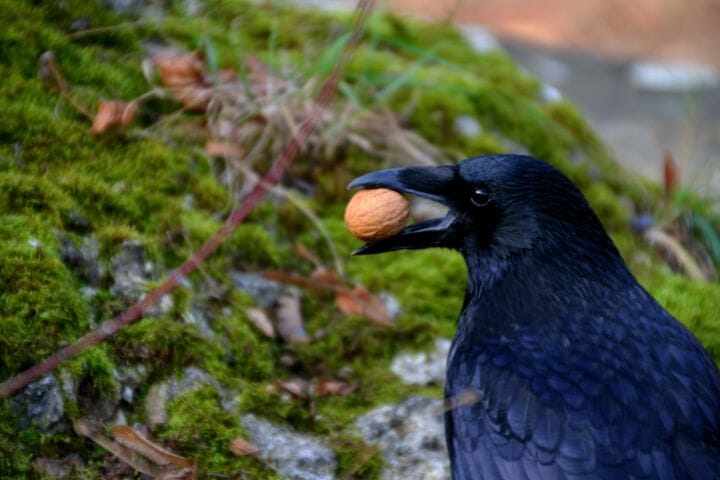
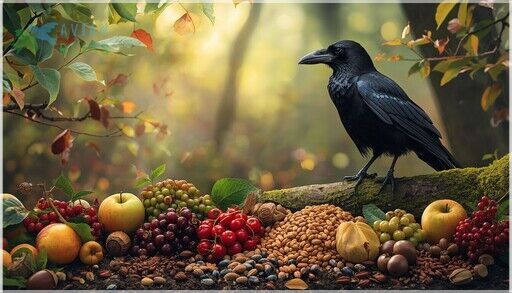
Ravens often favor meat, especially carrion, which is the flesh of dead animals. However, they are flexible omnivores that also eat small mammals, insects, eggs, fish, fruits, nuts, and grains. Their preferred food changes with the season, habitat, and what they can find.
Across the United States, Common Ravens live in places as different as mountain forests, deserts, coastal areas, farmland, and towns. Their varied diet helps them survive in these settings. A raven in a western mountain range may find a deer carcass, while another near a farm may eat insects, grain, or scraps left behind by people.
There is no single food that every raven chooses above all others. Carrion is a major food source, and animal matter often plays a large role in the diet. Still, a hungry raven may choose an easy meal of eggs, a mouse, a beetle, or berries when those foods are more available.
Ravens are also clever foragers. They watch other animals, explore new food sources, and hide extra food for later. These habits help explain why they can thrive in both wild landscapes and places shaped by people. Understanding their natural diet also helps people decide how to observe them without making the birds depend on handouts.
Source: Bing
What Is the Ravens’ Favorite Food?
Meat is a strong candidate for the Common Raven’s most important food category, with carrion often providing a valuable meal. Carrion includes animals that have died from natural causes, vehicle collisions, predation, or other events. A large carcass can provide a raven with much more food than it could obtain from a single insect or berry.
The word favorite needs some care here. People may have a favorite meal and choose it even when other options are available. A wild raven must weigh food value against effort, danger, competition, and opportunity. The most useful meal at a given moment may not be the same meal it seeks tomorrow.
A carcass can offer rich energy and protein, while live prey such as mice can provide a fresh meal. Insects are useful when they are easy to catch, and fruits or grains can help fill gaps in the diet. The raven’s success comes from being able to switch between these choices rather than relying on one food alone.
Source: Bing
Carrion
Dead animals provide a major food source, especially where large mammals are common or carcasses are easy to find.
Small mammals
Mice, young rabbits, and other small animals can supply protein and energy when ravens can catch them.
Insects and other invertebrates
Beetles, grasshoppers, and similar prey offer small but useful meals.
Plant foods
Berries, seeds, nuts, grains, and buds broaden the diet when these foods are available.
Why Meat Matters So Much
Meat provides protein and fat, which help support movement, body maintenance, and reproduction. Ravens often search for carcasses or follow clues that may lead to food. They may also watch predators and scavengers because the activity of other animals can reveal where a meal is available.
A carcass can draw more than one raven, as well as other scavengers. Access is not always easy. A raven may need to wait, approach carefully, or compete with larger animals before it can eat.
A large food reward
One carcass may provide several meals, so finding it can be worth the effort of searching.
A changing opportunity
The value of a carcass depends on its condition, the number of competitors, and how safely a raven can reach it.
What Foods Do Ravens Eat in the Wild?
Common Ravens eat a wide range of animal and plant foods. Their diet can include dead animals, live prey, bird eggs, young birds, insects, reptiles, amphibians, fish, fruit, nuts, and grains. They may also consume scraps and garbage when they encounter them.
This broad diet is known as omnivory. An omnivore eats both animal and plant matter, though the balance between the two can vary. Ravens are also opportunistic foragers, meaning they take advantage of food that is available without relying on a narrow menu.
Their choices can differ even within the same region. A raven living near a rocky coast may find different food from one living in an inland desert or a forest. The season matters, too, because insects, berries, prey animals, and carcasses do not remain equally easy to find throughout the year.
Source: Bing
Animal remains
Carrion from mammals and other animals can provide a substantial meal.
Live prey
Ravens may catch small mammals, reptiles, amphibians, insects, and other small animals.
Eggs and young birds
They sometimes raid nests for eggs or nestlings when they can reach them.
Fish and other aquatic food
Fish and other animal matter may be available near rivers, lakes, shorelines, and other wet habitats.
Fruit, nuts, and grains
Plant foods provide additional energy and help ravens use seasonal food supplies.
Do Ravens Eat Fruit and Vegetables?
Yes. Ravens eat some fruits and other plant foods, including berries, grains, seeds, nuts, and buds. These foods may become especially useful when they are abundant or when animal prey is harder to find.
However, eating plant matter does not mean that a raven is mainly a vegetarian. Its diet remains flexible, and animal foods can be very important. A raven eating berries in one setting may feed on a carcass or catch small prey in another.
Common natural plant foods
Berries, acorns, seeds, grains, nuts, and plant buds can form part of the diet.
Why availability matters
Ravens may eat more of a particular plant food when it ripens in large amounts or is easy to reach.
What Do Ravens Like to Eat Most in Different Seasons?
A raven’s most useful food can change with the season. Weather affects the movement of prey, the growth of plants, and access to carcasses. The timing of these changes also differs across the United States, so a seasonal pattern in Alaska may not match one in California or the Southwest.
During spring and summer, insects and young animals may be easier to find in some habitats. Eggs and nestlings can also become available to ravens that locate unguarded nests. In areas where berries ripen during the warmer months, fruit may provide another food source.
During fall and winter, some plant foods become less available, while carcasses may be easier to spot in open landscapes. Ravens may also visit farms, roadsides, landfills, and other places where food remains accessible. These are general patterns, not a fixed schedule followed by every bird.
Source: Bing
Spring
Ravens may take advantage of insects, small prey, eggs, and nestlings when these resources are available.
Summer
Insects, fruit, young animals, and other locally abundant foods can support feeding.
Fall
Ravens may use ripening berries, nuts, grains, carcasses, and other foods as conditions change.
Winter
Carrion, stored food, human refuse, and other accessible resources may become more important where natural food is scarce.
How Habitat Changes a Raven’s Menu
In mountain and forest habitats, ravens may find mammals, birds, insects, nuts, and carcasses. In open country, roadkill, livestock remains, grain, and small prey may be available. Near the coast, a raven may feed on marine animals or remains left by the tide.
Urban and suburban settings can offer scraps, outdoor pet food, and unsecured trash. Those foods may be easy to obtain, but easy access does not mean they are the healthiest or safest choice. A raven’s natural ability to adapt can become a problem when people unintentionally provide a steady supply of waste.
Wild habitats
Natural prey, carrion, insects, fruit, and seeds may make up much of the available food.
Farms and ranches
Ravens may encounter grain, insects, small animals, and livestock carcasses.
Towns and cities
Garbage and discarded food can attract ravens, but can also bring conflict and health risks.
Do Ravens Prefer Fresh Meat or Carrion?
Ravens eat both fresh meat and carrion. They can hunt live prey, but scavenging allows them to obtain food without making every meal a chase. Carrion is often a major resource, especially where wild or domestic mammals are common.
It is too simple to claim that every raven always prefers fresh meat. A bird may choose a carcass because it offers a large amount of food in one place. Another may catch a small animal because it is easy to capture and consume. Access, competition, and the condition of the food all affect the decision.
Ravens also need to judge risk. A carcass may attract coyotes, wolves, eagles, or other competitors. A raven might wait for a safer chance to feed or move to another food source. This balance between reward and risk is one reason their feeding behavior can look so thoughtful.
Source: Bing
Fresh prey
A captured mouse, insect, or other small animal offers food that the raven has obtained through hunting.
Carrion
A carcass can offer a large meal without the raven having to catch the animal itself.
Food safety
Ravens may inspect unfamiliar food sources and approach cautiously, especially when other animals are nearby.
Why Ravens Follow Other Animals
Ravens sometimes follow predators or watch their activity because it can lead them to food. A wolf or mountain lion may leave remains behind after feeding, creating an opportunity for scavengers. Ravens may also gather where other birds have found a carcass.
This behavior does not mean ravens are always dependent on larger predators. They can hunt, search, and scavenge on their own. Following another animal is one strategy among many, much like checking a familiar food source or exploring a new area.
Learning from cues
The activity of other animals can help a raven locate a possible meal.
Reducing search effort
A promising food source may save time compared with searching a large area without a clue.
What Do Ravens Eat Near People?
Ravens that live near people may eat food scraps, pet food, discarded meat, grain, and items found in open trash cans. Picnic areas, campgrounds, farms, roadsides, and landfills can offer easy meals. This ability to use human-made food sources helps explain why ravens sometimes thrive near settlements.
Still, there is a difference between food a raven will eat and food that is good for it. Leftover fries, salty snacks, heavily seasoned meat, sweets, and spoiled food are not suitable choices for feeding wild birds. Food waste may contain packaging, bones, chemicals, or other hazards as well.
The safest approach is to keep trash secured, bring picnic scraps with you, and avoid leaving pet food outdoors. In parks and protected areas, follow posted rules and do not feed wildlife. These steps reduce the chance that ravens will become dependent on people or begin approaching visitors in search of meals.
Source: Bing
Food scraps
Ravens may take discarded food, but scraps can be salty, spoiled, or otherwise unsuitable.
Pet food
Outdoor bowls can attract ravens and other wildlife, so bring them inside when pets finish eating.
Garbage
Loose trash provides food but can also expose birds to plastic, toxic substances, and other hazards.
Roadkill
Ravens may feed on dead animals along roads, where traffic creates an added danger for the birds.
Should You Feed Ravens in Your Yard?
It is generally best not to feed wild ravens directly. Regular handouts can teach birds to associate people with food, increase close encounters, attract other animals, and lead to conflict with neighbors. Feeding rules also vary by park, town, and other local authorities.
If ravens visit your yard, observe them from a distance instead. Keep garbage lids secure, remove food waste, and avoid leaving meat or pet food outside to draw them in. A yard that offers space, clean surroundings, and fewer hazards is a better place for wildlife than one built around a steady supply of human food.
Do not hand-feed wild ravens
Keeping a natural distance helps protect both people and birds.
Secure food and trash
Use closed containers and clean up outdoor eating areas after use.
Follow local rules
Check posted wildlife guidance before offering any food in public spaces.
How Ravens Find, Handle, and Store Food
Ravens use sight, memory, and learning to find food. They search the ground, inspect promising places, watch other animals, and return to areas where meals have been found before. Their intelligence helps them make use of changing food sources rather than follow one fixed feeding routine.
They can also handle food in ways that make it easier to eat. A raven may pull apart soft tissue, carry a small item to another spot, or work at a food source until it can reach the edible parts. The method depends on the size and type of food.
When a raven finds more food than it can eat at once, it may cache some of it. A cache is a hidden food store that the bird can return to later. Ravens may conceal food under leaves, in crevices, or in other hiding places, although the exact method depends on the surroundings and the item being stored.
Source: Bing
Searching
Ravens inspect open ground, trees, shorelines, roadsides, and other places where food may occur.
Learning
They can learn from past success and from observing the behavior of other animals.
Caching
Surplus food can be hidden for later, which helps a raven use a large meal over time.
Competition
A raven may guard a food source, hide a meal, or wait for a safer chance when other animals are present.
Why Ravens Hide Their Favorite Foods
Food can be unpredictable in the wild. A raven may find a rich meal one day and struggle to find the same amount the next. Hiding surplus food creates a reserve that may help bridge the gap between meals.
A hidden cache is not guaranteed to remain safe. Other ravens and animals may discover it, and some stored food may be lost. Ravens therefore benefit from choosing hiding places carefully and using their memory to return to them.
A reserve for later
Caching allows a raven to save part of a large meal instead of leaving all the surplus behind.
A changing food supply
Stored food can help when new meals are harder to find, though caches do not remove the risks of hunger.
What Foods Should People Avoid Giving Ravens?
The safest rule is not to offer food to wild ravens. Their natural diet already includes a wide range of resources, and handouts can change their behavior or draw them into unsafe areas. Food that seems harmless to a person may also contain ingredients or objects that create risks for a bird.
Avoid offering chocolate, candy, heavily salted snacks, highly seasoned leftovers, alcohol, and spoiled food. Do not leave out food with plastic wrap, foil, string, or other packaging that a raven could swallow or carry away. Moldy food and unknown scraps can also pose risks.
Bread is not a good reason to attract wild ravens, either. A bird may eat it, but that does not make it a balanced food source. A steady supply of bread or other human leftovers can displace natural foraging and encourage birds to gather around people.
If you find a raven that appears injured, weak, or unable to fly, do not try to treat it with food or water. Keep your distance and contact a licensed wildlife rehabilitator or the appropriate state wildlife agency for advice. Do not attempt to capture a healthy adult raven, which may defend itself.
Source: Bing
Salty and highly seasoned foods
Chips, heavily salted meat, and spicy leftovers are poor choices for wild birds.
Chocolate, candy, and alcohol
These are unsuitable items to offer wildlife and should be kept away from birds.
Spoiled food and moldy scraps
Food that has deteriorated may carry risks and should not be left out for ravens.
Food with packaging
Plastic, foil, string, and similar materials can cause injury or become choking or entanglement hazards.
What to Do If a Raven Needs Help
First, watch from a safe distance to see whether the bird is truly injured. Young ravens may spend time on the ground while learning to fly, and their parents may still be nearby. Do not assume that every grounded young bird is abandoned.
If the bird has an obvious injury, is caught in a dangerous place, or cannot move normally, contact a licensed wildlife rehabilitator or state wildlife agency. Describe the location and the bird’s condition, and follow the advice you receive rather than feeding it or trying to move it yourself.
Observe without crowding
Keep people and pets away while you assess the situation from a distance.
Seek qualified help
A wildlife rehabilitator can advise whether intervention is needed and how to reduce harm.
Frequently Asked Questions
Q
What is a raven’s number one favorite food?
There is no proven number one favorite food shared by every raven. Carrion, or dead animal flesh, is a major food source for Common Ravens, and animal matter often makes up an important part of their diet. Individual birds choose among available foods based on access, season, and conditions.
Q
Do ravens like meat more than fruit?
Meat and other animal foods are often very important to Common Ravens, but they also eat fruit, nuts, seeds, and grains. Their diet varies with local conditions. A raven may take berries when they are abundant and eat meat when a carcass or prey animal is available.
Q
Can ravens eat dog or cat food?
Ravens may eat outdoor pet food because it is easy to reach, but that is not a reason to offer it. Pet food can attract wildlife to homes, lead to conflict, and change natural feeding behavior. Bring pet bowls inside after meals and keep food storage secure.
Q
Do ravens eat eggs and other birds?
Yes. Ravens sometimes eat eggs and nestlings, and they can hunt small birds or take other small prey. This behavior is part of their natural feeding ecology, although its frequency varies with habitat and food availability.
Q
Do ravens eat nuts and berries?
Yes. Nuts, berries, seeds, grains, and buds can all form part of a raven’s diet. These foods may be especially useful when they are abundant. However, eating plant foods does not make the raven a strict vegetarian because it also consumes a wide range of animal matter.
Q
Should I leave meat outside to attract ravens?
No. Leaving meat outside can attract ravens and other wildlife, create sanitation problems, and increase contact between wild animals and people. In many places, feeding wildlife is discouraged or restricted. Enjoy ravens by watching their natural behavior instead of creating a food source for them.
Q
Do ravens store food for later?
Yes. Ravens may hide extra food in caches and return to it later. This behavior helps them use a large food source over time, especially when meals are unpredictable. Other animals may find some caches, so storing food does not guarantee that every meal will be recovered.
✦ Wrapping Up
Conclusion
Ravens do not have one universal favorite food, but carrion and other animal foods are major parts of the Common Raven’s diet. They also eat small mammals, insects, eggs, fish, fruit, nuts, seeds, and grains. Their flexible feeding habits help them survive across many landscapes in the United States.
What a raven eats depends on what it can find and how safely it can reach it. A carcass may offer a large meal, while insects or berries can provide useful food at other times. Ravens also hide surplus food, learn from their surroundings, and make use of changing opportunities.
If you enjoy seeing ravens near your home or while traveling, the best choice is to observe them without feeding them. Secure trash, remove food scraps, and keep pets away from wildlife. These simple steps let ravens remain wild while giving you a chance to watch their remarkable feeding behavior.
💡 Key Takeaway
Remember that carrion is a major natural food source for ravens, but their diet is varied. Watch them from a distance, secure food waste, and do not leave human food outside to attract them.
Animal Facts Zone is a family-friendly online resource built for curious minds, students, and wildlife enthusiasts. Founded and edited by Sourov Biswas, the platform breaks down fascinating animal behaviors, species identification guides, and nature trivia into clear, easy-to-read articles.
From backyard butterflies and fireflies to reptiles, birds, and wild matchups, every guide is crafted to answer real questions about the natural world and inspire everyday wildlife appreciation. Whether you are a student researching a species or a nature lover exploring your own backyard, Animal Facts Zone helps you learn something new about the animal kingdom in minutes.